









By Clint Thompson
The fear of the unknown is what makes chilli thrips a dangerous threat to Georgia blueberries. Chilli thrips were first confirmed in Georgia four years ago and have been observed in multiple counties since then, though Ash Sial, University of Georgia (UGA) entomologist, believes the list of counties is much larger.
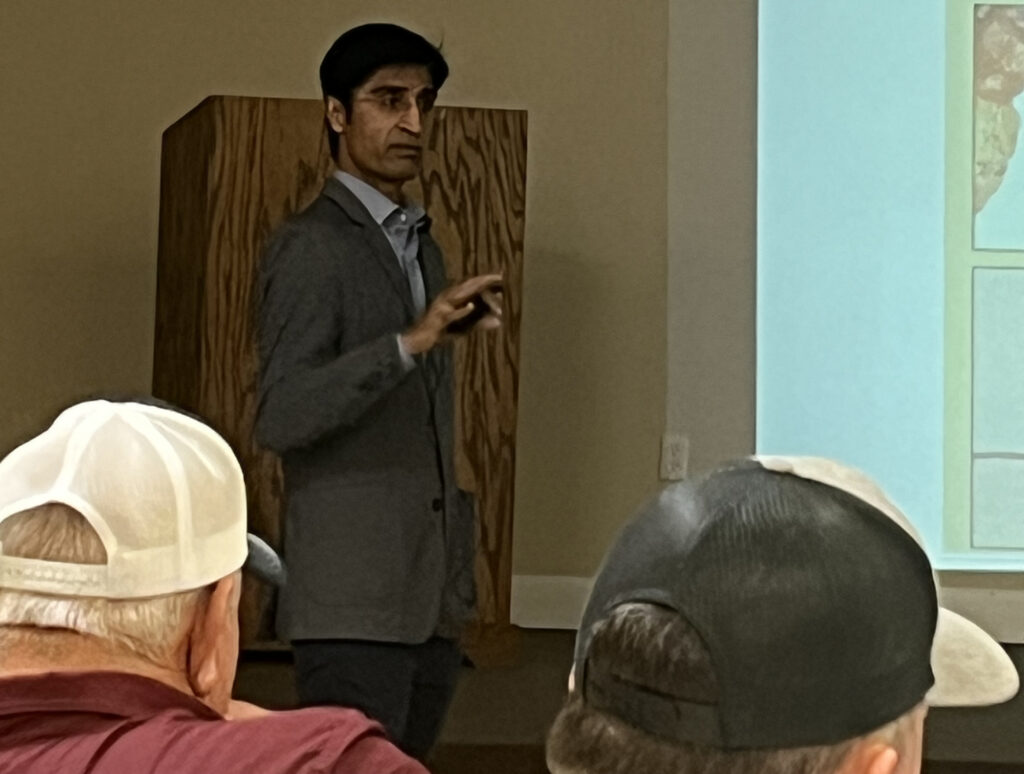
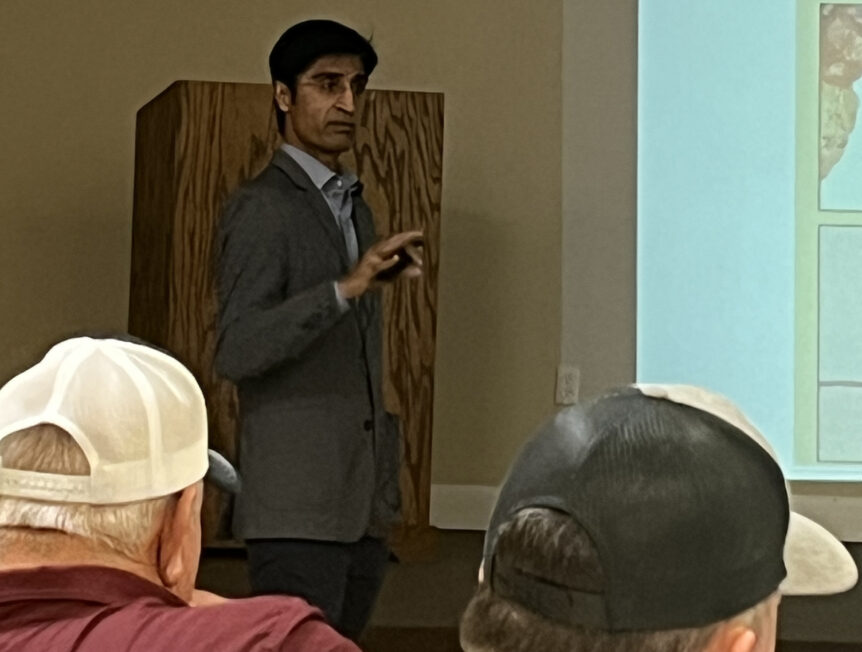
Sial highlighted chilli thrips and their impact on blueberries during a presentation at the 2026 Annual Blueberry Update in Alma, Georgia, on Jan. 7.
“Chilli thrips is a pest we don’t know very much about. We are still evaluating different materials. We are combining different options, different products into one spray to maximize the activity period. Overall, that is our growing concern because of the timing and the impact that it can have,” Sial said.
Chilli thrips are an invasive species from Asia that appear later in the season. They are distinguished from flower thrips by their smaller size, incomplete dark stripes on the abdomen and dark wings. They are also different in how they impact blueberries.
“Wildflower thrips are there and can cause damage. Chilli thrips are much more aggressive in feeding. They can build up populations much faster. They can basically cause the bush to die,” Sial said. “Flower thrips will never do that no matter how large numbers they are. All they can do is suck enough juice out of the plant and particular blooms will drop.”
Treatment Options
Blueberry producers have multiple insecticide options at their disposal, though Sial emphasized that Apta and Assail are most effective. Other options include Agri-Mek, Exirel and Rimon. Mixing Rimon at a lower rate, 10 ounces per acre, may extend the residual activity.
“We do have some, but they need to be repeated. Because of the way chilli thrips’ life cycles work, it’s really hard to knock them down to zero no matter what you do,” Sial said. “Repeated applications are needed. In some cases in Florida, I’ve heard they have to make any where from nine to 15 applications just to control chilli thrips.”