









Weekly Field Update
Clemson Extension agents provide updates in The South Carolina Grower this week about the status of various crops being produced throughout the state.
Statewide
Tom Bilbo – Extension Entomologist
- This is a friendly reminder to be scouting for spider mites in your strawberries. I have a field in Charleston that has remained uncovered and, despite a fairly cold winter, already has spider mites easily past threshold. This will result in fewer berries later this spring than if I had intervened (this field is being used for a miticide spray trial beginning in a couple of weeks).
- Notably, I also found good signs of natural enemy activity and noticed many eggs of the predatory Bigeyed Bug. Hoverfly (Syrphidae) eggs look very similar and are also impactful predators. There were also a few aphids around, but these are a non-issue that resolves itself 95% of the time unless small plants are covered with aphids.
- My takeaway given these observations? A miticide is warranted and nothing else. This will help knock back mite numbers to a more favorable ratio with natural enemies who will provide greater assistance as the season progresses. Spraying bifenthrin will kill all these beneficial predators that will soon hatch and begin feasting on spider mites and aphids.
- Spider mite treatment threshold: 5 mites/leaflet for pre-fruiting plants, or 5% of leaflets infested with mites. Sampling 100 leaflets/acre.
Coastal Region
Zack Snipes
- We received a good soaking rain (Sunday) throughout the region which should help push plants. We have a beautiful 10-day forecast with no nights below 32 degrees fahrenheit.
- This is the time of year when folks ask, should I start pushing my strawberries or not? The answer is, well it depends. From flower to fruit, takes about 35 days. So, the question I ask back is, if you begin pushing them now, are you willing to frost-protect for the next 35 days to have berries by mid-March? Here is a table from NOAA with our last average frost dates dating back to 1991.
- For folks on the sea islands, I would say it’s time to push. For the folks more inland, I would wait another week to 10 days.
- Do not forget your boron applications (1/8 pound of actual boron) or you will have “bull-nosed” berries in 35 days.
- Other crops look okay right now with some purpling due to the cold weather.
Midlands
Rob Last
- Some welcome rainfall over the weekend will help to promote crop development; however, scouting will remain crucial to monitor for symptoms of diseases and timely management.
- Strawberries, overall, look good, with some leaf spots from Septoria and Gnomonia. Many growers have applied a protectant fungicide following the prolonged period under row covers.
- Spider mites are present in some crops, and given the temperatures forecast for this week, populations could quickly explode. Remember to avoid using broad-spectrum insecticides, such as pyrethroids, because they can trigger population flares. Instead, select a specific miticide, such as Nealta.
- Aphids are present in many crops with a low population, and I am seeing parasitism of many aphids. Typically, aphid treatment is not required.
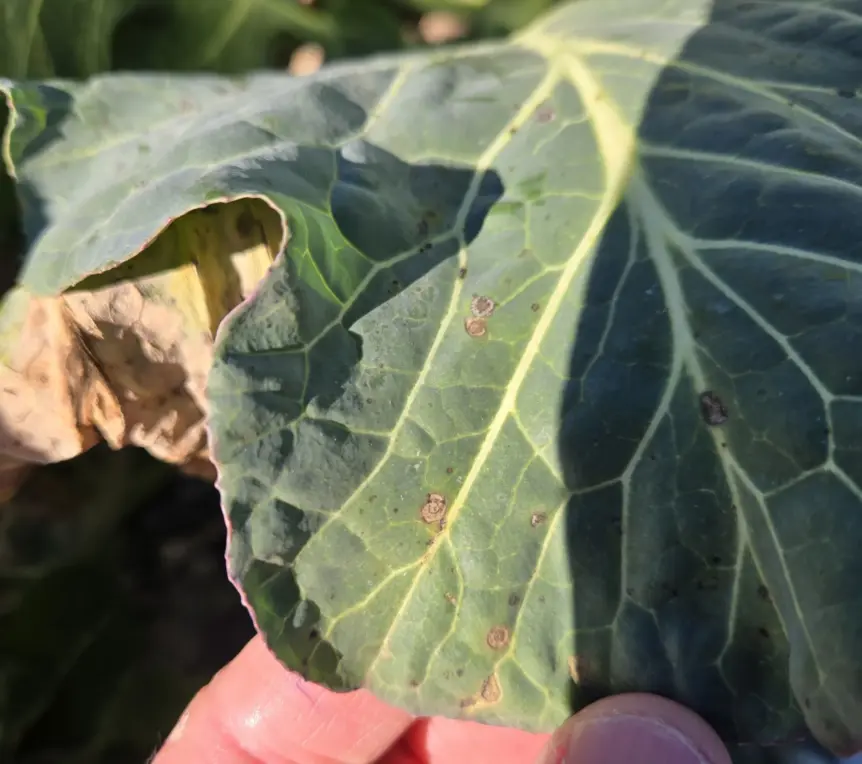
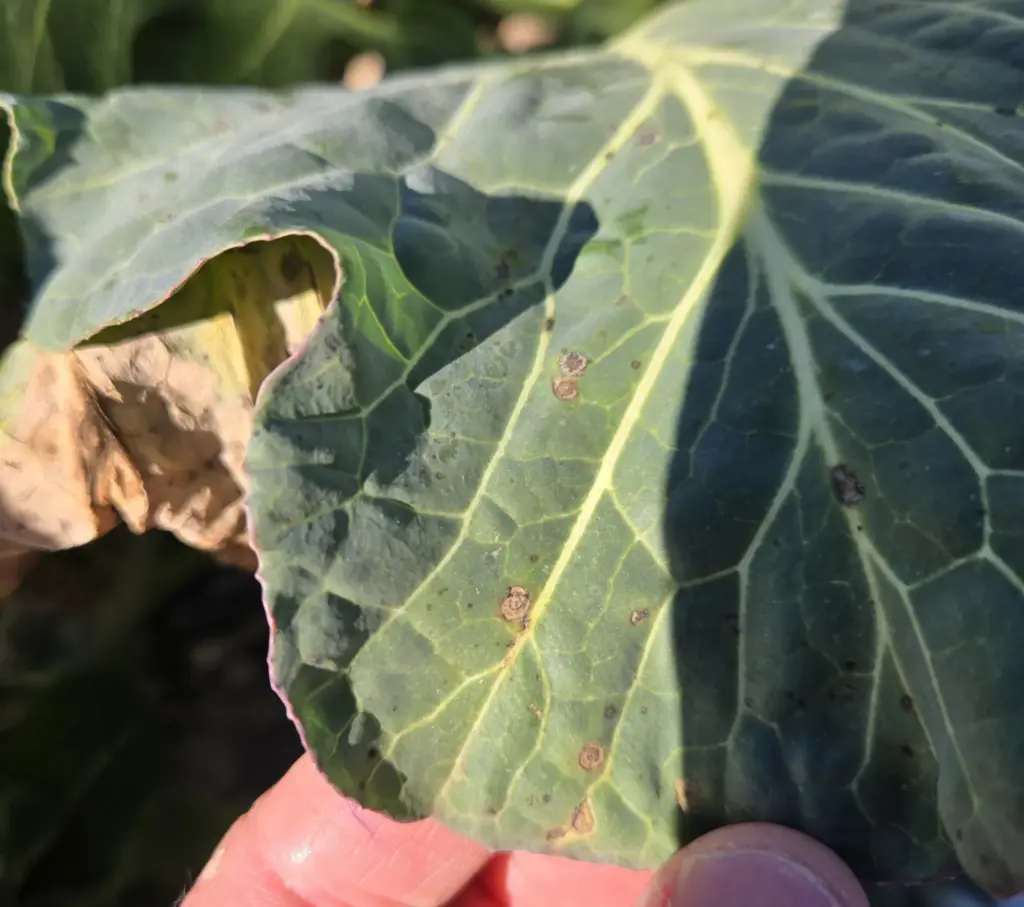
- Brassica growers should be on the lookout for alternaria leaf spot. I am seeing quite a few crops with high disease activity. The most effective fungicides based on Dr. Keinath’s trials are Inspire Super, Miravis Prime, Quadris Top or Priaxor.
Upstate
Samantha Brown
- We received much-needed rainfall in the Upstate, but with rain followed by warmer weather, this week will see prime weather conditions for fungus spores to spread. A protective spray like Captan may be a great idea to protect crops.
- While on the warmer weather topic, scout for an acceleration in spider mite development. Check the undersides of leaves and fruit daily. Early detection is key.
- If you have not already done so, it is a great time to prune muscadines and blueberries. Pruning is vital in crop production as it creates better airflow and light penetration.
- Be mindful of leaf wetness and field humidity levels. Extended moisture on foliage, especially leafy greens, increase the risk of leaf spot, downy mildew, and bacterial diseases. Irrigating early in the morning will allow the foliage to dry before sunset.