









Weekly Field Update
Clemson Extension agents provide updates in The South Carolina Grower this week about the status of various crops being produced throughout the state.
Lowcountry Report
Anna Sara Hill
- Scattered thunderstorms, accompanied by strong wind gusts, brought driving rain across much of the area (recently). It was a short reprieve from the high temperatures and high heat index that had enveloped the state this past week.
- Despite the heat, growers are busy planting brassicas and other fall crops.
- Okra and peppers are still being harvested in large quantities.
- To date, I haven’t seen or received calls about the two-spotted cotton leaf hopper, but they are in the state, and this is the same timeframe they became a problem last year. Keep a sharp eye out and please report to the Extension office if you detect them or suspect you have them.
- Whiteflies thrive in hot, dry weather, and I observed a few fruit trees that were loaded with them this week. When treating them, be careful with the timing and consult the weather forecast and the label. To avoid injury to the plant, do not use oil-based pesticides when the air temperature exceeds 86 degrees Fahrenheit.
- With the high heat index these days, it’s important for on-farm workers to review and implement safety precautions to avoid heat stress. Below are a few reminders:
- Stay hydrated by drinking 8 ounces of water every 15 to 30 minutes.
- Take frequent short breaks in a shaded, well-ventilated area.
- Wear light-colored, lightweight, loose-fitting clothing.
- Stay tuned to the weather forecast and, if possible, adjust work schedules to take advantage of the coolest period of the day.
- Have a safety response plan in place to address heat-related illnesses, and ensure everyone is familiar with it.
Midlands Report
Rob Last
- As we start a new work week, the temperatures seen over the weekend are set to continue. Given the high temperatures and humidity, heat stress and stroke become a significant risk. Take the time to protect yourselves and your workers.
- Powdery mildew is being seen in many crops, particularly those that are mature and awaiting destruction. Prompt destruction can be a major benefit in reducing sources of inoculum and, more importantly, pest and disease carryover from one crop to the next.
- Generally speaking, fall plantings look to be developing well. I am seeing beds with reduced growth and vigor. These areas are typically in beds with a notable depression in the bed surface. It looks like the bed centers have collapsed, resulting in less-than-ideal bed consolidation and creating nutrient and water stress.
- The two-spotted cotton leafhopper has been found in Charleston County. I am seeing leafhopper nymphs on eggplant and okra; unfortunately, it is difficult to speciate immature leafhoppers in the field. Keep monitoring and scouting crops closely. I find that the phone camera zoomed in can be a useful substitute for a hand lens.
Sarah Scott
- We are nearing the end of the peach season, as the last couple of varieties will soon be harvested. Summer pruning is taking place, and trees that are no longer producing well are being pushed up to make way for new plantings this winter.
- Late-season issues have included scale and a good bit of brown rot, but with only spotty rain showers, disease has slowed. Again, Oriental fruit moth and plum curculio seemed to have arrived late this season, and some damage from both pests is present.
- Fall vegetables are establishing well despite the heat.
- Field prep for strawberries has begun, with some growers making beds and laying plastic.
Upstate Report
Andy Rollins
- Muscadine harvest in the upstate is beginning. We are finding some anthracnose in bronze cultivars. Using systemic products, mixed with Captan, can improve control. Extended leaf wetness from regular rains has made disease control more difficult lately. But, overall, the crop looks good.
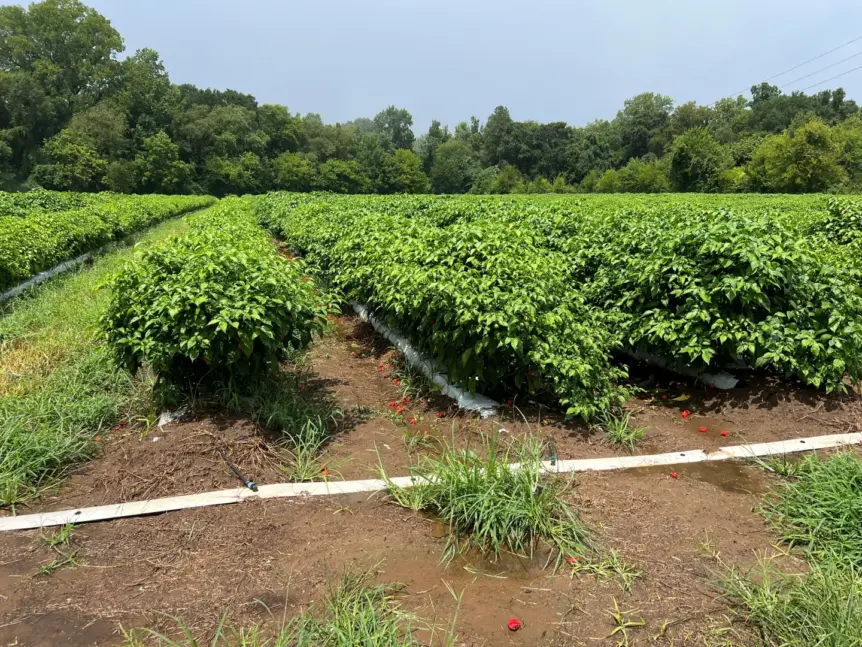
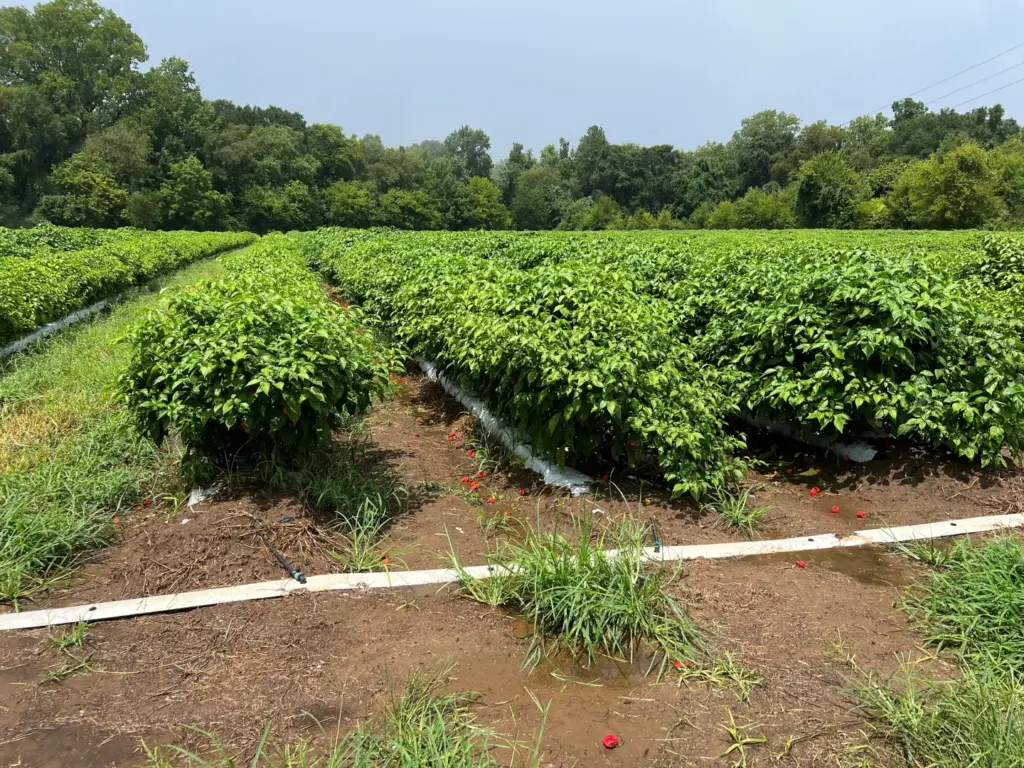
- Pepper plants are consistent in height and canopy but also loaded with fruit. Harvest has begun and will continue until the first or second frost. Earlier planting dates, root rot control with Orondis Gold, and a longer, cooler spring are all believed to have assisted production. Although no fungicides or insecticides have been used recently, fungal and insect problems were found, necessitating treatment.
- Peaches are still in production in the Upstate. Some Big Red growers are finished picking, while others still have plenty left to harvest. We have a few more varieties to pick but not many. If you want peaches grown in South Carolina, you will need to get them soon.