









By Clint Thompson
An Alabama Extension Christmas tree field research trial produced positive results pertaining to fertilizer management. It also yielded trees for military troops stationed across the country.
Jeremy Pickens, Alabama assistant Extension professor in horticulture at Auburn University, and his research team at the Gulf Coast Research and Extension Center in Fairhope, Alabama, used a three-year Specialty Crop Block Grant, funded through the Alabama Department of Agriculture and Industries, to study growth rates in Christmas trees.
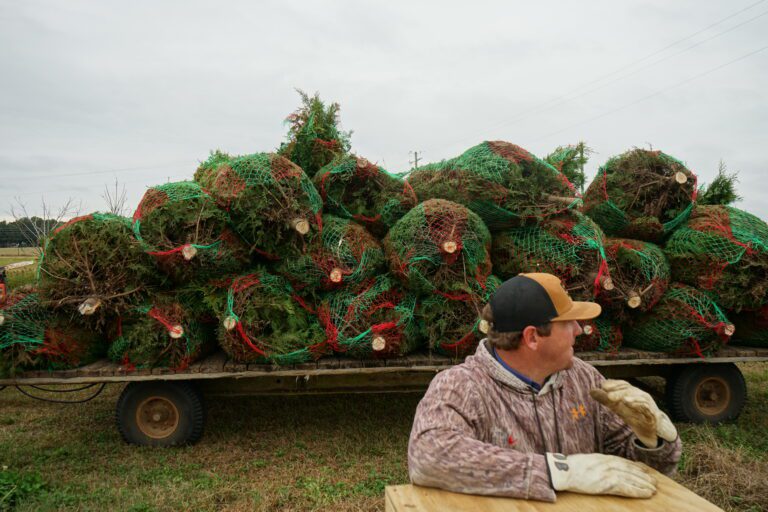
Once finished this year, Alabama Extension connected with the Trees for Troops program, which is part of the Christmas Spirit Foundation. All told, 200 trees were harvested and sent to troops this holiday season.
“We had all of these trees and it was the perfect place to send them,” said Pickens. “It was a cool project. It was fun growing the Christmas trees, but it was really great harvesting them and knowing where they were going. We even got pictures from one of the Marines receiving the trees. It was great. It was a fun project all around. We were glad it made being away from home a little better, having a tree in your home at some of these bases.”
Collaborative Effort
The program partners with FedEx to ship the trees to where they needed to go. The Alabama Extension trees were transported to military families at the Marine Corps Air Station Cherry Point in North Carolina.
“You’ve got to have enough trees to justify getting FedEx to come out. We donated about 200, and then a farm called Fish River Trees (Christmas tree farm in Fairhope, Alabama), they donated 50,” Pickens said. “We had a critical mass I guess you could say.”
The program donated more than 16,000 trees to 93 military bases in 2024.
For additional resources on Christmas tree production, visit aces.edu.