









By Clint Thompson
A joint review of the USMCA is a little more than two months away. The Florida Fruit and Vegetable Association (FFVA) is hopeful that timely assistance be provided for its specialty crop growers.
FFVA President Mike Joyner spoke during the recent University of Florida Institute of Food and Agricultural Sciences Agricultural Policy Outlook Conference. He highlighted how seasonal imports have devastated his state’s fruit and vegetable producers, and assistance could come in the form of product specific seasonal tariff rate quota’s (TRQs).
“This is a volume issue. At the end of the day, incredible volumes are being brought in. At the end of the day we’re asking for, between the fall and spring marketing season, a product specific seasonal tariff rate quota,” Joyner said. “You would go into these commodities that are most impacted, and we usually say there about seven or eight of them, and you would literally say, ‘At this point, you can bring this much in, and at this point, then there’s a tariff.’
“I testified at the International Trade Commission a month or two ago, but I think I was on there with eight people, and four of the eight were asking for tariff rate quotas.”
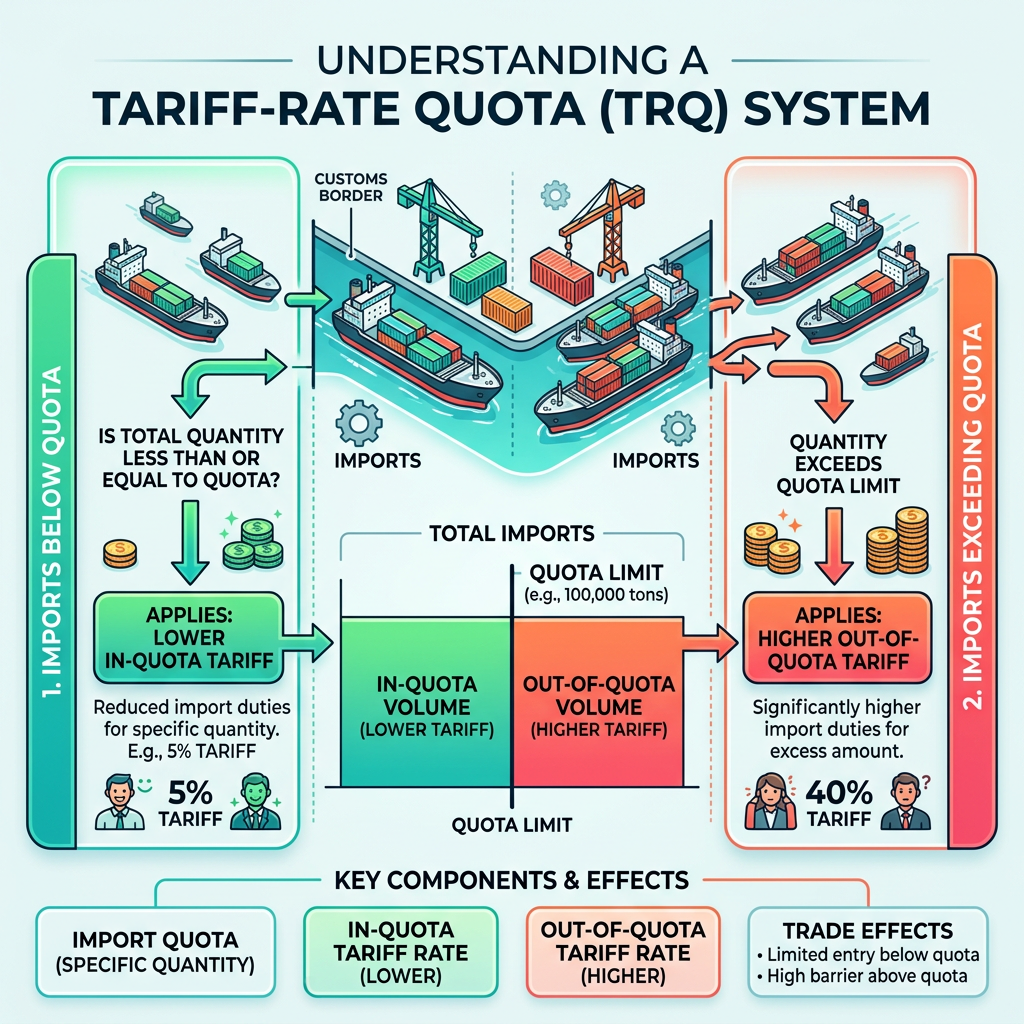
What Are TRQs?
TRQs are two-tiered trade mechanisms that apply a low tariff rate on a specific volume of imported goods and a higher tariff rate on any imports that exceed that volume.

Joyner reported that there has been a 527.8% increase in the value of imports from Mexico for all commodities. From 2004 to 2024, Florida has lost 73.4% of the market share in bell peppers, while Mexico gained 110.4%. During that same timeframe, Florida lost 54.4% of the market share in tomatoes, while Mexico gained 74.7%. Florida lost 52.0% of the market share in blueberries, while Mexico gained 361.7%.
The USMCA requires the Free Trade Commission, which comprises governmental representatives from all three countries, to meet on the sixth anniversary of entry into force to conduct a joint review of the agreement. That date is July 1. They can evaluate any recommendations for submitted actions and decide on any appropriate responses.
Each governmental party must confirm if it wishes to extend the term of the agreement. Also, if a participating party wishes to make a recommendation for the Commission to take action, it must do so at least one month before the joint review meeting occurs, which would be by June 1.