









By Clint Thompson
Widely recognized as a leading weed scientist in the Southeast, the University of Georgia’s Stanley Culpepper provides specialty crop growers with weed management guidance. Specialty Crop Grower caught up Culpepper to discuss challenging weeds in Georgia and what to do about them.
Q: What are the three most problematic weeds in vegetables produced on plasticulture and how do you manage them?
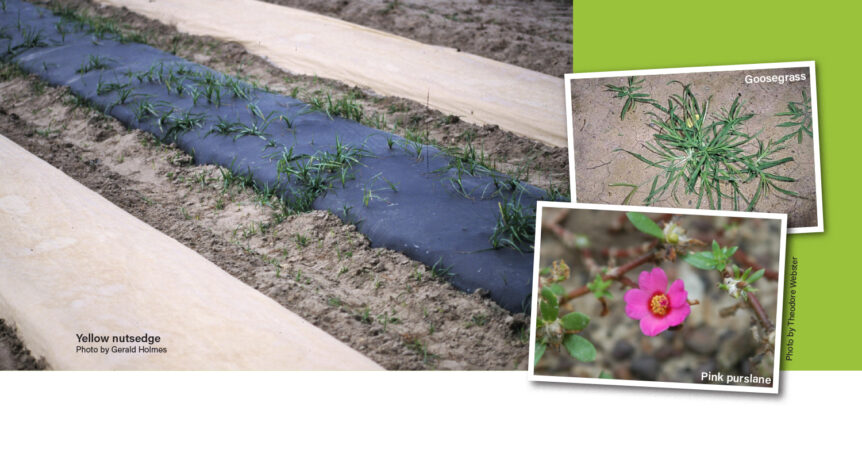
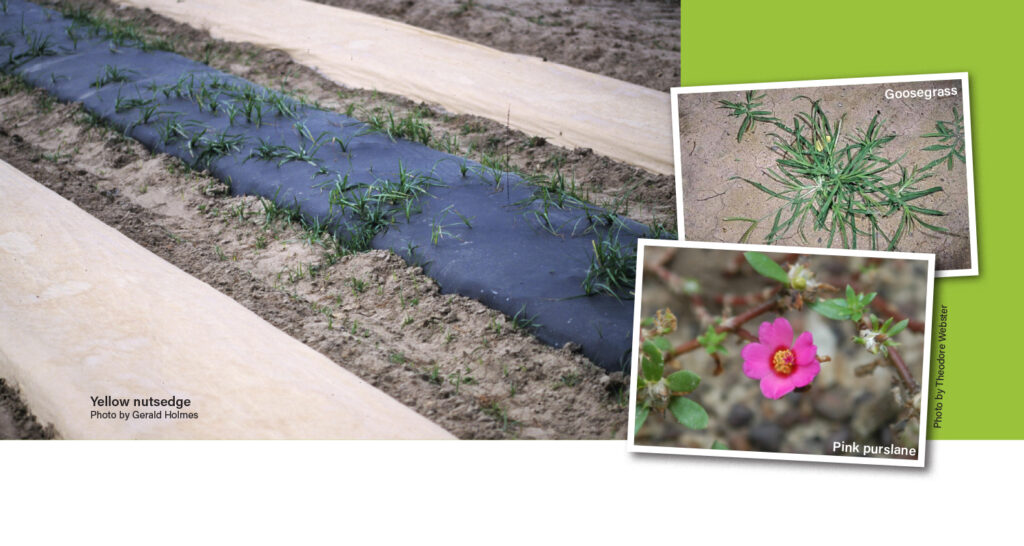
Culpepper: Nutsedge remains the most problematic weed in plasticulture because of its ability to emerge through the mulch, potentially destroying its integrity. Additionally, the cost of fumigation needed to mitigate the impact from nutsedge coupled with the limited number of effective herbicides add to the challenges farmers face when fighting this pest.
For controlling nutsedge in plasticulture, a holistic management approach is the key, often including approaches such as the following:
1) Controlling nutsedge in rotational crops or between crops using tillage and herbicides
2) Shank injection of effective fumigants when laying mulch for the first crop and then drip injection of fumigants for subsequent crops
3) Utilizing effective herbicides in those crops where tools are available (including row middle management)
4) Controlling the weed immediately following the final harvest
Success in managing nutsedge, just like most other weeds, will be determined by long-term management of the seed (tuber) bank.
Pink purslane has also quickly become one of the most problematic weeds in vegetables produced on plasticulture. The ability of this pest to establish and produce a large number of seeds quickly — even more quickly than a short-season vegetable crop can mature —has allowed it to proliferate.
Pink purslane does have one significant weakness farmers can exploit: the depth in the soil profile from where it emerges. It generally emerges in the top 0.5 inch of the soil, so deep turning the land can be used to bury those seeds germinating on the soil surface. If a given field has not been turned in the last three years, it would likely prove beneficial in management if the seed can be placed deep in the soil profile, allowing it to degrade over time.
However, tillage alone will rarely provide enough control, so herbicides are an essential component for success. For purslane, the key is to start clean and apply a residual herbicide (tank mix of two active ingredients if options exist) before any purslane emerges. Of course, the herbicides must be activated by rainfall or irrigation to be effective.
The next step should occur within two to three weeks by making an additional application of an effective residual herbicide (if the tool exists) following the concept of overlapping residual herbicides where the weed never emerges. Growers who try to control this weed after emergence almost always lose! As soon as crop harvest is concluded, kill all plants in the attempt to reduce additional seed production.
Finally, annual grasses continue to be among the most problematic weeds in vegetables produced on plastic mulch. Grasses emerge in nearly every crop plant hole because they are so common and prolific. In fact, when it comes to weeds reducing vegetable yield, grasses are likely at the top because of their competitive ability early in the season. There are many different grass species infesting most fields in the Southeast, but goosegrass deserves special recognition because it is much more difficult to manage with postemergence herbicides.
For most broadleaf vegetable crops, a herbicide program likely offers the most economically effective approach. When feasible, start with an effective residual herbicide at planting and then make timely early-season postemergence applications of a graminicide or grass herbicide when possible. Special attention should be given to making a timely postemergence application. This may allow for the use of lower herbicide rates and less aggressive adjuvants, thereby reducing crop injury. Deep turning the soil as well as overlapping residual herbicides throughout the season can also be very helpful to a sound management program.
Q: Is weed resistance a concern?
Culpepper: Herbicide resistance in plasticulture systems is currently limited compared to the challenges agronomic producers face because tillage, fumigation, hand weeding and the use of a limited number of often marginally effective herbicides are used collectively to manage weeds in vegetables produced on plasticulture. This dynamic and diversified weed management approach is costly and time-consuming but is a very sustainable approach when it comes to mitigating herbicide resistance. With that said, many vegetable growers do have to manage herbicide-resistant weeds, especially pigweed and horseweed, which are often more problematic when rotating on land used for agronomic crop production.
Video
Click here for video component.