









By Frank Giles
The COVID-19 pandemic illustrated the fragile nature of global supply chains as the movement of many goods was disrupted and delayed for months after shutdowns related to the virus. The conflict in Iran has been a reminder of that vulnerability as oil and fertilizer movement has been disrupted, sending prices higher and feeding uncertainty into the marketplace.
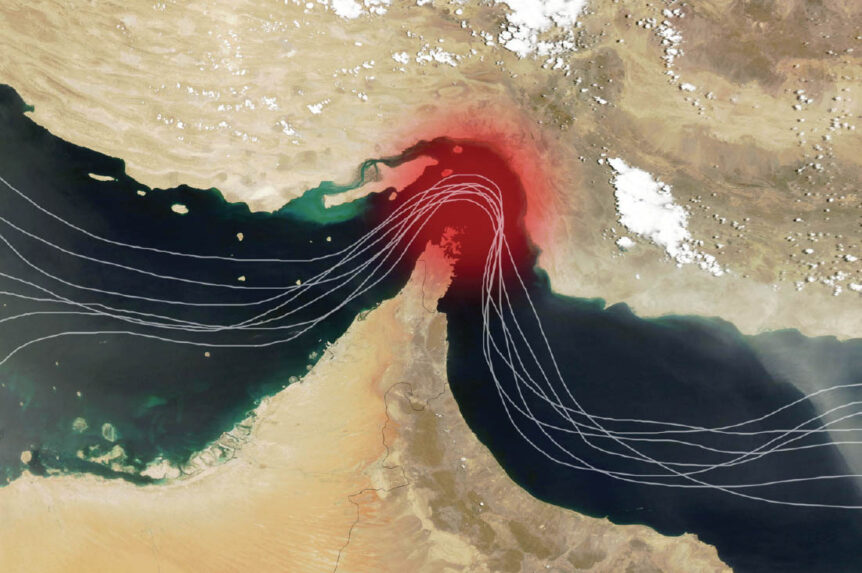
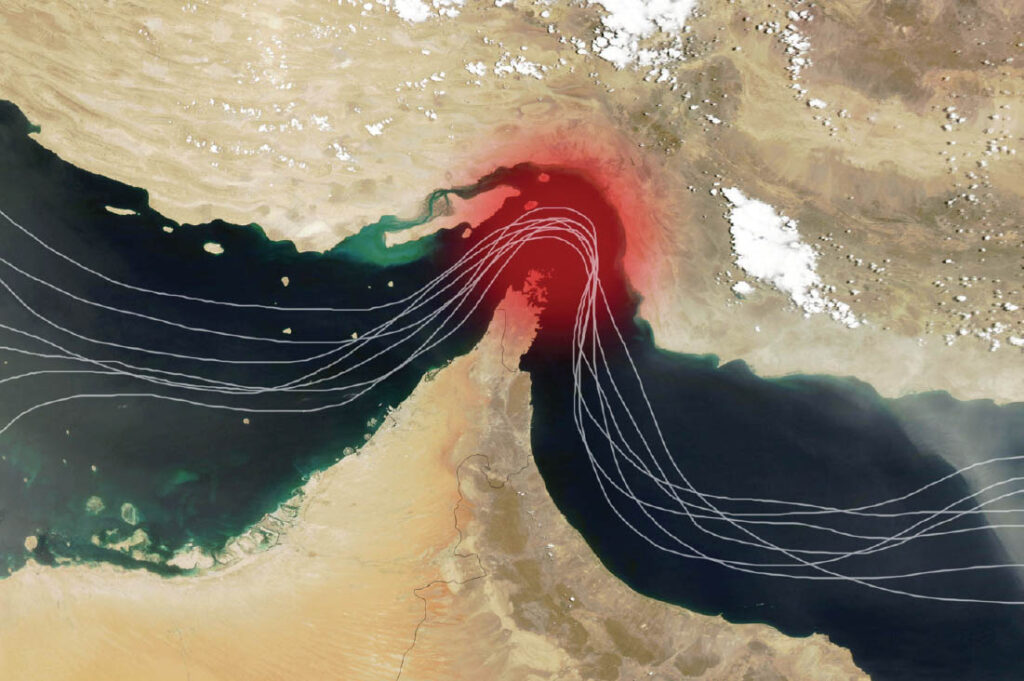
At the center of this disruption is the Strait of Hormuz, which is a main conduit for moving oil and key nutrient elements from the Middle East. At press time, the strait was still under blockade, and an agreement to end the conflict had not been reached. Regardless of when the conflict is resolved, it will take time for the global movement of oil and fertilizer to rebound.
Iran’s parliament voted in June 2025 to close the strait. According to Danny Munch, an economist for the American Farm Bureau Federation (AFBF), the Strait of Hormuz is only 21 miles wide but carries an outsized share of global commerce through its waters. That’s why fuel and fertilizer prices have reacted so dramatically.
“The Strait of Hormuz is one of the most critical choke points in the world around moving energy and fertilizer,” Munch said. “On the fertilizer side, countries exposed to the disruptions that we’re seeing in and around the Persian Gulf account for nearly 50% of global urea exports and about 30% of global ammonia exports. You also have about 20% of oil moving through that region.”
Munch added Qatar, Saudi Arabia and Iran accounted for roughly 25% of global nitrogen fertilizer exports in 2024, and when you add other countries like Egypt and Bahrain, that jumps up to over one-third. For countries that rely directly on these sources for supply, the fear of shortages is real, and prices react accordingly.
“When we’re thinking about global fertilizer use, even if countries like the United States might not get as much fertilizer from that region as places like Brazil and China, these are inputs priced on a global market,” Munch said. “So, any pull or any lack of supply that other countries can no longer get from that region means they’re trying to pull supply from somewhere else. That lifts prices for everyone, which is what we are seeing in the United States.”
Farmers Worried
In April, the AFBF conducted a survey gauging grower concern over the fertilizer supply situation and pricing. More than 5,700 farmers (AFBF members and non-members) from every state replied to the survey.
Seventy percent of respondents said that fertilizer has become so expensive that they will not be able to buy the full amount needed this year. Almost eight out of 10 farmers in the Southeast said they can’t afford all needed supplies. Sixty-one percent of vegetable growers who participated in the survey reported they would be unable to afford all their fertilizer needs at current prices.
Specialty crop growers who pre-booked fertilizer before the conflict were somewhat shielded. But as the conflict continues and disruptions remain, future supplies and price shocks are a big concern. Munch said the survey showed row crop growers in the Midwest had the most product already contracted; the Southeast was lagging.
“In the southern region, only 19% of our producers that responded to the survey reported pre-booking fertilizer,” Munch said. “And then the northeast and the western region were about 30% pre-booked. There’s a pretty big gap between those regions, and even in the Midwest, which has the highest percentage that pre-booked, there was still a significant number that had not pre-booked. So, there is a substantial exposure to the increase in prices that we’ve seen.”
Getting Back to Normal
Once the Strait of Hormuz reopens, how long will it take for the energy and fertilizer supply chain to stabilize and prices to come down? Munch says that is a crystal ball question that is more difficult to answer.
“In these energy and fertilizer markets, prices react more quickly because they can go up and down based on perceived threats to supply or on hope resolutions have been reached,” Munch said. “But in terms of how fluid the freight system is going to rebound, that’s going to take weeks to months to get back into normal order.
“Because of the COVID-19 disruptions that we had and the congestion across the West Coast ports, a lot of our import-export companies and the broader shipping industry have gotten a little bit nimbler and more flexible in moving containers and ships around the word and being a little more able to bounce back more quickly. So, I think we’re in better shape at dealing with these disruptions than we were before the pandemic. But it’s still going to take weeks to months to figure out and get things back to normal once some sort of resolution is in place and the strait fully opens back up to traffic.”
Click here for video.