









By Clint Thompson
Fusarium wilt remains a challenge for watermelon producers in North Florida and South Georgia. Grafting is a way for growers to navigate its challenge, says Josh Freeman, regional sales manager with TriEst Ag Group.
“If you take markets aside, markets come and go, but fusarium, that’s not going to change. In my opinion, varietal resistance is not close,” Freeman said. “(Grafting) is a tool to ensure that when you put a watermelon plant in the ground, you’re going to pick something off of it.
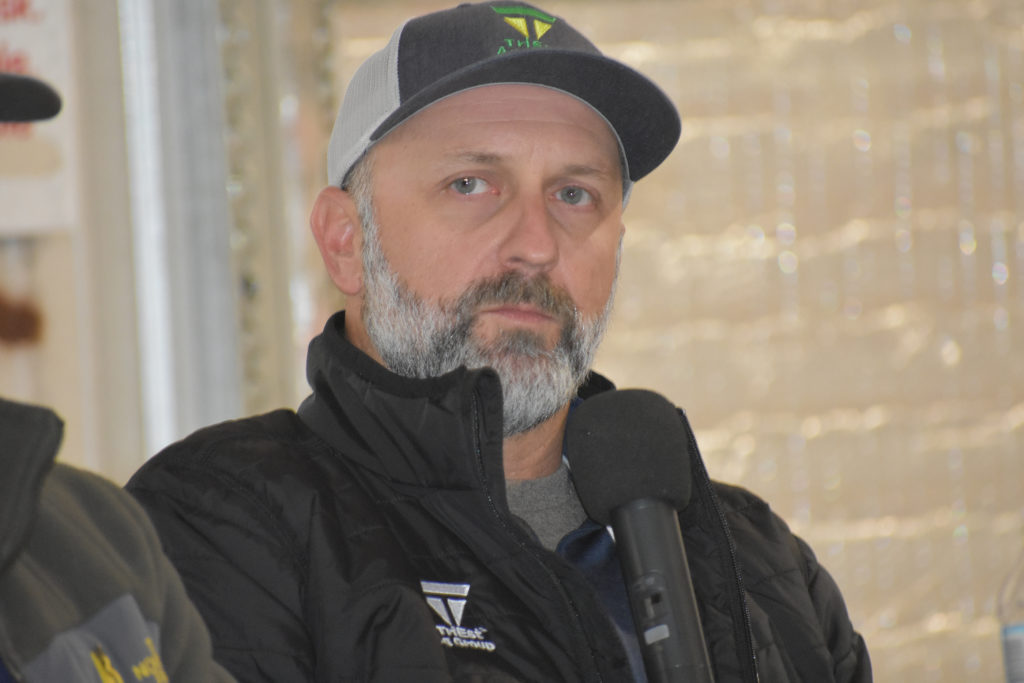
“I had somebody tell me that there’s nothing more expensive than not loading a watermelon.”
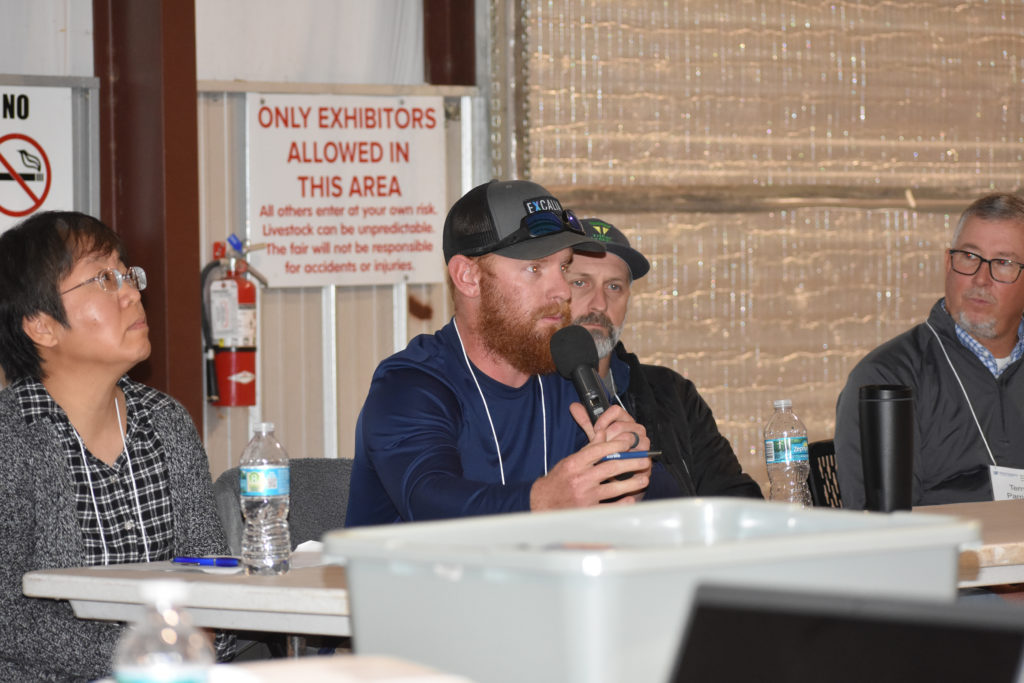
Freeman was part of an expert panel that discussed grafting during the recent Suwanee Valley Watermelon Institute. He said fusarium wilt is one of the top limiting factors to watermelon production.
Symptoms can appear at any growth stage. If they appear at the seedling stage, the plants will not even make it to vines. Plants infected with the pathogen will eventually die if the infection is severe. The plant can produce fruit if the infection is weak, but when it begins using the energy necessary to produce fruit, the plant will likely decline and slowly die.
Freeman described how grafting works and its effectiveness against the disease.
“It’s just putting a root system in the ground that’s either a non-host; like squash is just a non-host for the fusarium that we have; or in the case of the citrons, we’ve got some host plant resistance,” Freeman said. “That’s all it is; putting a root system in the ground that either doesn’t get it or doesn’t get it nearly as bad as the non-grafted plant.”