









By Clint Thompson
Southeast pecan producers must remember that this is the time of year for ambrosia beetles to become active in orchards. They are especially dangerous to young trees and those that are currently experiencing stress-like conditions.
Apurba Barman, University of Georgia (UGA) assistant professor of entomology at the UGA Tifton Campus, discussed the insect’s impact.
“We have seen in the past, by late February, we start to see ambrosia beetle moving out of the woods and coming to our pecans. Another thing with ambrosia beetles is that they attack stressed trees, young trees sitting on low areas with water standing,” Barman said. “We’ve had some rain events recently, so if you had any spots like that, trees might be sitting a week or two in standing water. Eventually, those roots are going to suffer and that’s how trees get stressed. We have seen ambrosia beetles like those trees.
“Pay attention to those trees.”
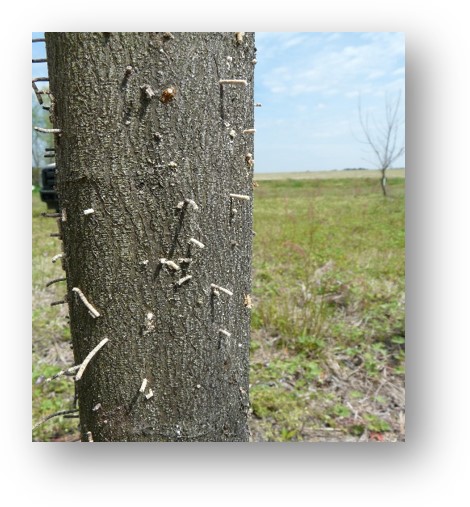
Producers have effective insecticides to manage the beetles. They just need to know when the beetles are present. Farmers can identify beetle activity by the toothpick-sized sawdust tubes the beetles leave sticking out of holes bored in trees.
Growers should use bifenthrin and spray the lower half of the tree, 3 to 4 feet from the ground level.
Insecticides should be applied approximately every 10 days. Doing this will help trees stay protected from ambrosia beetles.
“If you have two or three-year-old trees or if you just put out a tree this year, young trees, yeah, they’re more susceptible to ambrosia. This is the time of the year when ambrosia starts coming out of the woods, and their activity will last all the way until the end of April,” Barman said.