









By Clint Thompson
North Florida watermelon producers should be aware that squash bugs are active around the perimeter of fields. Growers and scouts need to look for individual adults and mating pairs, says Bob Hochmuth, University of Florida Institute of Food and Agricultural Sciences (UF/IFAS) Regional Specialized Extension agent in Live Oak, Florida.
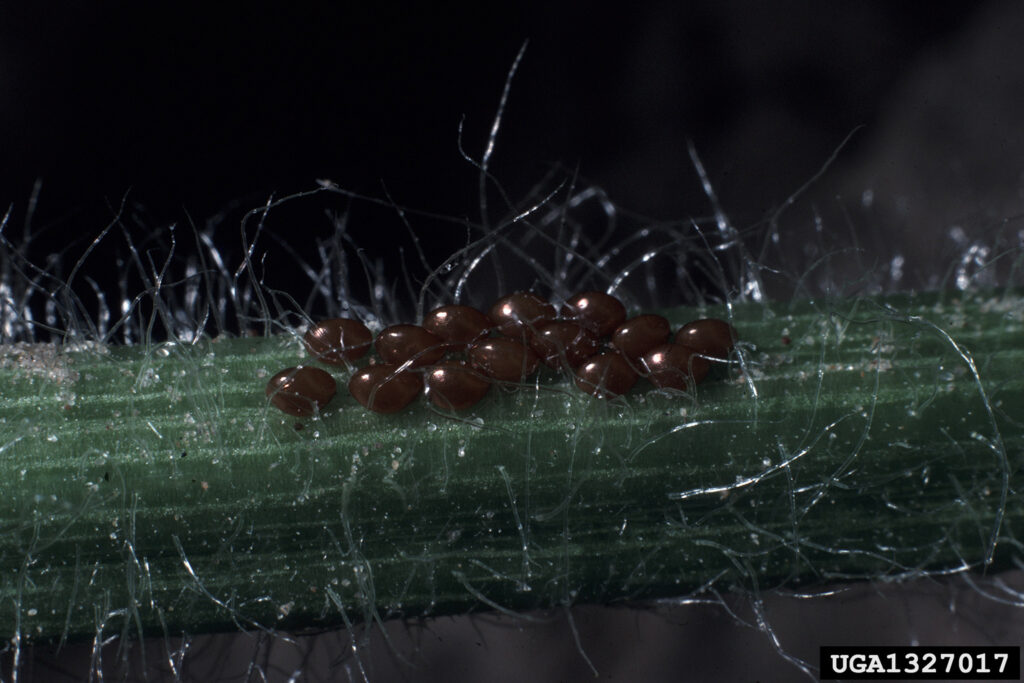
“The squash bug adults overwinter in the woodlands, tree lines and things like that, and then when it becomes warm enough consistently, then they’ll emerge out of that area as an adult,” Hochmuth said. “The first thing that they’re looking to do is mate and lay eggs. That normally means we’re going to see the populations moving in around the perimeter of the field, not all the way across the field.
“If we can catch them early, you might be able to just spray the perimeter of the field and do everything that you need to do.”
Insect’s Threat to Watermelons
Hochmuth said in his weekly email that growers can use pyrethroids to kill squash bugs easy when the insecticides make contact with the bug. However, it’s not an easy task since the squash bugs feed on the base of watermelon plant stems and hide in the plant hole in the mulch. Hochmuth added that growers should use high spray pressure and volume and spray in the late evening or at night to improve control.
“The squash bug in watermelon, in particular is a relatively new episode. If you went back 10 or 12 years ago, we would rarely be concerned about anything to do with squash bug in watermelons. They have been major problems in cucumbers and squash. But watermelons have not been a preferential host for the squash bug. Something has changed to make it so that now they’re an acceptable host,” Hochmuth said.
“It would seem like a few around the perimeter would not be that much of a concern, but these squash bug populations will build over the next two months, and by the time you get to the end of the season, in some cases you have high numbers of immatures and nymphs of the squash bug. They like at that time to get right at the stem of the fruit.”
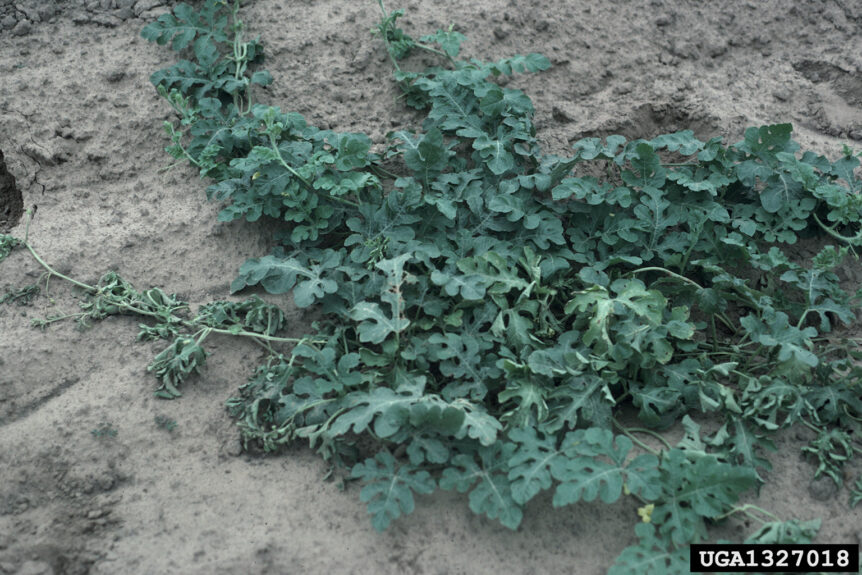
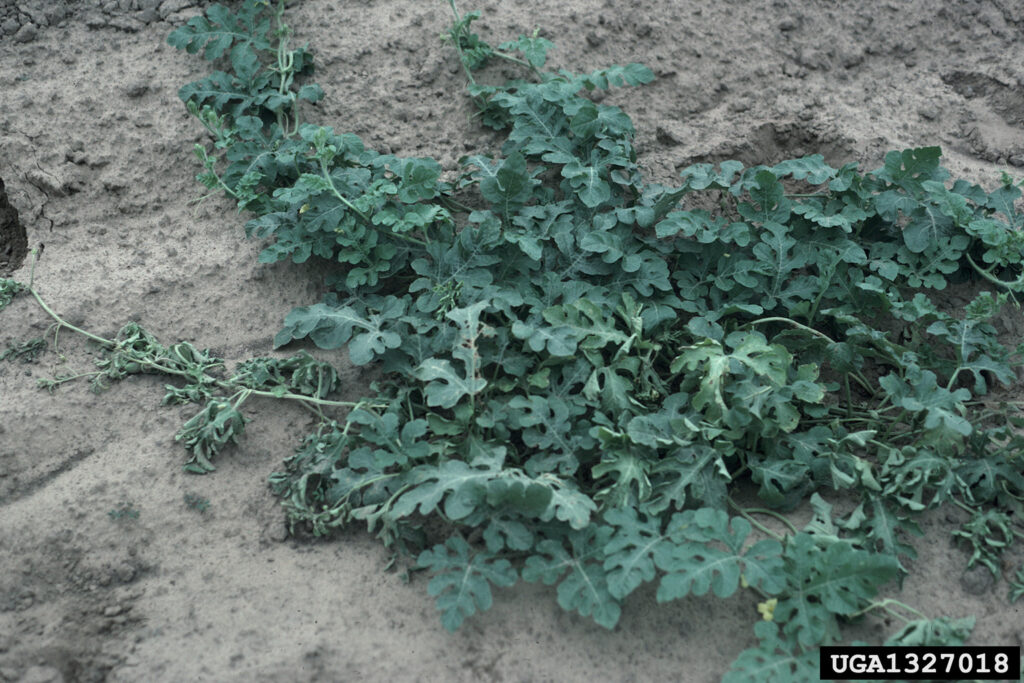
Squash bugs can cause dehydration damage if they build large populations at the base of the plant.