









By Clint Thompson
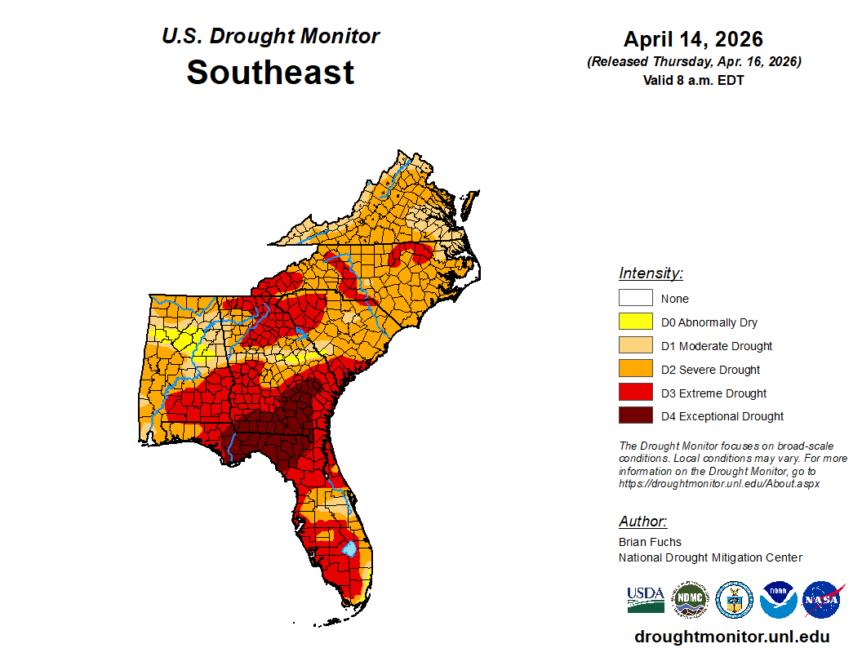
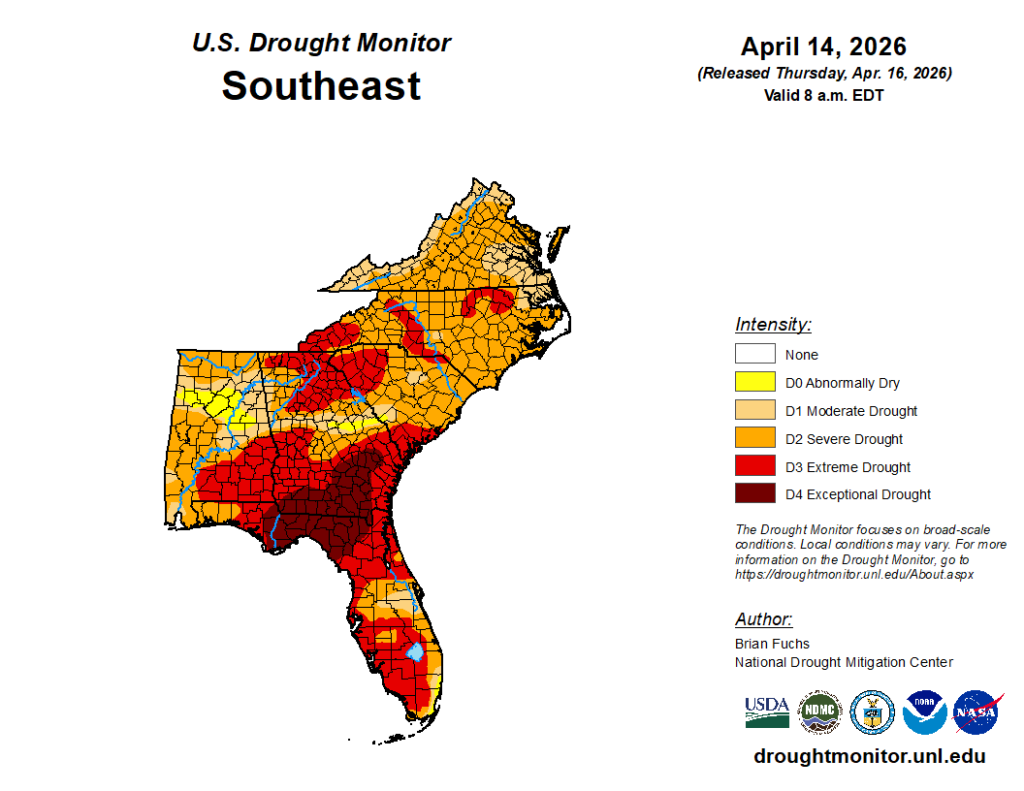
Not to have hurricanes or tropical storms to impact the Southeast last year was good news in that extensive damage was avoided in the region. But it was bad news in that the region missed out on rainfall which has spawned the current drought conditions in Florida, Georgia and Alabama.
“In the summer in Georgia, I think 30% to 40% of our rain can come from tropical systems. They don’t even need to be tropical storms or hurricanes, they could just be tropical lows that bring a lot of moisture in. We didn’t get any of that last year,” said Pam Knox, University of Georgia Extension agricultural climatologist.
“If you look at the timeline of when the rain was occurring, it was pretty wet even still into early August and then it just stopped, as we went into the height of the hurricane season. The number of storms that they got was about the long-term average, but they almost all stayed out to sea. The sub-tropical high was to the east this year so everything turned before it got to land.”
Could It Happen Again?
If the lack of tropical systems was surprising, how about the same scenario happening in back-to-back years? The possibility is there considering the weather pattern that’s in the forecast for this summer.
“They’re expecting that the La Niña that we’re in right now is going to transition into neutral conditions within the next month. It’s already showing up in the ocean circulation and just hasn’t quite linked to the atmosphere yet. Most of the models are indicating we’re going to swing into El Niño by mid-summer,” Knox said. “Usually when we have an El Niño, the jet stream suppresses any development of tropical storms. We have fewer tropical storms in an El Niño year than we would in a neutral or a La Niña year.
“So that means fewer storms and less likelihood of getting rainfall from one. Obviously, it depends where they go. It only takes one if it hits the right place. Just because it’s fewer storms, we could still see some. I think the last time we didn’t have any tropical storms in Georgia prior to last year was 2015 or something like that.
“Usually, we get one or two. We just didn’t last year. That really lit the fire under the drought.”