









By Clint Thompson
Weed management is a vital part of specialty crop production every year for growers in the Southeast. No matter how control strategies evolve with artificial intelligence (AI), current tactics will still be implemented to some degree, according to Lynn Sosnoskie, assistant professor with Cornell University.
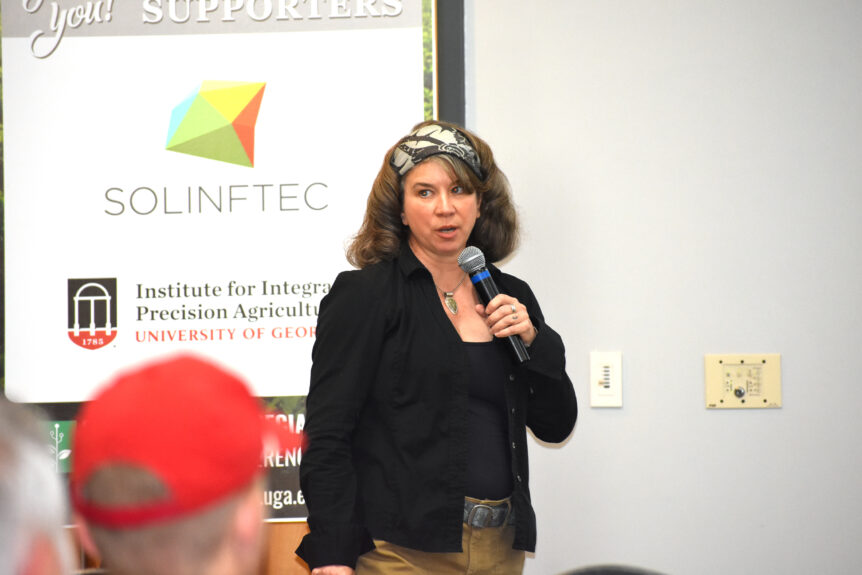
She talked about smart sprayers, lasers and AI during the Southeastern Specialty Crop Technology Conference at the University of Georgia Tifton Campus Conference Center in Tifton, Georgia, last week.
“I think the future is going to be more diverse and more dynamic. I think the future is going to contain a lot of the tools, a lot of the programs and the products that we’re using now,” Sosnoskie said. “I still think we’ll see cultivation. We’re still going to see herbicide use. We’re going to see cover crops. But I think we’re going to see new technology start to fill a role in our production environments as well.
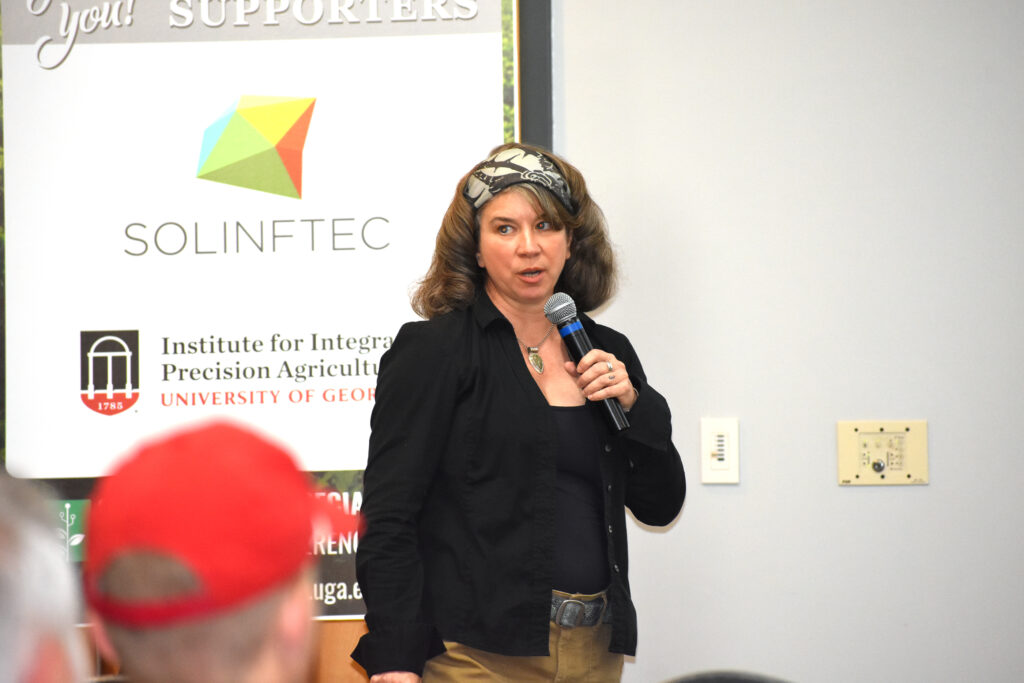
“So, thinking about precision sprayers, thinking about laser weeders, thinking about electrical weeders, thinking about robotic tools; our goal as weed scientists at the university level is to determine which of those tools work best in our different production environments and how best to integrate them into what we’re doing to make our environments more profitable, more sustainable.”
Importance of Weed Control
Weed control is essential considering its potential impact on the crop’s ability to absorb essential nutrients.
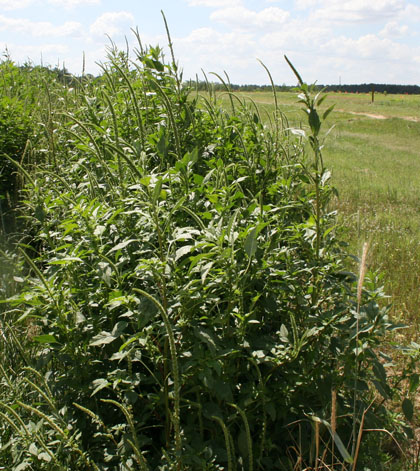
“First and foremost, weeds are the direct competitors with the crop for water, nutrients, and light. If the crop doesn’t have access to those resources, it can’t grow. We can’t produce yields,” Sosnokie said. “But weeds have other impacts on the crops as well. They can be hazards in and of themselves. They can have thorns or spines. They can be poisonous. They can be contaminants of the crop.
“We can have fruits of some weed species contaminate our seed production. We can also have impacts in that just the physical presence of weeds in the field prevent machinery from moving through the field. It can interfere with harvest efficiency. There are a lot of different impacts beyond just direct competition.”