









By Clint Thompson
A prolonged dry period in recent months across the Southeast meant unfavorable weather conditions for bacterial spot disease to flourish in peach orchards. But that doesn’t mean growers should let their guard down with trying to keep the disease from impacting the crop like it did in 2025.
“Yes, drier is much better,” said Phil Brannen, University of Georgia (UGA) Cooperative Extension fruit disease specialist. “Wet conditions, rain or excessive long dew can trigger infections. Fruit tissue is particularly susceptible at shuck split and two to four weeks after that.”
Brannen said peach producers should operate on a strict spraying schedule, every seven to 10 days. However, fungicides aren’t completely effective in a rainy summer, as was seen in 2025.
A Tough 2025
Bacterial spot disease is usually an annual concern for growers in Georgia. It was a major problem in 2025.
“Last year was the worst bacterial spot year that we’ve had in about 20 years,” Brannen said. “In some cultivars, we lost 100% of peach fruit. Across the board, it was a very high percentage of loss.”
The disease was such a problem that Brannen focused much of his talk at this year’s Southeast Regional Fruit and Vegetable Conference in Savannah, Georgia, on bacterial spot. Brannen attributed the disease’s impact to the deluge of rainfall that was persistent throughout the production season.
“Wet weather and timing of the wet weather were critical. I think we missed some critical sprays early in the season, possibly, or in mid-season. The early peaches in particular had a problem,” Brannen said. “Then we had a period where we didn’t have a crop. And then later in the season, as the rain continued, some of the other cultivars had some more issues as well. It was a pretty significant year for bacterial spot with just a tremendous amount of rain.”
Impacts to Trees and Fruit
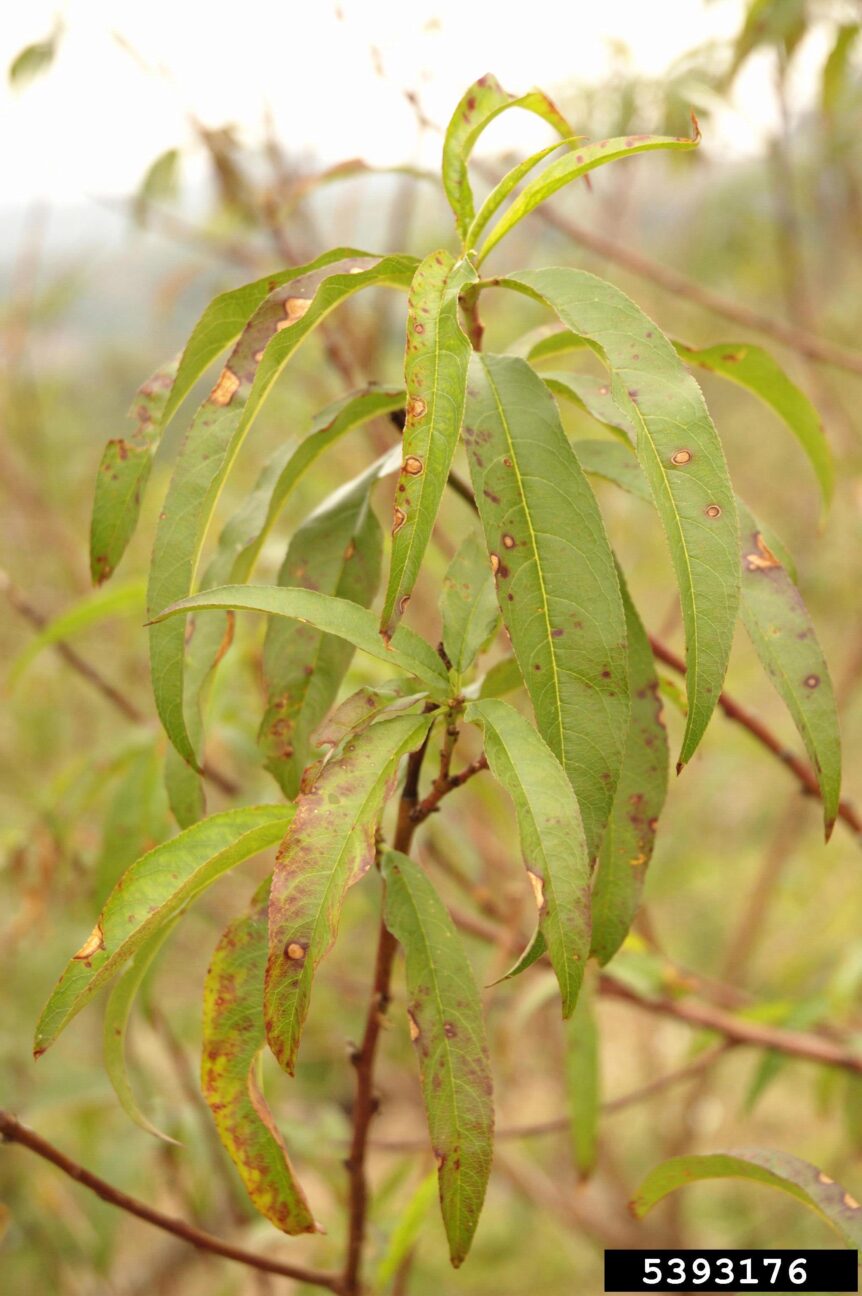
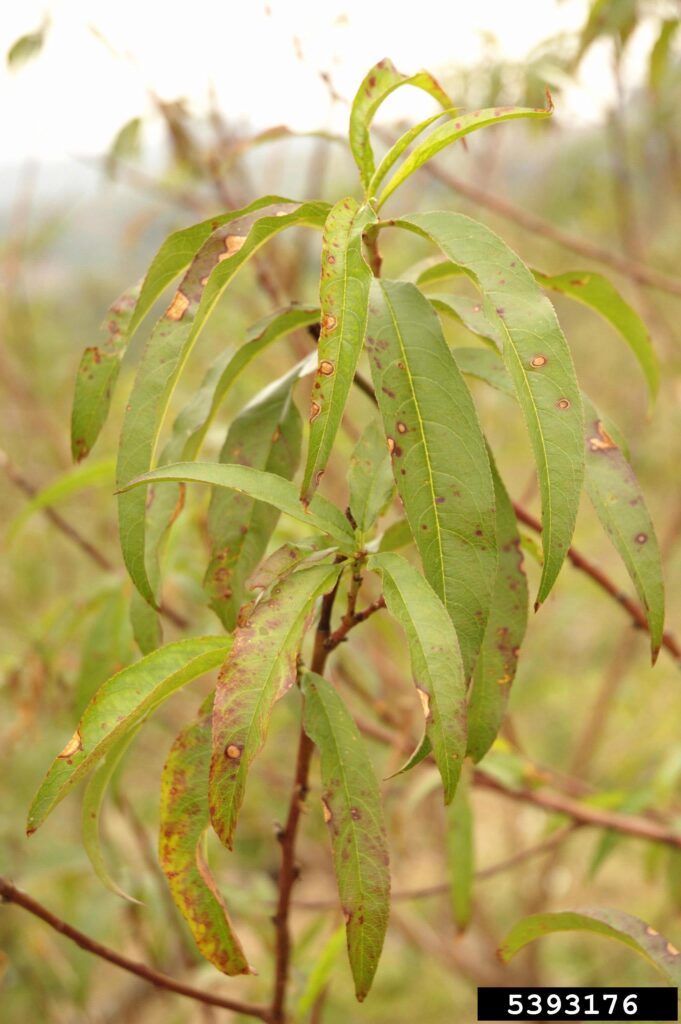
Bacterial spot is a sporadic leaf-spot disease that can cause defoliation in certain cultivars. Spots can also appear on the fruit, causing damage and leaving fruit unmarketable.
According to Brannen, defoliation leads to smaller fruit, which causes stress on the trees.
“Trees probably won’t live as long,” he said. “If you get the disease on the fruit, just one or two spots will downgrade it. But if you get enough like what I was showing (at Southeast Regional), you can’t even sell that fruit. Nobody’s going to buy it.”
Product Rotation
Growers start applying fungicides in the dormant period to protect against bacterial spot before bloom. They will usually apply a large rate of copper before coming back with an antibiotic like oxytetracycline (OTC) or copper after bloom throughout the season.
“Even before bloom, you’ll put out a large rate of copper, skip bloom and then keep coming back with either an antibiotic or copper after bloom all the way through the season pretty much,” Brannen said.
He encourages growers to alternate copper and OTC, especially since there have not been recorded instances of resistance development in either management tool.
“You can have bacterial resistance on OTC or copper, but in Georgia, we don’t have it. If you don’t have resistance, alternation is the way to go,” Brannen said. “You’re hitting the bacteria from two different directions, so resistance is going to be less likely to develop. That’s the ideal scenario.”