









Watermelon growers in the Suwanee Valley Region of North Florida must be mindful of potential pathogens that could spark devastating diseases and prematurely end production seasons.
Bob Hochmuth, University of Florida Institute of Food and Agricultural Sciences (UF/IFAS) Regional Specialized Extension agent in Live Oak, Florida, noted several disease pathogens in his weekly email. It is important to monitor your crop with rains becoming more frequent in the region.

Powdery mildew gets its name from the white and powdery appearance of the mycelium. By the time that growers and scouts identify powdery mildew, infection is well under way. Initial symptoms appear as circular yellow areas in the leaves which then develop a whitish growth. Selective fungicides like Vivando, Rhyme or Quintec are recommended.
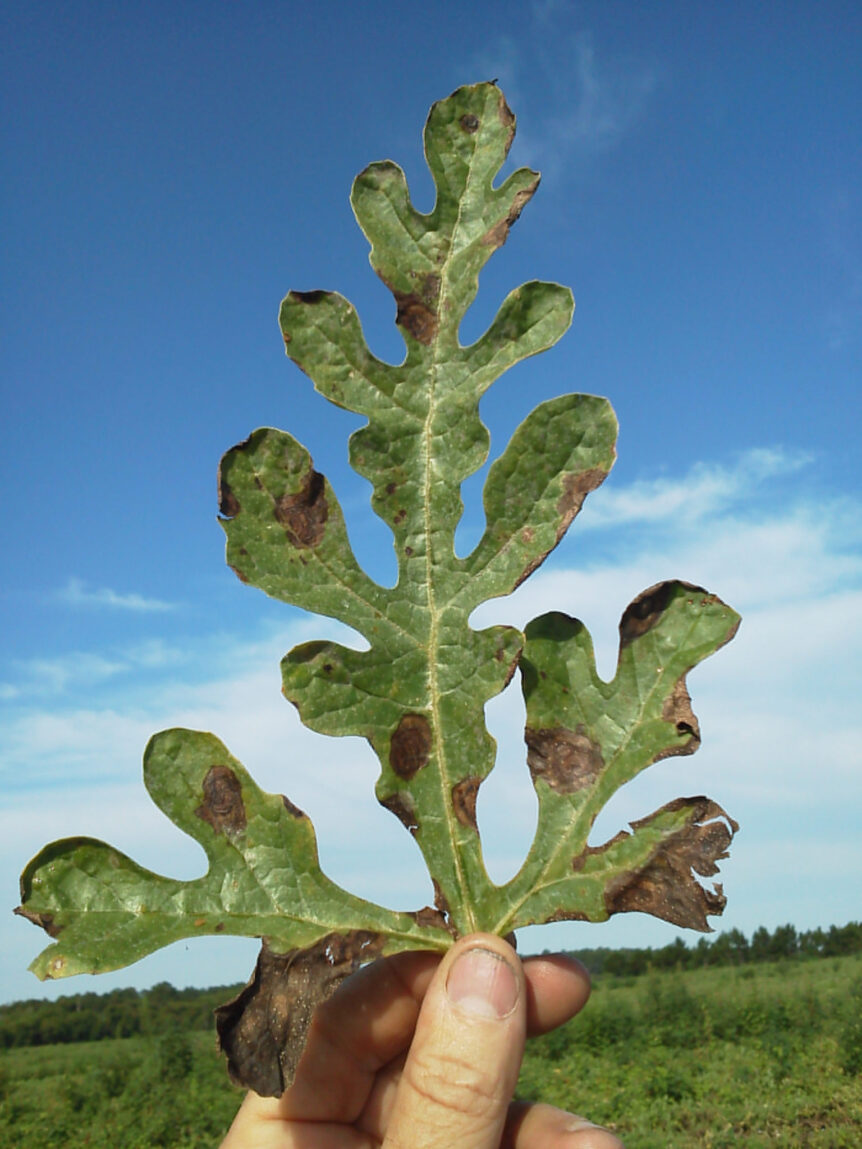
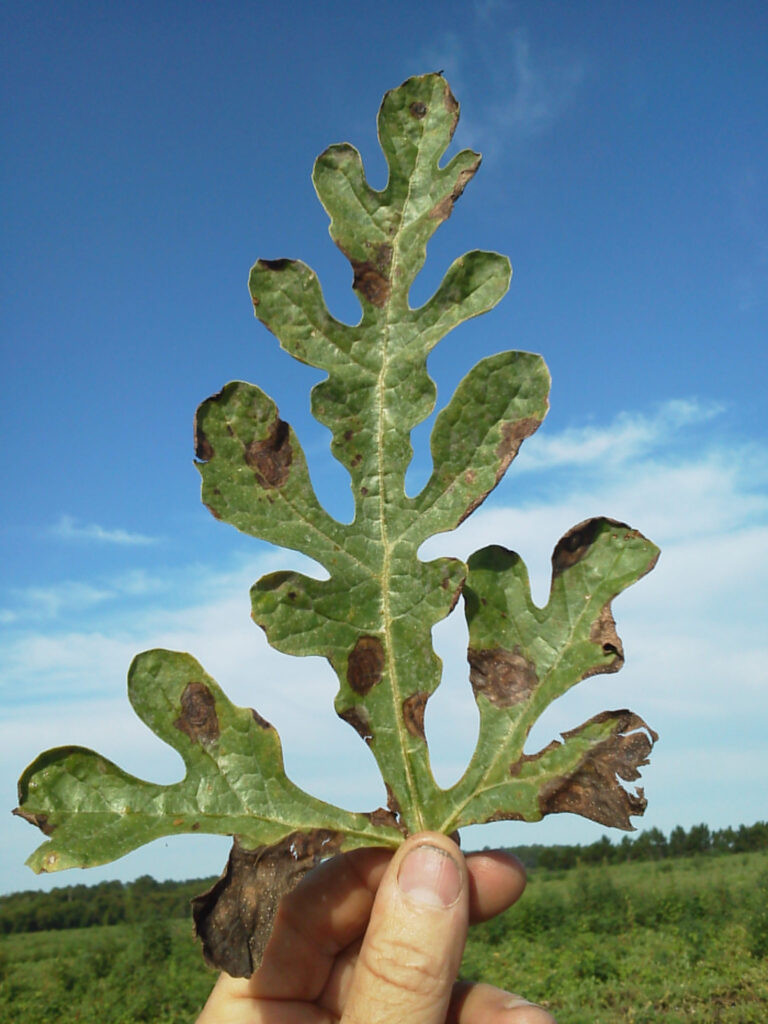
Gummy stem blight infections are beginning to spread now that the vine coverage is full. It had been quiet amid the prolonged dry conditions that persisted for most of the growing season. Gummy stem blight causes lesions on leaves and stems and leads to defoliation. The disease favors warm, wet conditions.
Alternaria spores have been observed in samples affected by powdery mildew and gummy stem blight. An application of Inspire Super or Aprovia Top should suppress gummy stem blight and Alternaria diseases.
Scouting will be a critical management strategy for growers who must make timely management decisions, especially as environmental conditions become more favorable for disease development.