









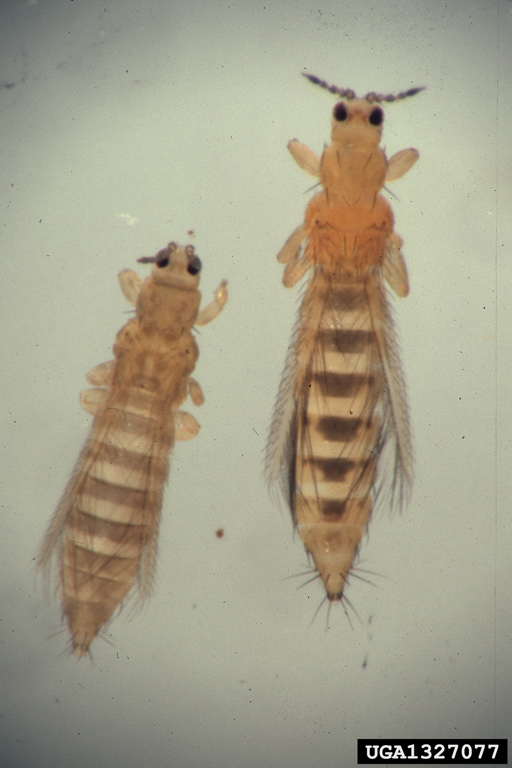
Thrips Update in South Florida
Thrips populations are building across the South Florida region, according to the most recent release of the University of Florida Institute of Food and Agricultural Sciences (UF/IFAS) South Florida Pest and Disease Hotline.
In Southwest Florida, scout reports indicate that thrips population levels are increasing. There is moderate pressure overall with localized hotspots.
Along the east coast, scouts are reporting population levels that range from low to high depending on the field location. Thrips parvispinus pressure appears to be increasing in peppers in Martin and St. Lucie counties, as the pepper production winds down in the southern part of the state and moves northward.
According to the University of Florida Institute of Food and Agricultural Sciences, Thrips parvispinus, which was originally discovered in Florida in 2020, is a pest that can damage vegetable, ornamental and fruit crops.
In the Homestead area, heavy thrips pressure is continuing in beans, especially the Asian bean thrips species.
Management Strategies
UF/IFAS reminds growers that cultural practices can be effective in reducing thrips. Reflective plastic mulch on field margins can help repel the virus carrying thrips. Also, planting a non-host crop can help reduce flower thrips infestation on vegetable crops.
Do not use insecticides unless you are sure about the pest status of the thrips on the crop. Thrips identification by an Extension agent, scout or researcher is key, as some thrips can be harmless or even beneficial.
Scout regularly to confirm the infestation level. Softer products are recommended if populations are below threshold levels.