










By Clint Thompson
The cotton jassid’s lingering absence in fields across South Georgia is a win for vegetable producers in the middle of this year’s spring season.
Stormy Sparks, University of Georgia Cooperative Extension vegetable entomologist, said the insect hasn’t been detected since about February, though researchers and Extension agents have been closely monitoring traps set up across the region.

“They were catching them where they put out those yellow sticky cards for whiteflies, the cotton group that does that. They were catching them on those sticky cards. It’s a little bitty card and there’s like one for five miles. I don’t think they’ve caught any since February, sometime,” Sparks said. “We’ve got county agents running pepper weevil traps all winter and they were catching them on those.
“Phillip’s (Roberts) got one student worker, and his job is to try to find the jassid. He hadn’t found any. We’re looking all over the place. If they’re here, the populations are low enough that they’re not detectable. But this time last year we didn’t know they were in Georgia.”
Where is the Jassid?
Sparks theorizes why the jassid has yet to make an appearance in fields this season.
“You would hope the winter killed them, but we had a more severe winter last year than we did this year and they obviously came through. It may be that they just get knocked back far enough during the winter that it takes them a long time to build up,” Sparks said. “There’s a potential that they could end up being like whitefly; not an issue in the spring but it could become a problem in the fall.”
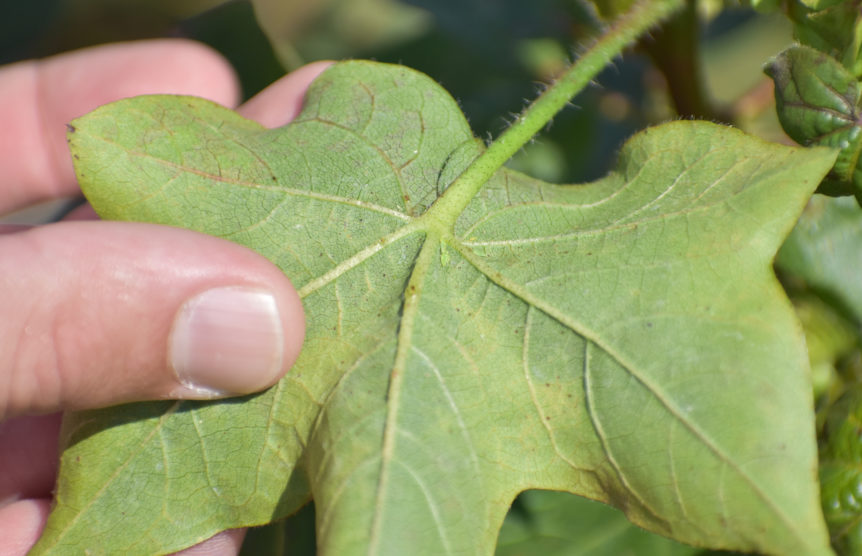
The cotton jassid impacted cotton and certain vegetable crops like okra and eggplant last year. Its emergence this year is important, because if it is not detected during the spring, then growers won’t have to worry about the insect until they start spraying for whiteflies.
Growers would prefer not to have to deal with the jassid until they manage the whitefly because those insecticide sprays would kill the jassid as well.
“You would probably adjust your spray schedule somewhat but yeah a lot of the stuff we spray for whitefly controls jassid,” Sparks said.
Growers usually do not apply insecticides for whiteflies during the spring and summer. If growers have to manage the jassid year-round, it could lead to resistance development in whiteflies.