









By Clint Thompson
Tomato research at the University of Georgia Tifton Campus should help growers determine if crop production in hotter parts of the year is a feasible alternative.
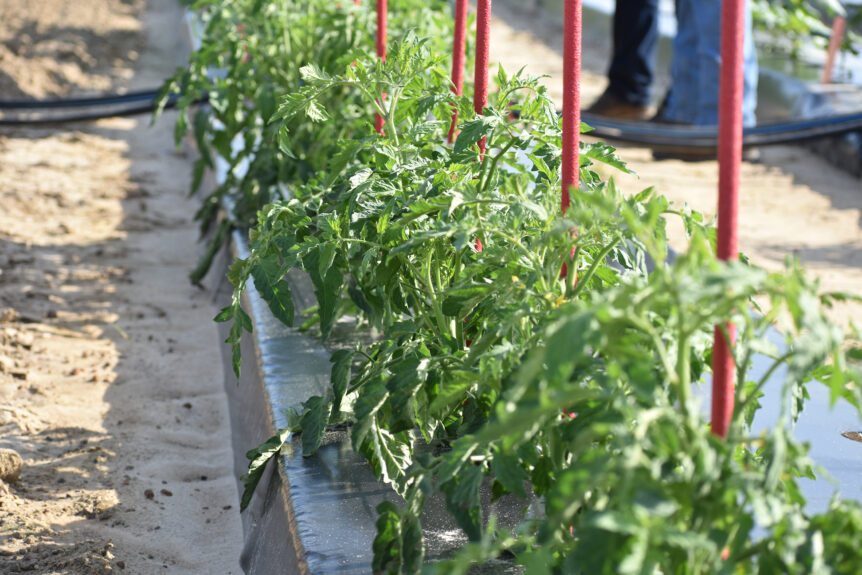
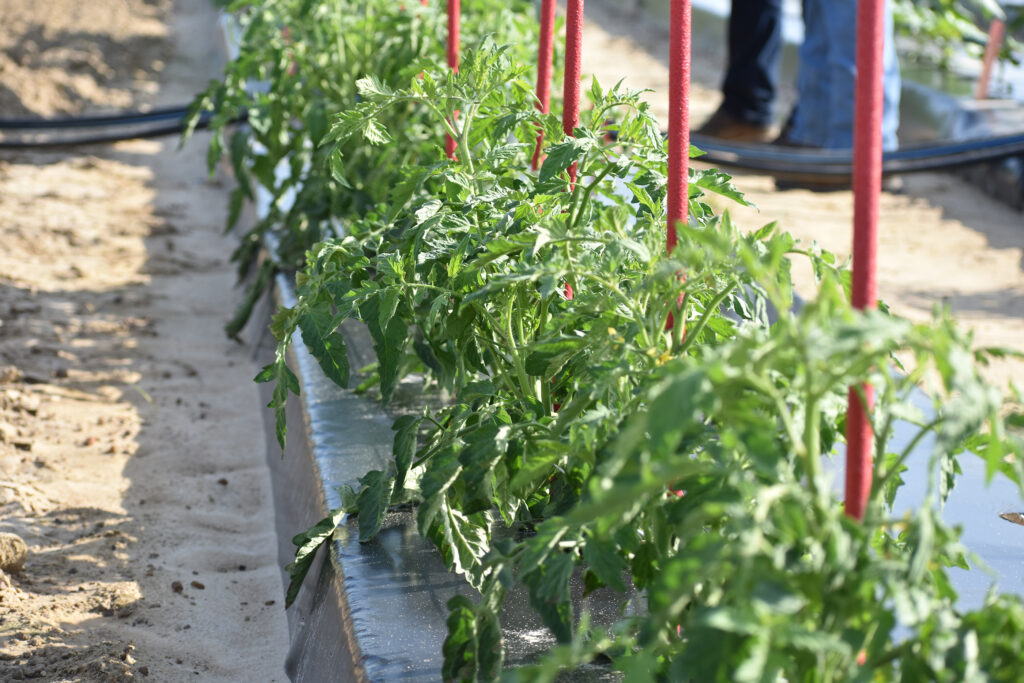
Ted McAvoy, University of Georgia Extension vegetable specialist, is studying the heat effects on tomatoes that are planted two weeks to a month later than they normally would.
“We’re not planting July 1, but we’re planting the end of April instead of the end of March,” said McAvoy.
It is a multi-state research project, led by scientists at Texas A&M University. The potential impact would be Southeast growers producing a tomato crop at times when production is limited and the market is quiet.

“So, like Florida, you could start earlier in the fall, and it should extend seasons by at least, in Georgia, by two weeks to a month,” McAvoy said. “Then we’ll have fruit, hopefully, when no one else does.
“There are Texas breeders, Florida, North Carolina State and Oregon, and they’re sending stuff to different parts of the world. Everyone’s planting in their heat slot.”
Natural Challenge
Tomato production is a natural challenge during adverse weather conditions, specifically when temperatures get extraordinarily high.
“We have problems with pollination when it’s super hot,” McAvoy said. “Typically, we struggle when nighttime temperatures are above 70 degrees (Fahrenheit) or daytime temperatures are above 90 degrees.”
The tomatoes are also more likely to encounter increased disease pressure, whether it is from tomato spotted wilt virus, transmitted by thrips; or tomato yellow leaf curl virus, transmitted by whiteflies.
“I look for disease resistance and yield, but essentially people have looked at stomatal conductance. You know, is it more efficiently using water? People are looking at pollen viability,” McAvoy said. “So, they think they have some material that should perform well in the heat. And we’re validating it in the field.”