









By Clint Thompson
Downy mildew’s confirmation in North Florida watermelons was later than normal this year. But it still could impact certain watermelon fields in the Suwanee Valley Region.
Bob Hochmuth, UF/IFAS Regional Specialized Extension agent in Live Oak, Florida, talks more about the disease in an interview with AgNet Media.

“Some (farmers) are, you know, maybe one harvest away from being totally done, and others are basically just getting started here, maybe across (the fields) once or twice,” Hochmuth said. “So the fields that are nearly done, there probably is not much of a risk and there’s not much of a need for them to do much with it if they don’t see it. But in the younger fields that still have a couple of weeks to go, I think the danger with downy is significant and they would need to make an application.”
Disease Impact
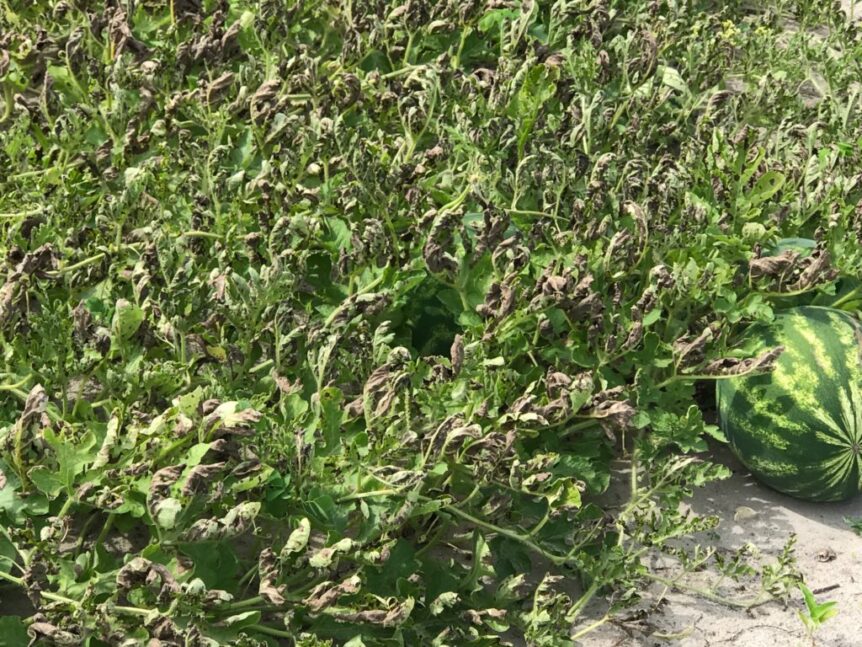
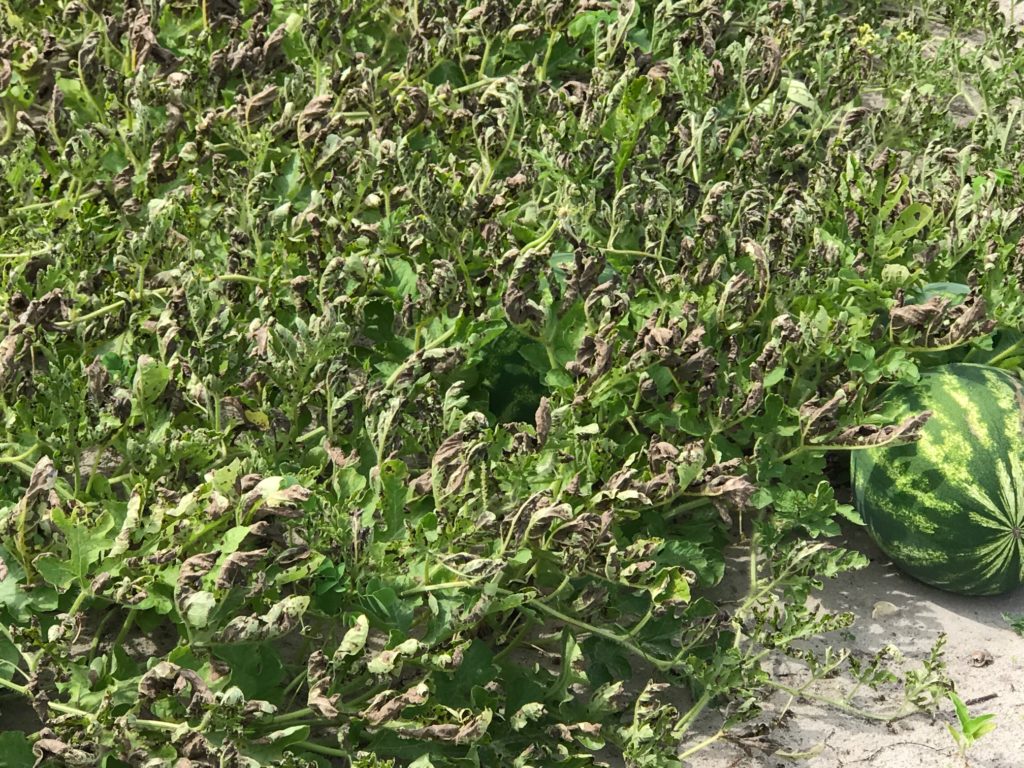
Downy mildew can degrade or destroy the plant’s foliage very rapidly. It thrives in a wet, humid environment, and the fungi need the water on plant tissue to germinate and infect the plant.
Under favorable conditions, severe foliar infection can occur and cause the leaves to curl and eventually die. If the leaves are damaged, they cannot protect and shade the fruit. As a result, the watermelons can develop blisters or sunscald.
“It’s not so much a reduction in yield, it’s the fact that when it hits, the name ‘wildfire,’ that’s the term that everybody uses for downy, and that term is well deserved. So just in a matter of a few days, it can walk across the field and basically turn the foliage dead and then that that exposes the watermelons that are in the field. They’re now more prone to being sunburned and then and then possibly not harvested,” Hochmuth said.
Hochmuth recommends that growers add either Raman or Orondis Ultra to their spray tanks to protect against downy mildew.