









By Clint Thompson
San Jose Scale’s impact in Georgia peaches this year has been noticeably not as bad compared to recent years.
“No, it’s not bad this year,. I need to knock on wood, but we haven’t been seeing a huge pressure,” said Brett Blaauw, assistant professor at the University of Georgia (UGA) College of Agricultural and Environmental Sciences. “This year it’s been low levels, and so, hopefully, it can stay that way for the rest of the season because we’re only about halfway through.”
Blaauw could not pinpoint the exact reason why the scale’s been reduced this year. One could be the prolonged drought that impacted the region, from last fall to mid-spring.
“I think part of it might just be the drought. Now it’s been really dry, the trees have probably been stressing, and since they’re feeding on the sap of the tree, if the tree’s not doing well, they’re probably not doing well either,” Blaauw said. “That’d be my guess is the drought, but I don’t really have any clear evidence to say otherwise; that’s just a hunch.”
The scale’s impact on the peach crop could increase since rains have picked up across the region.
“If (drought was the reason) then I would expect the scale to start doing better, which means doing worse for the growers. So we’ll keep an eye on it for sure, but hopefully, knock on wood, it stays low pressure,” Blaauw noted.
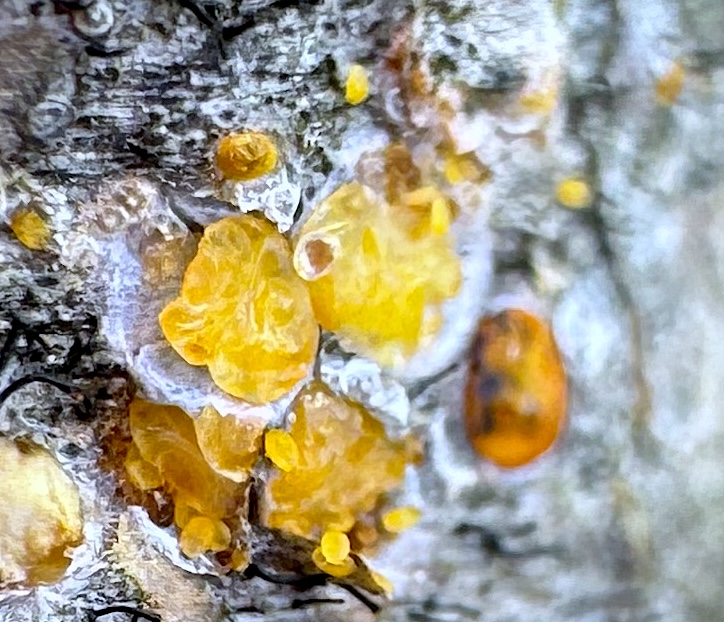
San Jose scale is a tiny insect that has a waxy coating that covers and protects the whole body of the insect. It protects them from the environment and from other insects that would eat them.