









By Clint Thompson
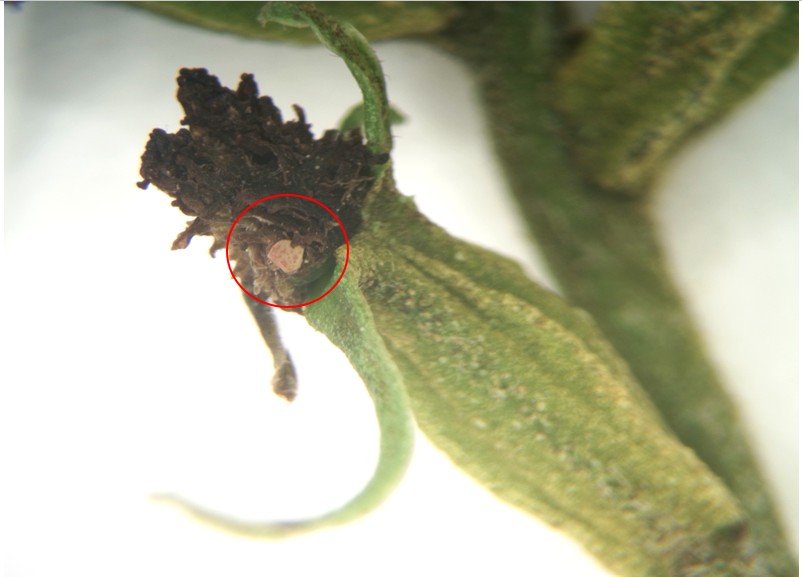
The pecan nut casebearer (PNC) has had minimal impact on pecan trees in the Southeast. That’s good news for farmers hoping to make a strong crop this season.
Apurba Barman, University of Georgia (UGA) Extension pecan entomologist, said the observation about PNC was based off a survey conducted in counties throughout Georgia.
“We just finished some survey looking at the damage by pecan nut case barrier, the PNC. And we found that this year the population has been really low, and we have not seen much damage,” Barman said. “I would say it’s very minimal, maybe in single digits. Even if somebody did not spray, you know, they did not experience a high nut loss or nut damage from PNC.”
Barman said the insect has peak activity; one is in late April, and another flight is in June. The April flight can be more damaging, since the nuts are small.
“The first generation is the most damaging because it can drop the small nutlets. But fortunately, we did not have heavy population of PNC this year,” Barman said. “It may be because of the really dry period early on and that might have impacted the populations. Basically, any population coming out in the spring, they need good moisture to emerge.
“For example, you know, last year, if we have seen 80 to 100 moths, this year it’s just 10 to 15. So that’s kind of the difference what we have seen on the track capture. And that has also kind of translated into what we have seen in terms of the nut damage.
“Everywhere we have seen across the board, the damage is very minimal, which is good. But also some growers, they sprayed and whatever they sprayed, I think that worked well. But we did not have enough insect pressure to start with. That’s the observation.”