









Increased rainfall across the cold-hardy citrus region is a sight for sore eyes. Still, citrus growers in South Georgia, North Florida and South Alabama must stay on top of their trees’ water needs to help ensure a viable crop this season.
Mary Sutton, University of Georgia (UGA) assistant professor and citrus Extension specialist, spoke on this subject at the recent Georgia-Florida Irrigation Expo last month.
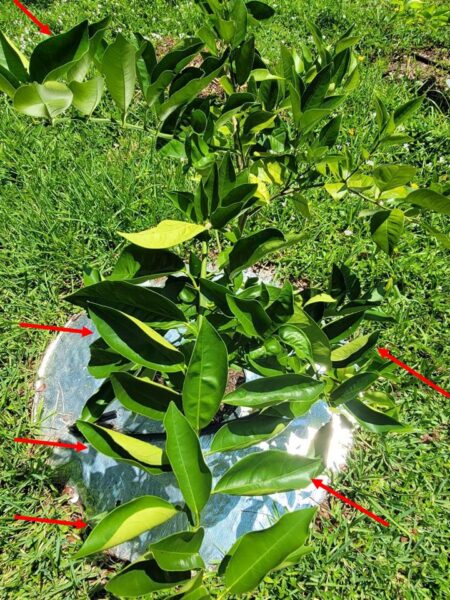
“I would still say we’re on an as-needed basis. The rainfall has been all over the place it seems like. We do want to make sure trees are still getting water,” Sutton said. “I know a lot of people rely on soil moisture sensors or irrigation apps, so be sure to stay on top of whatever schedule you’ve developed. If we start seeing any cupping or curling of leaves, that is a good sign that trees are drought-stressed, and we need to up our game.”
According to the UGA Automated Weather Network, Tifton, Georgia, received 4.62 inches of rainfall from June 1 to June 21, compared to 2.69 inches last year. During that same time period this year, Camilla, Georgia, received 4.75 inches compared to 3.31 inches in 2025. The increased rains have led to a significant reduction in drought conditions, according to the U.S. Drought Monitor, though the region is still feeling the effects of a prolonged dry spell from last fall until spring.
“If you look at the drought monitor, the drought is definitely coming down across the South Georgia/ North Florida area, but it is still pretty dry,” Sutton said. “The hard part with citrus is we’ve got so many different tree ages and so many different varieties, it’s hard to put a number on how much water everything needs.”
By Clint Thompson