









By Clint Thompson
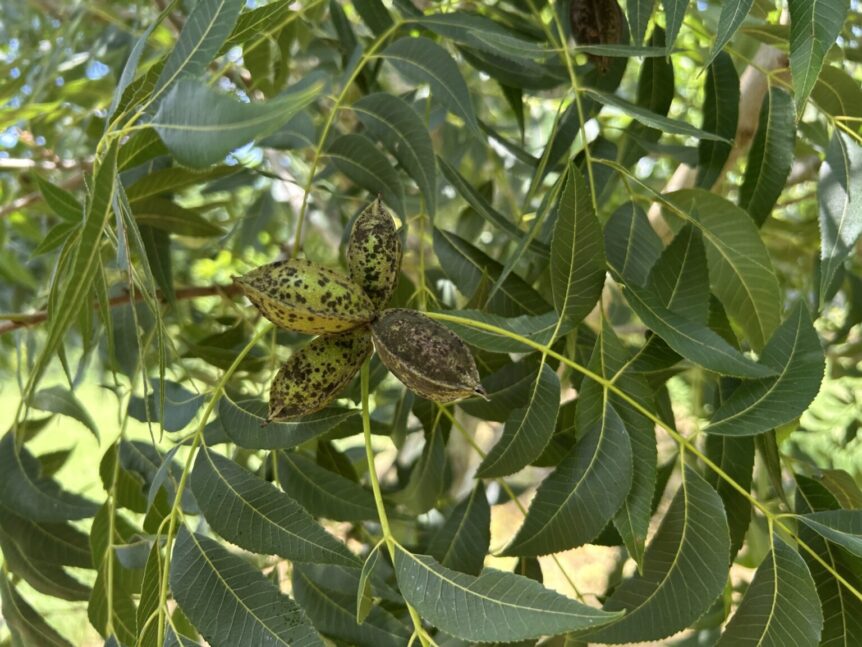
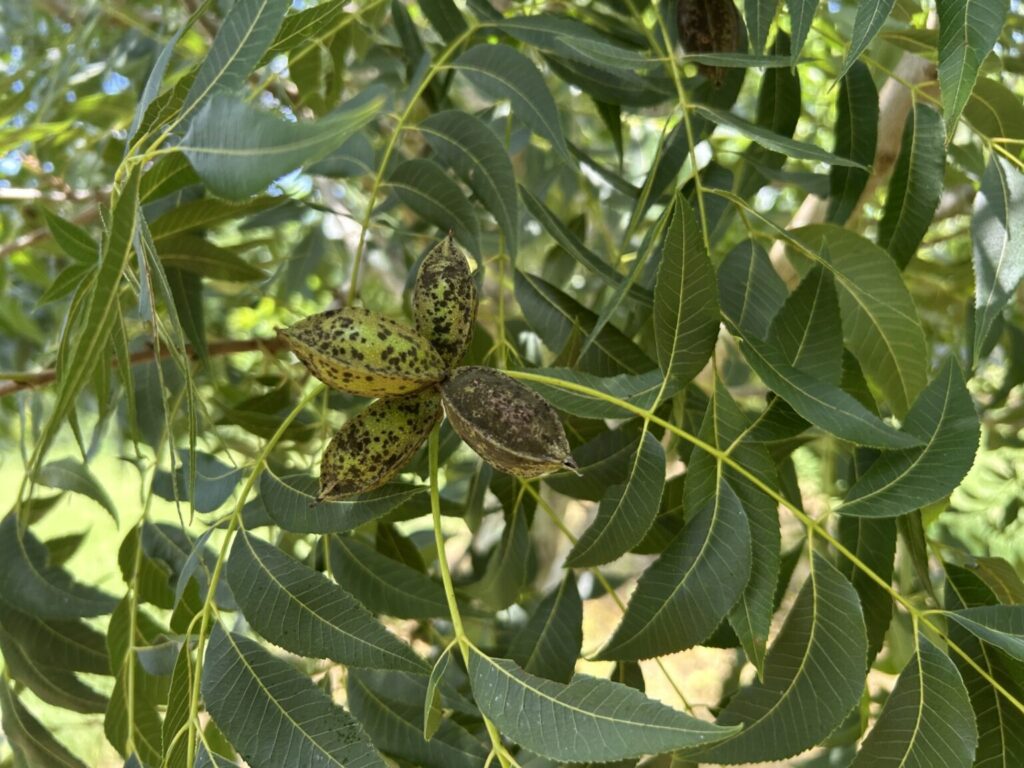
Scab disease may be becoming harder to control on the Pawnee pecan variety. That’s a concern shared by Lenny Wells, University of Georgia (UGA) Extension pecan specialist.

Wells noted in the UGA Pecan Blog that his team saw more scab on Pawnee last year than what is observed in Desirables, a notoriously scab susceptible variety.
“I had hoped this was a fluke and that we wouldn’t continue to see this pattern,” Wells wrote. “But we are seeing it again. In the back of my mind I have been concerned for several years now that we would see this heavier scab pattern develop on Pawnee because we had so many acres of Pawnee trees planted between about 2012 and 2022.”
Pawnee pecans have brought a higher price than other nuts because of its early harvest date. But any time a variety is planted that substantially, it is expected that scab will only worsen.
“Given the high market price of Pawnee, growers could afford to spray Pawnee 10 to 12 times to make them. Pawnee can take more scab than a lot of varieties and still produce a good quality nut,” Wells noted. “Still, there is a limit to everything.”
Scab Disease Background
Scab is a fungal disease that infects the leaves or nuts of pecan trees. If scab impacts the nut early enough in the production season, it can cause the nut to blacken and fall from the tree. It excels on trees that have received moisture. Some growers must make at least 10 fungicide applications during an average year to manage the disease.
Wells cautioned growers that Pawnee is “scabbing to an alarming level, while Desirable remains largely clean under the same spray program.”
“The grower orchards I have seen this pattern in are good growers, spraying top-notch programs at appropriate intervals, and Pawnee is still scabbing,” Wells said. “One grower has even told me he is considering the option of removing his Pawnee because he just can’t control the scab anymore.”
Wells advises producers to make the environment in growing Pawnee optimal for managing scab. Growers should increase air flow, push back wooded edges, hedge the orchard if needed; avoid planting in a tight space and put in a location that has good air flow.
Pawnee shells will harden by early August, meaning an additional 2 to 3 more sprays is required. Don’t go longer than 10 days between sprays on Pawnee, especially if more scab is present.