









By Clint Thompson
Harvest season has come and gone for most watermelon growers in the Southeast. While producers are done producing this year’s crop, they are not done with its management.
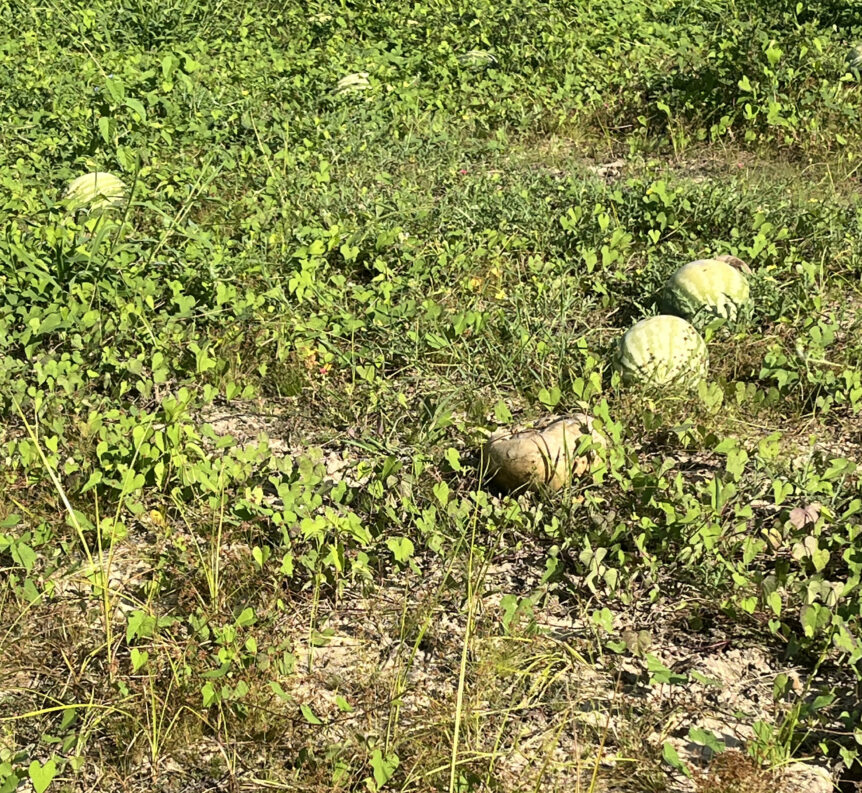
Growers are encouraged to disk any unwanted melons in the field once the season has ended, according to Tim Coolong, associate professor in the University of Georgia College of Agricultural and Environmental Sciences.
“Ideally, I understand if you’ve got 300 acres of watermelons and you’ve got a bunch of other stuff going on, these things take time to do, but in an ideal world, we would get that field turned in,” Coolong said. “If that plastic has to come out, yank that plastic out and disk up those old melons and those old vines so they can start breaking down in the soil.”
Sanitation is an important management tactic. If producers clean up their fields promptly after the last harvest, it will reduce feeding damage and potential viruses associated with whiteflies.
Whitefly infestations are significant because of their potential impact throughout the year. They typically migrate from winter vegetables to spring vegetables to agronomic crops, like cotton, to fall vegetables and back to winter vegetables. The buildup of whiteflies is concerning since their feeding injuries in vegetables can lead to virus transmission, including cucurbit leaf crumple virus, cucurbit yellow stunting disorder virus, cucurbit chlorotic yellow virus, squash vein yellowing virus and tomato yellow leaf curl virus.
“A lot of rainfall will help reduce those populations. Right now, we have a lot of cotton in the field, and they’re going to be on that as well. In the winter time, I think about kale and stuff like that, that stuff that’s left out there might have a lot of whiteflies on it, and in the spring, they just migrate to the next crop. Similar things can happen with melons,” Coolong said.
Whitefly populations are especially concerning, since they could impact fall vegetable crops.
“Our early fall vegetables in particular, the squash and snap beans, if whitefly populations are high, those are the most affected crops,” Coolong said.