









By Clint Thompson
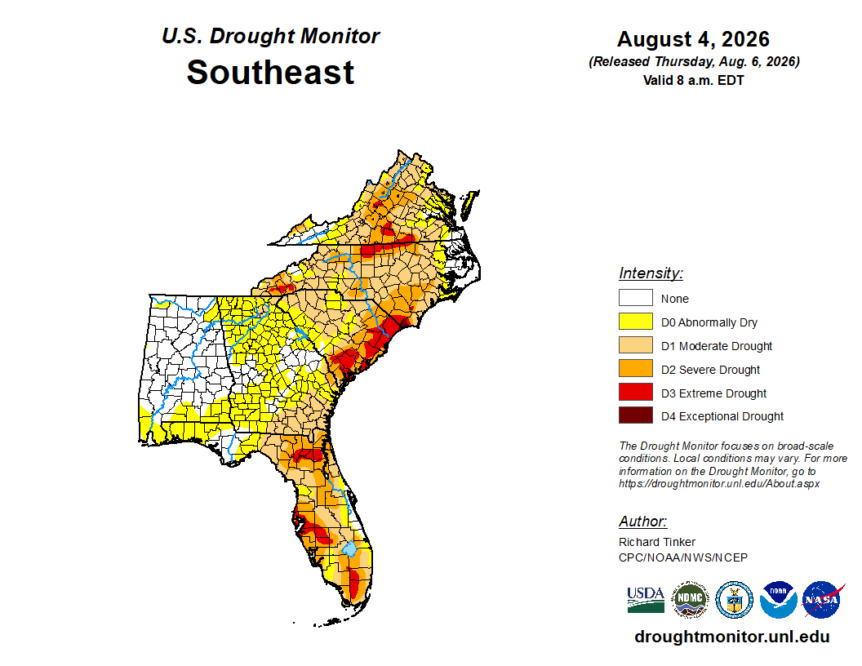
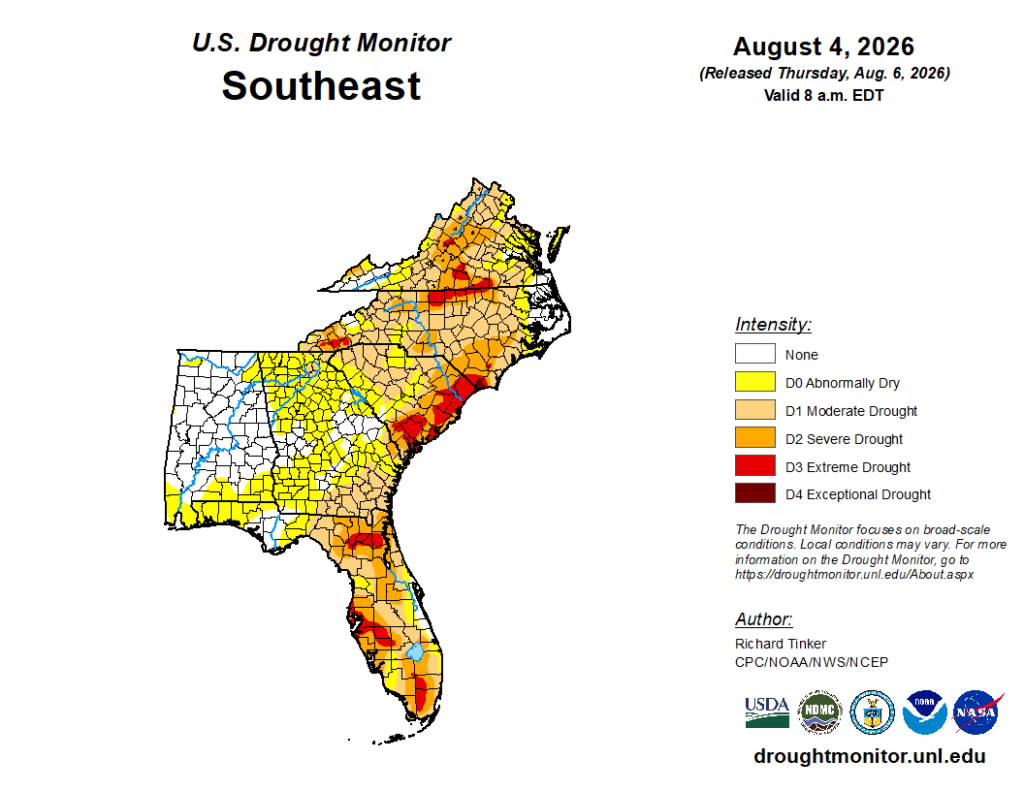
The August 6 release of the U.S. Drought Monitor showed updated drought conditions across the Southeast, including Florida, Georgia and Alabama.
Florida
Extreme drought continues to be observed in various areas in Florida. One is located in the northern part of the state in all or parts of Gilchrist, Suwanee, Columbia, Union, Bradford, Clay, Putnam and Alachua counties. Another area is located along the west coast in parts of Pasco, Pinellas, Hillsborough, Polk, Hardee, Highlands, DeSoto and Manatee counties. The last extreme drought area is observed in the southeastern part of the state in parts of Miami-Dade, Broward, Palm Beach and Hendry counties.
Severe and moderate drought cover most of North Florida and into the central and southern parts of the state, while abnormally dry conditions are seen in the Florida Panhandle.
Georgia
Moderate drought in Georgia is mostly isolated to the southeastern part of the state. The conditions start in Thomas and Brooks counties, expand eastward to Camden, Glynn and McIntosh counties and northward to Bacon, Appling, Tattnall and Long counties. Severe drought is observed in a couple of counties along the eastern border, in Chatham, Effingham and Screven counties.
Moderate drought in North Georgia starts in Hall, Forsyth, Dawson, Lumpkin and White counties, and expands northeastward to Rabun County and also includes the northern areas of Towns and Union counties. Abnormally dry conditions are seen in most of North Georgia and throughout parts of middle and Southwest Georgia.
Alabama
Alabama remains mostly drought free, though abnormally dry conditions cover most of the southern parts of the state. They include all or parts of Houston, Henry, Barbour, Dale, Coffee, Geneva, Covington, Butler, Conecuh, Escambia, Baldwin, Mobile and Washington counties. Abnormal conditions are also seen in a couple of areas in North Alabama. One is in the northeastern part of the state in Cherokee, Dekalb and Jackson counties; and the other is in Northwest Alabama in Lawrence, Colbert and Lauderdale counties.