









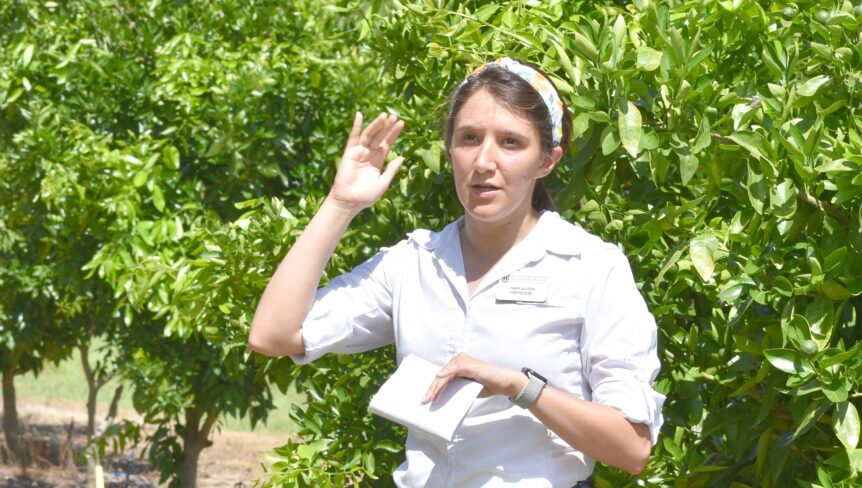
Fertilizer recommendations for citrus are still a work in progress for University of Georgia (UGA) researchers, including Mary Sutton, UGA assistant professor and citrus Extension specialist. She discussed this topic at the recent Southeast Georgia Citrus Update in Lyons.
South Georgia citrus production is still in its early stage. Fertilizer recommendations are needed for the industry’s long-term sustainability.
“We’re hoping to figure out the optimal rates for here in Georgia. We rely a lot on California, and Florida — other places that grow citrus — for recommendations,” Sutton said. “But they don’t have our soil types. They don’t have our weather conditions, and they don’t have our types of citrus.
“We’re just trying to figure out if what we’re doing is working. Do we need to cut back? Do we need to increase? What rate is going to give us the best quality fruit without overdoing the fertilizer?”
Sutton believes that growers are currently overfertilizing their trees.
“A lot of what we’re going off of is based out of Florida. They have a much sandier soil than we do. They get a lot more runoff and leaching than we do,” Sutton explained. “They put out a lot more, and plus they have greening (disease). It’s a very different ballgame.
“But with a lot of our loamier, clayer soils, the fertilizer sticks around a little bit better. I do think we’re probably putting out more than necessary.”
Too much fertilizer can be detrimental to a tree’s success.
“For example, if we’re putting out too much nitrogen, that’s really going to promote vegetative growth. We might see the fruit quality suffer because we’re ending up with these massive trees,” Sutton said. “Plus, it’s expensive to put out that much or too much fertilizer, so we are looking to make sure we’re doing things as efficiently as possible.”

By Clint Thompson