









By Clint Thompson
This year’s summer season is on its last leg with fall weather on the horizon. For the second straight summer, the Southeast, including Florida, Georgia and Alabama, did not experience a hurricane or tropical storm.
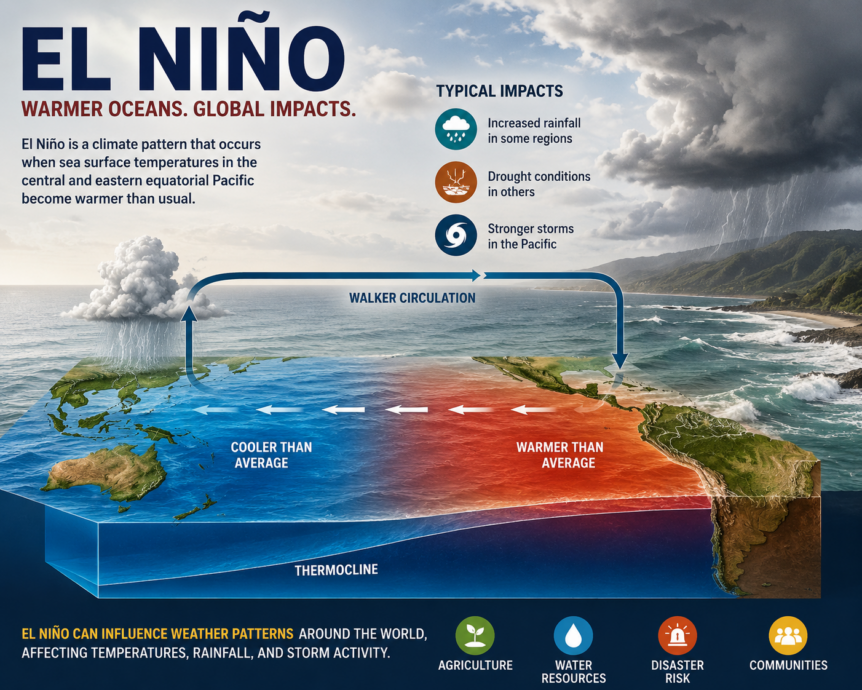
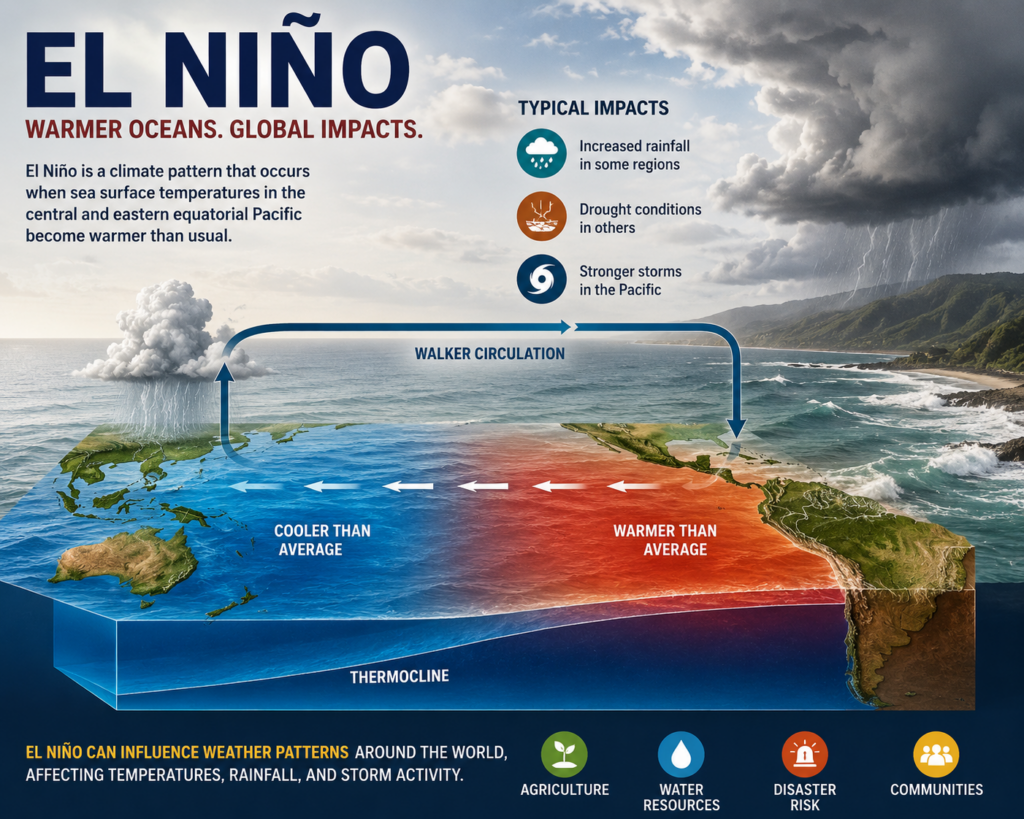
It’s not a surprise to Pam Knox, University of Georgia Extension agricultural climatologist, who attributes the lack of Atlantic tropical activity to the El Niño weather pattern.

“You know, we were expecting it to be quiet because El Niño is already really strong, and usually El Niño has a lot of wind shear aloft. The wind is blowing really strong at high levels, about the elevation that airplanes fly at,” Knox said. “Anytime you get a storm that’s trying to push vertical development, which is what a hurricane is all about, the top’s getting blown off before it can organize. It just fizzles out. And that’s what happened with (storm) Dolly.
“I think it was trying to get going because the water it was over was pretty warm. But once the top of that blows off, it just destroys the vertical circulation and then it just can’t get stronger.
“There’s a lot of wind shear in the Caribbean and even over the Gulf, there’s a lot. And this is associated with the El Niño. That is really just shutting anything that might develop off, even though we haven’t had a lot of development in the eastern Atlantic Ocean, either. But this is just the time of year when that really starts to ramp up. I think what you’re probably going to see is more storms trying to develop in the eastern Atlantic Ocean. Once they get far enough west to really feel that wind shear, they’re just going to weaken and fall apart.”