









By Frank Giles
An “alternative crop” is somewhat of a loaded term. What qualifies a particular plant as alternative varies widely. When does an alternative crop cross the line into being considered conventional? Is a more traditional crop planted in a new area, alternative? What about when new production systems take over in what are considered conventional crops?
Those questions will remain as growers look to new crops and opportunities. This feature looks at some of those crops. Before trying a new crop or practice, growers should study the pros and cons. Test it in small trials before planting significant acreage. Establishing whether the crop will have a market, what the realistic return on investment will be and how long it will take to become profitable should also be considered.
Bamboo
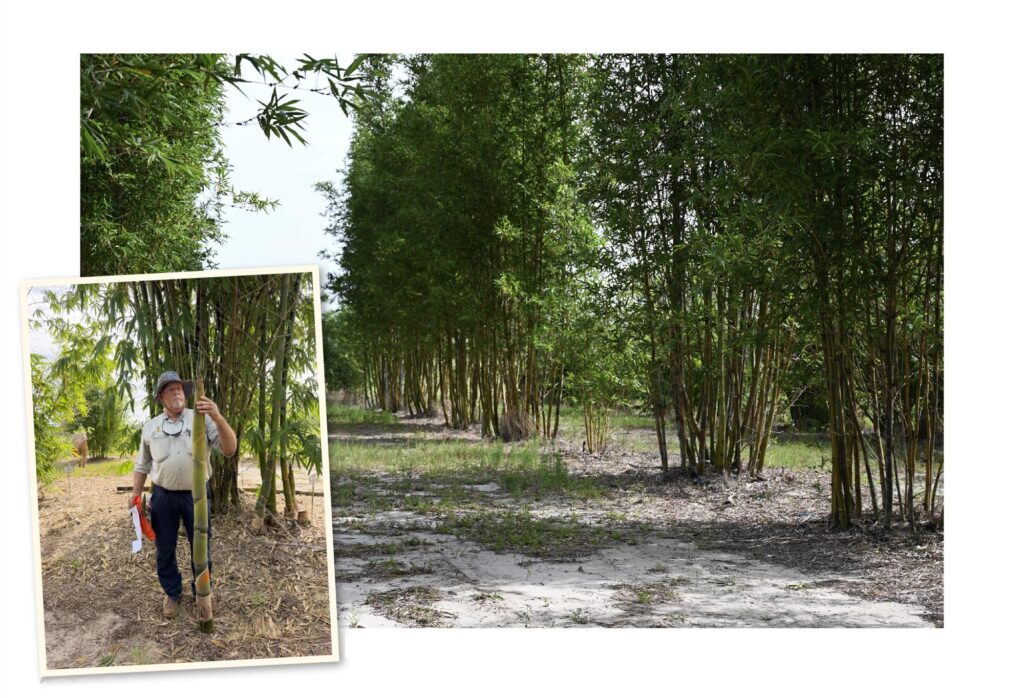
Bamboo has had its ups and downs as a potential alternative crop. In Florida, it is seen by some as a backup for the state’s struggling citrus industry. Where groves have been pushed, bamboo can be planted. Bamboo fits well with the citrus bed and irrigation infrastructure already in place.
Some failed deals left a sour taste in some growers’ mouths, but the bamboo industry is making another run at getting established in Florida. Kevin Barley, president of the Florida Bamboo Growers Association, says some important elements are falling into place to support the industry.
“We have roughly 1,000 viable acres in the industry, and I expect this to increase steadily as we have found our way to farm profitability,” Barley said. “We are fortunate to have Florida Fresh Bamboo as a buyer of the food crops, jarring bamboo shoots for the Asian American community.
“The main benefit for the growers in the food crop market is that we have a large existing market (our crop equates to 1%), and our product is the only jarred bamboo shoots in the country that is Food and Drug Administration approved. The Asian American community doesn’t trust the food-safety practices of Chinese processors. As an industry, we have the opportunity to increase demand for this very healthy food by offering a higher-quality product.”
Bamboo wood and timber products have several desirable traits, including being attractive and a very strong material. Barley says the industry in Florida has potential, but technology advancements are needed.
“I don’t think it’s possible for us to profitably market to wood markets without developing mechanical harvesting (due to labor costs),” Barley said. “Researchers at the University of Florida Institute of Food and Agricultural Sciences (UF/IFAS) are working together to accomplish an autonomous way to cut timber. But, the technology is challenging, and we are likely a couple of years away from a practical solution.”
This winter, growers also learned about the potential of freeze damage to bamboo varieties. Many were knocked back by the freeze, but most varieties’ root systems survived. It will take a year or more for those plants to bounce back to produce shoots for food use.
A bamboo field day was held at Rucks Citrus Nursery in Frostproof, Florida, this summer to showcase varieties he planted for evaluation and demonstration. Rucks also grows bamboo nursery plants for sale. Bamboo was further explored during an alternative crops seminar session at the Citrus & Specialty Crop Expo in August.
Hemp
When the cultivation of industrial hemp became legal with the signing of the 2018 farm bill, there was a lot of excitement around the potential of the alternative crop. Its main uses have been CBD, fiber and grain. A significant number of growers took advantage of the opportunity to experiment with the crop, but it was an example of where hype outshined reality.
Since the initial boom, the hemp industry has been challenged by market volatility. North Carolina was among the states positioned to take advantage of the new crop, but expectations have become more realistic in the state, according to David Suchoff, an alternative crops Extension specialist with NC State University.
“Hemp acreage for the state is low,” Suchoff said. “There are still a handful of farmers producing CBD/cannabinoid hemp for extraction purposes. Many of these operations are vertically integrated and provide products directly to consumers.
“There’s been a slow increase in fiber hemp acreage as more fiber processors come online. The fiber hemp industry has taken some time to really take off, given that there are a number of post-harvest processes required to get it from a raw form to fibers that can be incorporated into textiles and nonwovens. Additionally, there’s a new National Science Foundation Textile Innovation Engine here in North Carolina that has fiber hemp as one of its priority areas. The goal is to accelerate innovation in our state’s textile industry, with fiber hemp playing a major role.”
Timothy Coolong, University of Georgia (UGA) professor and Extension specialist, said hemp production in Georgia has cooled.
“Currently hemp production is significantly lower than it was in 2020 and 2021,” Coolong said. “We do have a handful of smaller growers typically that are growing for the cannabinoid market. There is, however, an interest in growing fiber and seed hemp if a processing facility were to be situated in Georgia.”
Blueberry
While blueberries are not an alternative crop in the Southeast, growers are trying alternative practices that are evolving the landscape for the crop.
Beyond the move toward southern highbush varieties, growers are planting varieties with the goal of shifting to mechanical harvest. The UF/IFAS blueberry breeding program has placed an emphasis on developing new varieties suited for machine harvest.
Georgia has grown into a leading blueberry-producing state. In the 1970s, the industry started with rabbiteye varieties that were native to Georgia. But, over the years, the industry shifted toward southern highbush varieties. According to Juliet Chu, a blueberry breeder with UGA, the current ratio is roughly 70% southern highbush to 30% rabbiteye. That could change in the coming years.
“In the future, rabbiteye varieties will pick up acreage because the currently downward trend of its planting acreage is caused by the lack of improved cultivars,” Chu said. “To fill this gap, the UGA blueberry breeding program is working closely with our growers to develop new rabbiteye blueberries with high fruit quality and market competitiveness. These new cultivars will allow Georgia growers to produce high-quality fruits during the May to July harvest window.
“Rabbiteye is native to Georgia; therefore it has less maintenance cost and longer orchard life compared to southern highbush. The UGA breeding program is working with our growers to bring this wonderful native blueberry species back to the fresh fruit market.”
Avocado
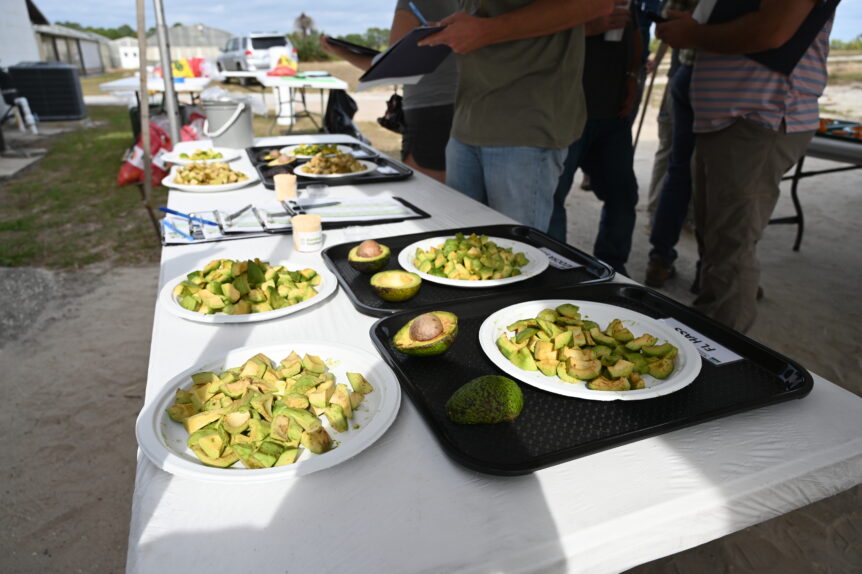
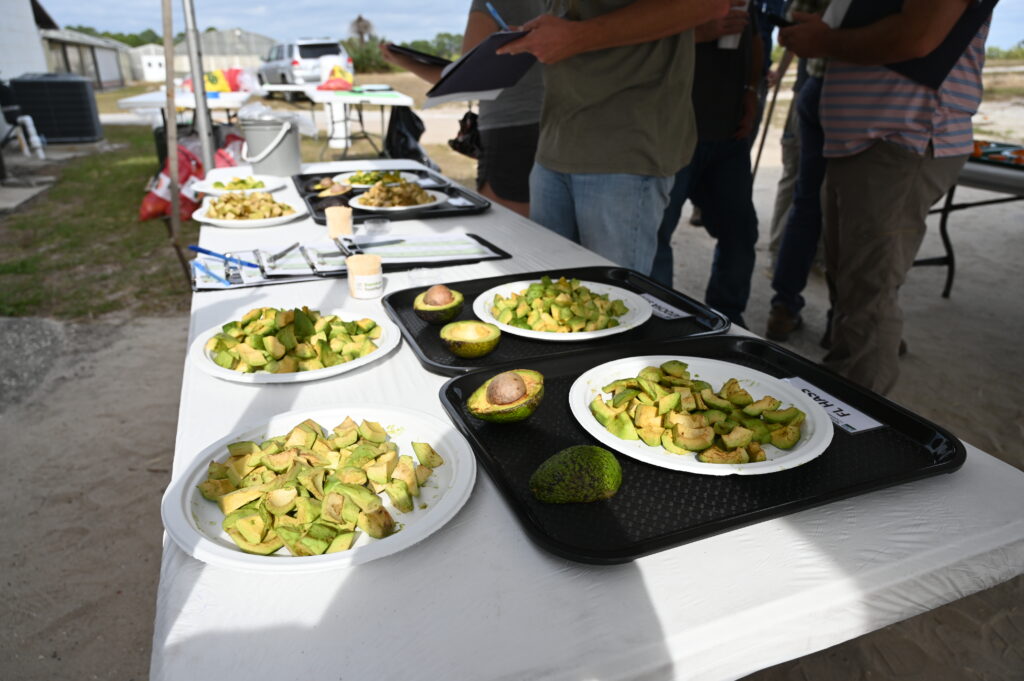
While avocado is a well-established crop in South Florida, efforts are being made to widen its footprint with the development of new varieties that can be grown in central parts of the state.
Scientists at the U.S. Department of Agriculture (USDA) U.S. Horticultural Research Laboratory in Fort Pierce, Florida, began an avocado breeding program in 2008. The program started with trials that included various combinations with the Hass type avocado — the smaller, dark green fruit often associated with Mexico. According to Erin Rosskopf, USDA research leader and microbiologist, the trick is finding a variety that tolerates the heat further south and the colder temperatures further north, along with some level of disease tolerance.
“As we might have predicted, commercial varieties of the Mexican type better survived the extreme cold we experienced in February of this year,” Rosskopf said. “In our northern planting near Leesburg, Florida, trees were challenged by temperatures under 20 degrees Fahrenheit for 13 to 14 hours. Everything experienced some leaf burn, but the varieties Brazos Belle, Brogdon and Atocha Star made quick recoveries. This planting was done over the last two years, so we need more time to observe that block and how they produce in the future.”
Citrus
While citrus is moving away from alternative status in states like Georgia, it is still relatively new in terms of commercial cultivation on scale. Estimates put acreage at roughly 7,000 acres in the cold-hardy citrus region (North Florida, the Florida Panhandle, Southern Georgia and Eastern/Southern Alabama).
There have been growing pains associated with the expansion of citrus across the region. One issue has been overproduction of the satsuma variety. It is popular due to its cold tolerance and being a great piece of fruit. But it is challenged by market flooding when all the fruit comes online roughly at the same time. Alternate bearing and a large percentage of the fruit not meeting standards for fresh fruit packing are other problems.
Growers in the region are seeking to diversify with new varieties. Some of those include Sugar Belle® (mandarin hybrid), UF-950 (mandarin), Cara Cara (navel orange), UF-914 (pummelo-grapefruit hybrid) and Tango (seedless Murcott).
A new selection that has growers’ interest in the region is UF-1424 (mandarin). It was given the nickname Greenie because of its tendency to not color up in groves further south in Florida. But it colors up nicely in the cold-hardy region and has scored very well in taste-test panels.
While still very much niche, some growers in South Carolina have planted citrus in warmer microclimates. According to Juan Carlos Melgar, a professor of pomology with Clemson University, those locations are in the coastal regions, including Charleston and Beaufort.
“Considering that the coastal area has an economy that relies heavily on tourism and the hospitality sector, and this is a sector where locally grown products are very appreciated (e.g., high-end restaurants and local breweries), the local production of citrus can be relevant for some small growers that want to diversify their farms,” Melgar said. “Food hubs such as GrowFood Carolina sell fruit from several producers in the area.”