









By Clint Thompson
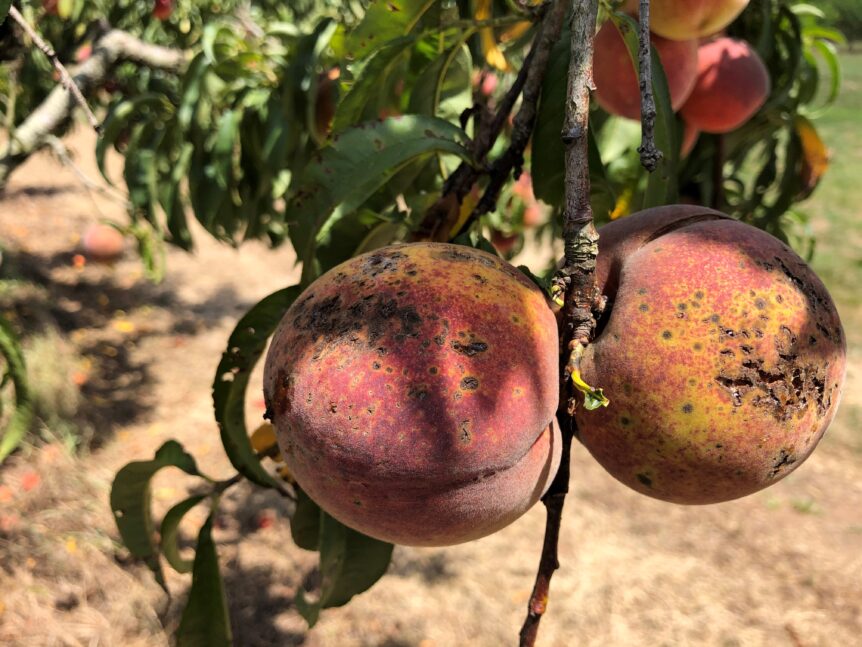
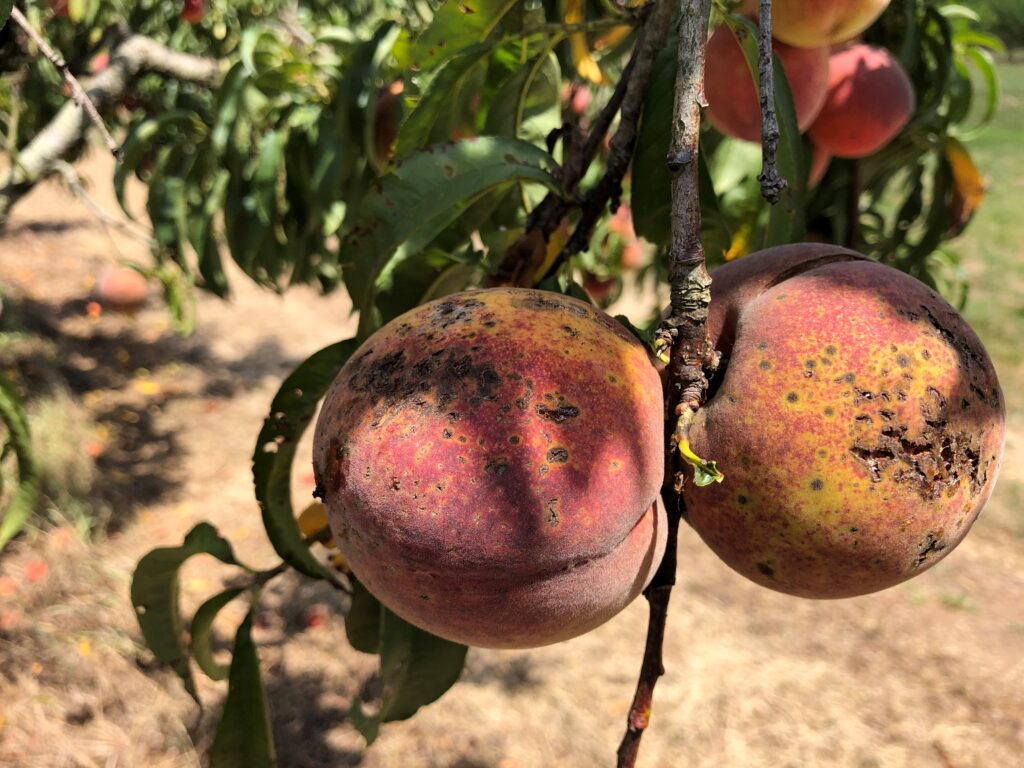
Bacterial spot disease remains a challenge for peach growers in the Southeast. Even after last year’s weather conditions were not conducive for the disease’s development, growers should consider it a threat every year.
Phil Brannen, University of Georgia (UGA) Cooperative Extension fruit disease specialist, talked about the disease and its impact in an interview with AgNet Media.

“So year before last, it was absolutely horrible. The pressure was so intense, and we lost so many peaches, and then this year we had the drier spring, and we just never had very much bacterial spot at all. I mean, my trial here at the Hort farm, we had absolutely no bacterial spots come out to anything. So that’s the way it works out sometimes,” Brannen said.
“It was interesting because we actually did start getting a little bit more rain as the summer progressed. But we still never had the bacterial numbers or whatever to take off. It’s really associated with that rainfall, especially in the spring and early summer. And if we don’t have that, or if we didn’t have that this year, it’s just not going to develop as much, and that’s what we saw.”
Resistant Cultivars
Brannen advises producers to use resistant cultivars whenever possible.
“We do have some cultivars that are more susceptible and some that are less. We always encourage growers to utilize the resistant cultivars,” Brannen said. “But then some of the ones that are more susceptible are the more popular ones that are for folks. They are very beautiful fruit and really good taste and so that’s the ones that growers like to grow.”
Management Options
Management continues to be a real challenge as growers are limited in what they have to control the disease.
“We’re limited to copper and antibiotics. They are the two things we can use for that disease, and we have the potential for developing resistance or the bacteria developing resistance to both copper and antibiotics,” Brannen said. “That’s a constant challenge for us.”