









By Clint Thompson and Josh McGill
Ag labor reform is necessary for long-term sustainability for fruit and vegetable farmers, especially those located in the Southeast region. But change is also needed for growers to have certainty as to what they are paying for workers in the H-2A program. Right now, that does not exist, says Mike Joyner, president of the Florida Fruit and Vegetable Association (FFVA).
“In your home, in my home and in businesses, you just want as much certainty as possible, and we just don’t have that certainty in this program,” Joyner said. “I mean, we’ve got examples, real life examples of growers who bring hundreds of workers in under a contract for a certain amount. They’ll be three weeks into a season, and the salary will change or jump 20%.
“I mean, can you imagine doing business that way, bringing in 300, 400, 500 workers, housing them, feeding them, and then three weeks into it, you’re told it’s going to increase by 20% or 30%? Any certainty we can get in this is appreciated.”
Court Ruling
That uncertainty worsened recently when a federal judge ruled the Department of Labor’s (DOL) current AEWR methodology was unlawful. The DOL was ordered to develop and publish a new methodology.
The DOL issued an interim final rule in October 2025 after a federal court vacated the 2023 AEWR rule and the U.S. Department of Agriculture discontinued the Farm Labor Survey.
Specialty crop growers and industry leaders want to codify the Adverse Effect Wage Rate and get wages stabilized so there will be certainty from one year to the next.
U.S. Representative GT Thompson’s (PA-15) Securing Agriculture’s Workforce Act of 2026 would reform the H-2A program for the first time in 40 years.
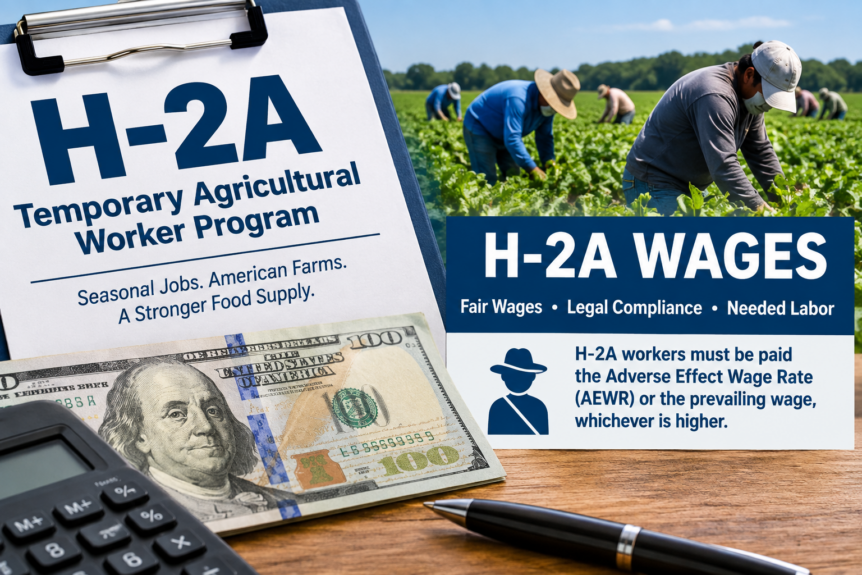
According to the U.S. Department of Labor (DOL), the H-2A temporary agricultural program allows employers who anticipate a shortage of domestic workers to bring nonimmigrant foreign workers to the U.S. to perform labor or services of a temporary or seasonal nature.