









By Clint Thompson
It will not be long before citrus producers in the cold-hardy citrus region start harvesting this year’s crop. But there are still weeks left of production where growers must manage their fruit.
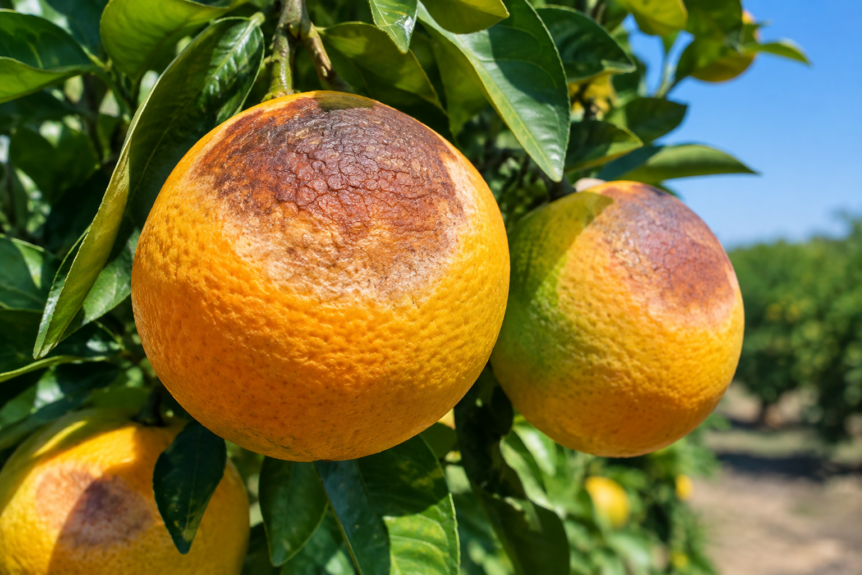
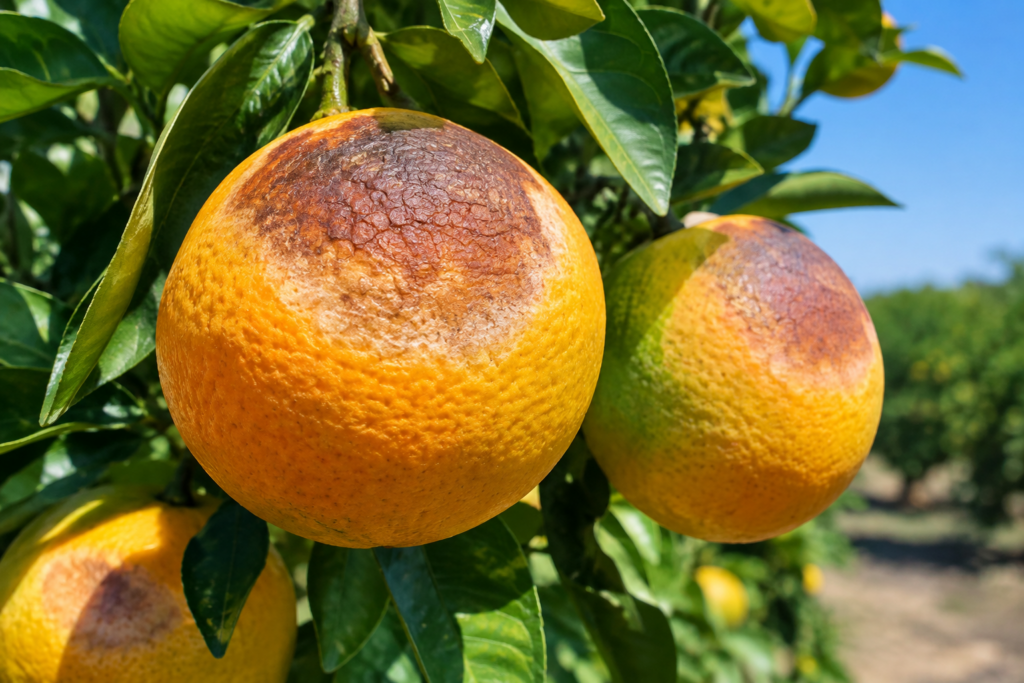
Much of that management will center on protecting the crop from the sun, a problem that’s only intensified in recent weeks, according to Mary Sutton, University of Georgia (UGA) assistant professor and citrus Extension specialist.

“I have been seeing some sunburn issues in a couple of spots. If (growers have) had problems with sunburn in the past, they might want to keep an eye on that and go ahead and put something out if they’re concerned,” Sutton said. “Usually where I’m seeing the sunburn is those fruit that are on the very edges of the canopy or the very tops of the canopy where they are getting hit directly by the sun, probably for extended periods of time throughout the day.”
Sutton urges growers to apply chemical treatments that protect citrus from the sun and sustaining blemishes as a result.
“Yeah, there’s a couple of products that are labeled for citrus that provide, basically, sunscreen and can kind of help cut the intensity or reflect light to protect the fruit and leaves,” Sutton said.
The summer heat has lingered into mid-September throughout most of the region, which consists of South Georgia, North Florida and South Alabama.
According to the UGA Automated Weather Network, the average high temperature from Sept. 10-16 in Tifton, Georgia, was 91.2 degrees Fahrenheit (F). The average high temperature during the same timeframe in Waycross, Georgia, was 91.1 F and Moultrie, Georgia, was 90.5 F.