









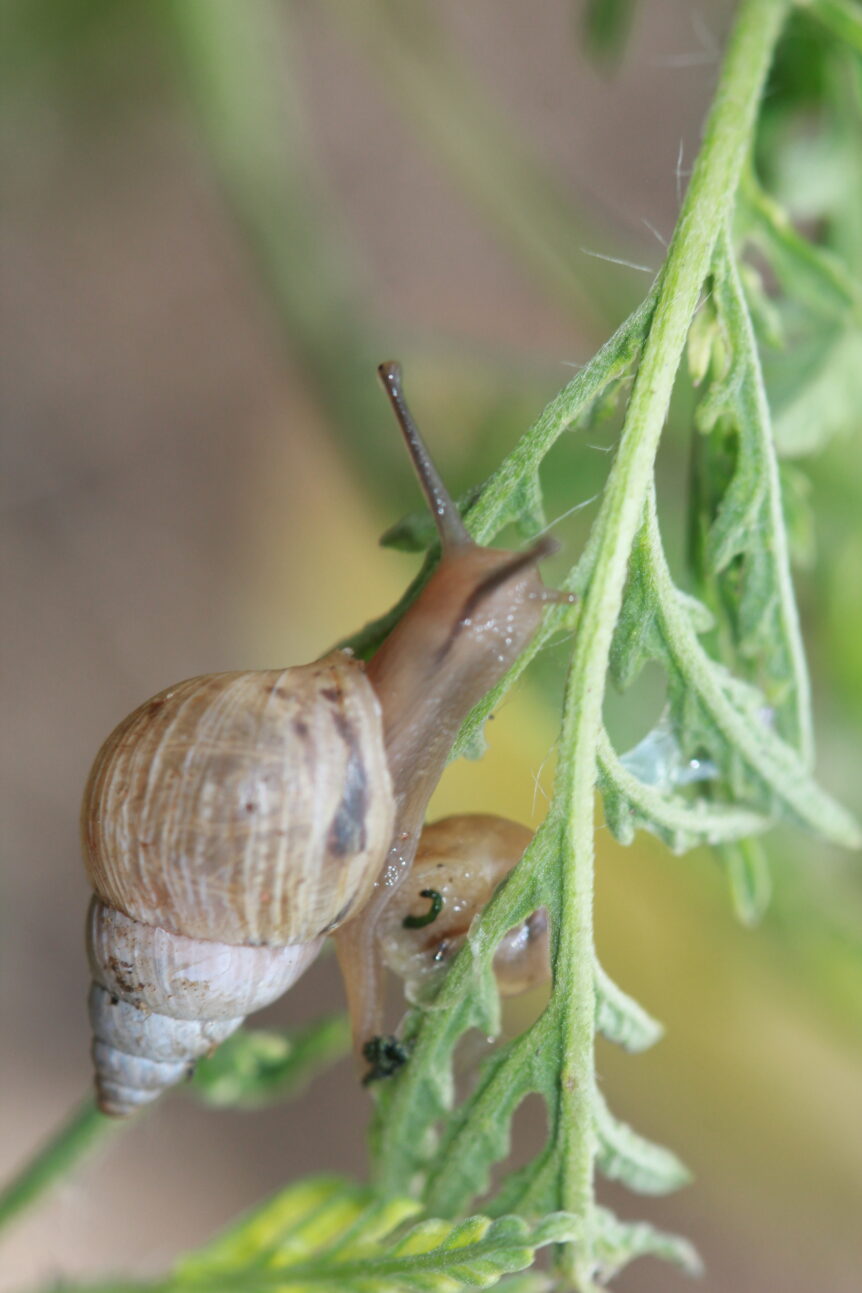
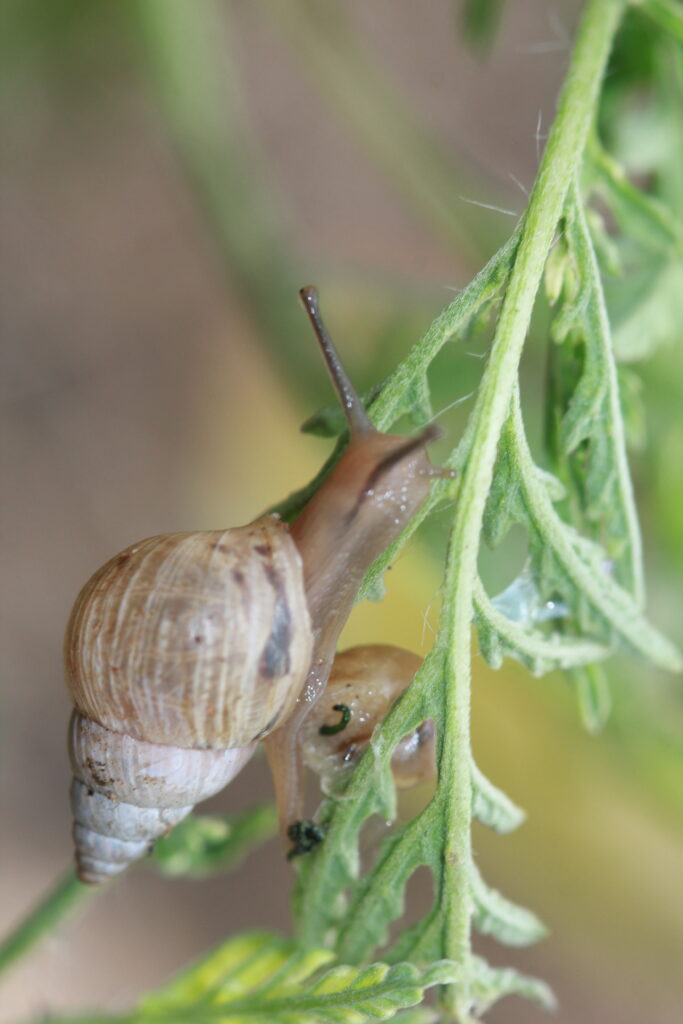
Photos by Tim Ebert
Pest Alert: Ghost Snail (Bulimulus bonariensis)
Bulimulus snails, sometimes called ghost or peanut snails, have increasingly become problematic for growers. The snails are an invasive species native to Central and South America and the Caribbean. They likely arrived in the United States on more than one occasion and from multiple locations.
Where Is It?
The snail was initially recognized as a problem in Florida citrus. The pest climbs onto microjet sprinklers, often clogging them and disrupting irrigation. Ghost snails have spread into other southeastern states like Georgia and Alabama and are becoming an issue in other crops.
Because this snail is on the move and becoming a problem for more growers, entomologists are trying to learn more about it. The pest has been found in cotton, peanuts, citrus, squash, blueberries and soybeans.
Why Is It Important?
The mature adults are simultaneous hermaphrodites, meaning each individual carries both male and female organs, allowing them to reproduce rapidly. They can lay anywhere from 20 to 50 eggs per clutch, which are uniformly white and opaque in appearance.
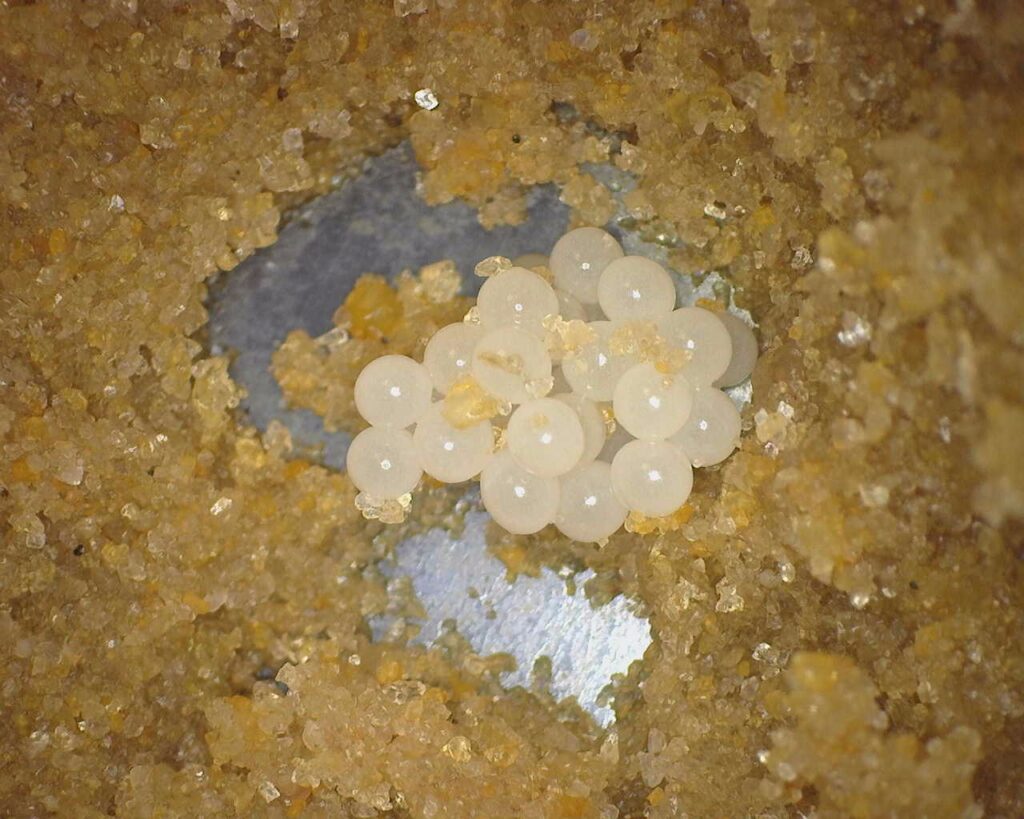
The snails are climbers, so they can be found on equipment, the walls of barns, etc. This aspect of the pest has allowed it to spread from the movement of equipment from field to field.
While the peanutsnail prefers to feed on decaying plant matter, it has been found feeding on living plant tissue, which is another cause of concern for growers. For instance, it will feed on canker or freeze-damaged citrus fruits, leaving scarring on peels. It also has been found to feed on the bark of citrus tree trunks.
For crops like blueberry, peanut and squash, the pest can cause contamination issues during harvest, which potentially could present food-safety challenges. These challenges could become more problematic as pest populations grow. Populations can explode in fields.
What Should You Do?
Growers should be on the lookout for the pest in groves and fields and around the farm in general. The light brown or tan snails are about 1/2- to 1-inch in length and conical in shape.
When identified in fields, care should be taken to avoid spreading them to other locations. Inspect equipment, trucks and people moving between locations.
Lauren Diepenbrock, University of Florida entomologist, is studying the snails to learn more about their movement and lifecycle. She is also evaluating potential treatments to manage the pest, including snail baits and chemicals that are labeled for other pests.
“We are evaluating these different treatments and are sharing what we find with growers,” she said. “I encourage growers to let us know if they think they’ve found a material that works on them. That is how we found that abamectin miticide has some efficacy on them. We also are looking at some of the commonly applied herbicides to see if they have some efficacy. We are just looking for anything that can help to knock those populations down.”
Information for this alert was sourced from the University of Florida Institute of Food and Agricultural Sciences