









By Clint Thompson
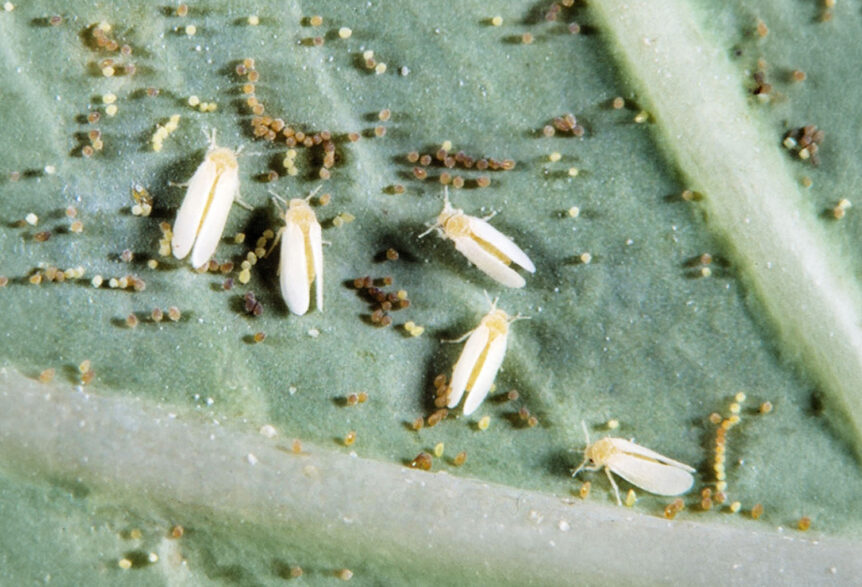
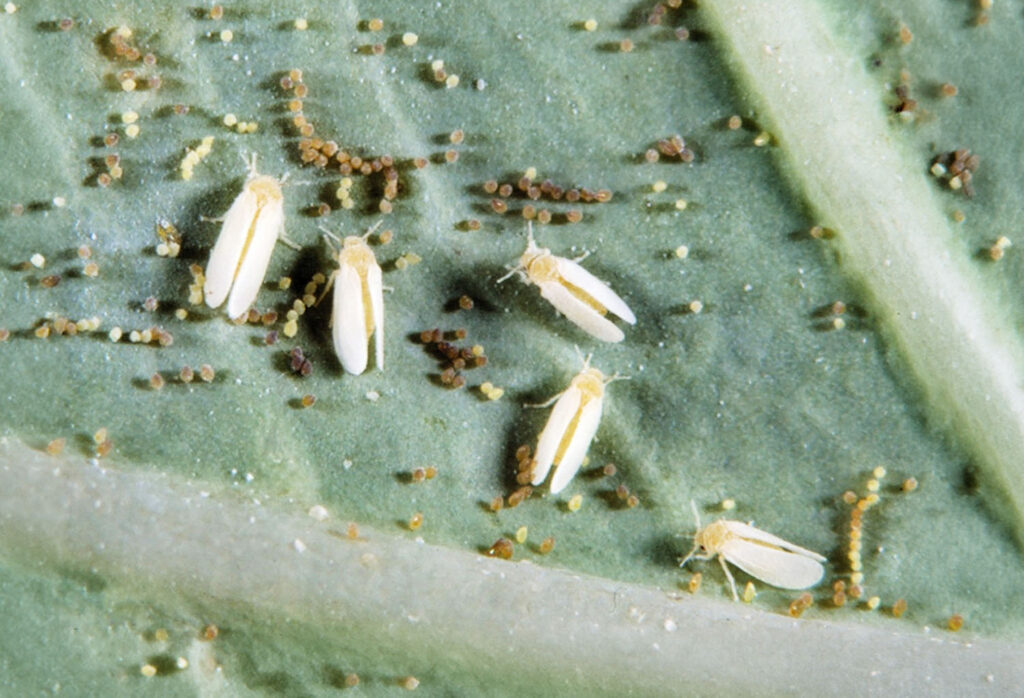
Whitefly infestations came back in a big way this year in South Georgia. It’s the worst the region has experienced in nearly a decade, according to Stormy Sparks, University of Georgia (UGA) Cooperative Extension vegetable entomologist. The high populations are impacting the vegetable and cotton crops this fall.
“It’s worse than it has been in a long time,” Sparks said. “We had some hot, dry weather, and whiteflies got an early start in cotton. The weather was favorable for them. You throw in an extra generation, and we haven’t had a tropical system (as of print time). We’ve had some rains, but we haven’t had rain everywhere all at once. And that’s what really impacts the populations.”
Sparks said whiteflies were observed in June. Significant populations are not normally found until July or later.
“The indications have been there for a while,” Sparks said. “We’re not anything like we were in 2017, but this is probably the worst we’ve had it since that year. Most of the cucurbits are what they really love, but they’re in everything.
“They’re in tomatoes and peppers. Peppers have become more of a problem in the last few years than they were in the past. Whiteflies used to not really reproduce very well on pepper, but we get some significant populations in pepper now. But the biggest host is the cucurbits and then also tomato, if you get the viruses involved. And that’s the other thing; we’ve had a lot of virus this fall.”
Virus Vector
Whitefly infestations are significant because of their potential impact throughout the year. They typically migrate from winter vegetables to spring vegetables to agronomic crops, like cotton, to fall vegetables and back to winter vegetables. The buildup of whiteflies is concerning since their feeding injuries in vegetables can lead to virus transmission, including cucurbit leaf crumple virus, cucurbit yellow stunting disorder virus, cucurbit chlorotic yellow virus, squash vein yellowing virus and tomato yellow leaf curl virus.
According to UGA data, economic losses associated with whitefly infestation and its vectored viral diseases on vegetables in Georgia were estimated at approximately $132.3 million in 2016 and $161.2 million in 2017. In fall 2017, the viruses contributed to roughly 45% crop losses in snap beans and 35% in squash.
Pest Management
Managing whitefly can be a challenge, especially due to its tendency to develop resistance to insecticide options. UGA recommends an integrated pest management approach.
Quickly destroying crop hosts after harvest is one of the more important cultural steps growers can take to manage the pest. Disking is preferred to chemical burndown alone because nymphs can further develop after burndown.
Timely defoliation and harvest of cotton helps curb populations and potential to cross over into fall vegetables. To the extent possible, select varieties that are resistant or tolerant to whitefly-vectored viruses.
At planting, the use of systemic insecticides can help in high-risk fields and/or when whitefly populations are already present. This holds especially true for fall vegetable plantings.
Good weed management in all crops is important because weeds can serve as alternative hosts to the whitefly. Keeping vegetable crops healthy with balanced fertilizer and irrigation applications helps keep plants less vulnerable to the pest.
Scout frequently for the whitefly and focus insecticide application on nymph populations. Treat early when whiteflies are getting established, because it is difficult to achieve good results with rescue treatments when the population explodes.
For insecticidal control, Knack is the primary product used in cotton,” Sparks said. “They are generally dealing with low early infestations that can build during the year. In vegetables, it varies by location. But where we have consistent problems, we tend to have large populations shortly after transplanting. This requires stronger activity. We generally have foundational products of a rotation of a neonicotinoid (Venom, Sivanto Prime, etc.) and a Group 28 (Verimark, Exirel, Coragen). The growth regulators (Knack, Courier) are good to work in for resistance management. Several other products with activity on whitefly are also encouraged where their activity on other pests fits the specific situation.”
The Georgia Pest Management Handbook (ipm.uga.edu/georgia-pest-management-handbook) is a valuable resource for crop-specific recommendations on whitefly management. Local UGA Extension agents can also provide guidance.