









By Clint Thompson
Cooler temperatures this time of year are just what the doctor ordered for Southeast vegetable farmers struggling to control whiteflies. That amounts to a bunch of producers in Georgia and Alabama, since the insect infestations are the worst in a decade, according to Stormy Sparks, University of Georgia (UGA) Extension vegetable entomologist.
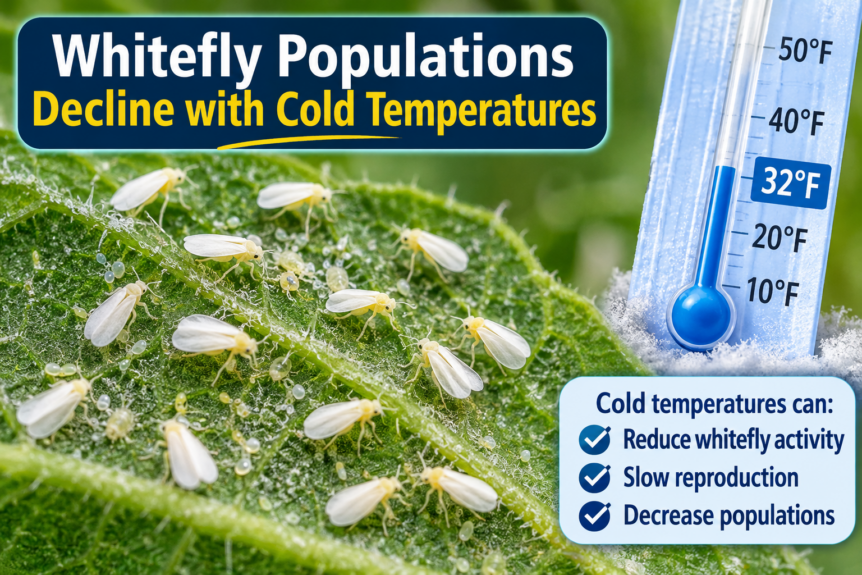
Sparks insisted, though, there’s been a dropoff of whitefly populations for several weeks now, ahead of this weekend’s forecast for an extreme drop in temperatures in the region.
“When it gets cold at night, even if it warms up during the daytime, that life cycle really stretches out,” Sparks said, “and if you’re still spraying them, obviously, you’re getting better control because you’re killing them. They’re not coming right back in like they can do when it’s warm.
“We never get cold enough to kill whiteflies. We get cold enough to kill whitefly hosts. That’s why the populations decline during the winters. There’s not enough stuff out there for them to feed on and reproduce.”
Whitefly infestations are significant because of their potential impact throughout the year. They typically migrate from winter vegetables to spring vegetables to agronomic crops, like cotton, to fall vegetables and back to winter vegetables. The buildup of whiteflies is concerning since their feeding injuries in vegetables can lead to virus transmission, including cucurbit leaf crumple virus, cucurbit yellow stunting disorder virus, cucurbit chlorotic yellow virus, squash vein yellowing virus and tomato yellow leaf curl virus.