










By Frank Giles
The Florida Fruit & Vegetable Association (FFVA) hosted its annual convention in September in Naples. The event included several sessions on issues facing specialty crop growers. Among the topics covered was a presentation on consumer trends that impact demand for fruits and vegetables.
Presenters John Gerzema of Harris Insights and Analytics and Ray Day of Stagwell Global have their fingers on the pulse of trends in their respective roles leading their companies. They noted today’s trends move fast, fueled by social media and new technology.
Hot Topics
Gerzema said major hot topics have been health and healthcare, inflation, artificial intelligence (AI) and transparency. Both speakers said these topics are shaping the political landscape in advance of the midterm elections.
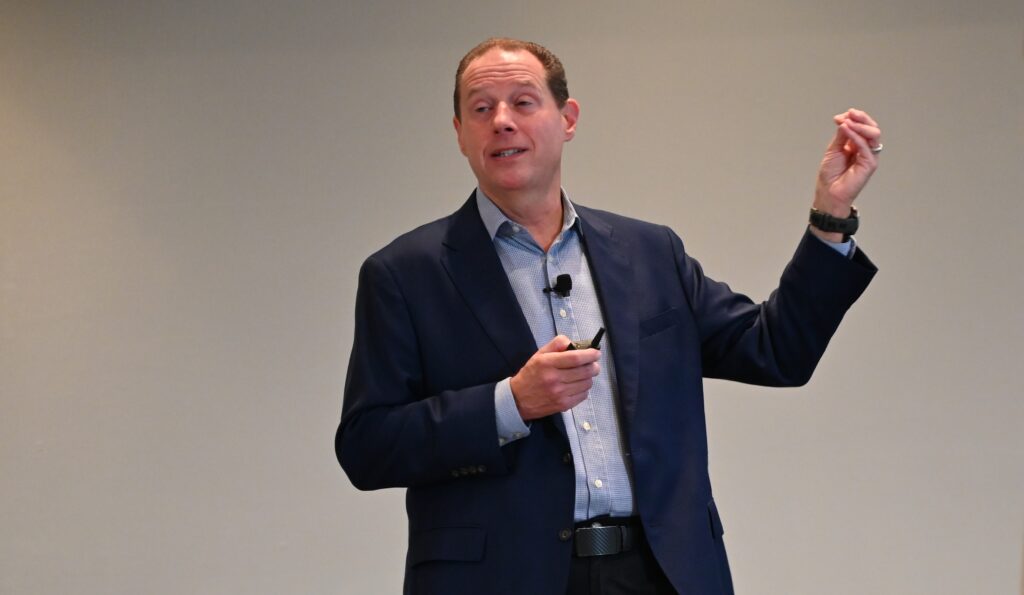
Transparency is related to whether consumers really trust what private industry and the government are telling them. Mistrust is fostered by information and misinformation battles playing out on social media.
“Many of these issue concerns are being accelerated by AI,” Gerzema said. “This is really the first major bipartisan issue we’ve seen in our data where you have Republicans and Democrats agreeing about the concern over AI. When you look at our data, 28% feel they are more likely to die from AI than old age.”
Gerzema added that the AI concern extends beyond big data centers; it is about the fact that the public can’t keep up with the rapid pace of technological change. An example of this is the comical AI-generated video of actor Will Smith eating spaghetti with all of its face-melting flaws. Only three years later, AI-generated video is hard to distinguish from the real thing.
Grocery Bills
An issue that hits closest to home for specialty crop growers is what consumers are experiencing in the grocery store. The presenters noted that two-thirds of consumers surveyed in their research are “triggered” by going to the grocery store.
“If you think about the consumer experience, you don’t want your customers (of fruit and vegetables) to be triggered,” Gerzema said. “That is a dominant negative emotion consumers are feeling about shopping through the grocery aisle right now.”
“Some people love grocery shopping. Some people hate it,” Day added. “But this notion of being triggered, we’ve never seen that before.”
The speakers laid out more data from their research:
- 72% of Americans say grocery prices are where they feel most impacted by inflation.
- 51% of Americans report difficulty affording groceries.
- Consumers report they are spending 11.2% of their income on groceries.
Food Safety
This summer’s recalls have also impacted consumer trust. The recalls had wide psychological impacts on consumers.
“Another big issue has been trying to understand what happened with these summer recalls that had significant impact on Americans’ trust of the supply chain,” Gerzema said. “The food recall fervor over the summer definitely had an impact.”
Some of the speakers’ stats on food safety include:
- 53% of consumers said the recalls changed the way they shopped in the grocery store.
- 47% of consumers said they avoided recalled brands.
- 40% of consumers said they avoid recalled foods (like lettuce) or avoid going to restaurants in proximity to recalled foods (like Taco Bell).
- Nearly one-third of consumers surveyed said they were buying more from local sources because they trust its safety more.
“This ties back to this issue of transparency and trust,” Gerzema said. “What Americans really trust is local. Sixty percent say that large national companies don’t understand the daily lives of their community. This might explain why people lean more toward local farmers’ markets during an outbreak crisis. Seventy percent said they feel safer buying food from a farmers’ market or a local source.”
For smaller produce growers, how they can take advantage of a local, smaller footprint is important. Larger farms and brands need to determine how they can communicate more on a local level to build trust.