










By Clint Thompson
The cotton jassid’s devastating impact on cotton last year has industry experts alert on when the insect will emerge as a threat this season.
Stormy Sparks, University of Georgia (UGA) Cooperative Extension vegetable entomologist, emphasized that the insect has not been detected in multiple weeks, which is a positive sign heading into planting season.
“We’ve got some okra, not a lot, but we’ve got some okra out, and Phillip’s (Roberts) got some cotton out. We’ve been monitoring yellow sticky traps, not a lot of them but some. They were picking them up early in the winter in the whitefly sticky traps, but I don’t think we’ve seen a jassid in probably about two months,” Sparks said.
Jassid’s History
The cotton jassid made its presence known in 2025, mostly impacting cotton and certain vegetables like okra and eggplant. As long as it is not observed during the spring, then growers won’t have to worry about the jassid until they start worrying about whiteflies, which is normally later in the summer.
“We didn’t see anything until we had problems in okra last year in July. Ted McAvoy was doing an okra variety trial here on the station, and he was done with that spring trial about the time jassid showed up last year,” Sparks said. “You hope they don’t show up at all, but if they’re going to show up, you hope that’s the way it happens. If they show up early, it’s going to be bad.
“If they show up any time this month, it’s going to be really bad for cotton.”
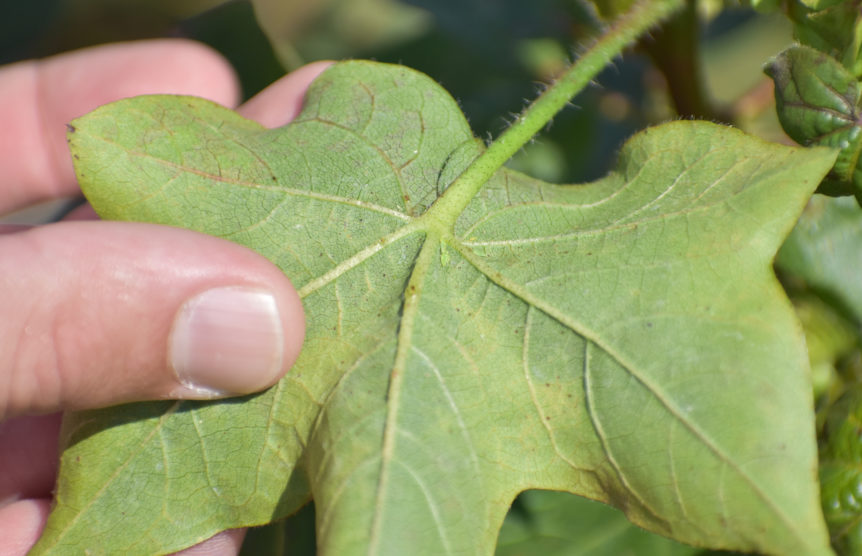
The cotton jassid feeds on the lower surface of cotton leaves, extracting the contents of cells. Symptoms include yellowing, reddening and then bronzing of leaves. The jassid is also extremely small, so it is likely that plant damage will be observed before the insects themselves. It is a pest of cotton, okra, eggplant and sunflowers.