









By Frank Giles
When Federico Boscolo arrived in North Florida to establish and operate a new leafy greens farm, the concept of 100-year storms was not burned into his mind or vocabulary. That changed in 2017 when a nearly decade-long stretch of quiet hurricane seasons ended with Hurricane Irma.
Boscolo’s family hails from Italy, where their company, Cultiva, is a well-known European brand. The plan for Florida was to grow baby leaf spinach and other greens under high tunnels. That was a concept not yet tried on a large scale in the United States when the farm began operations in 2016.
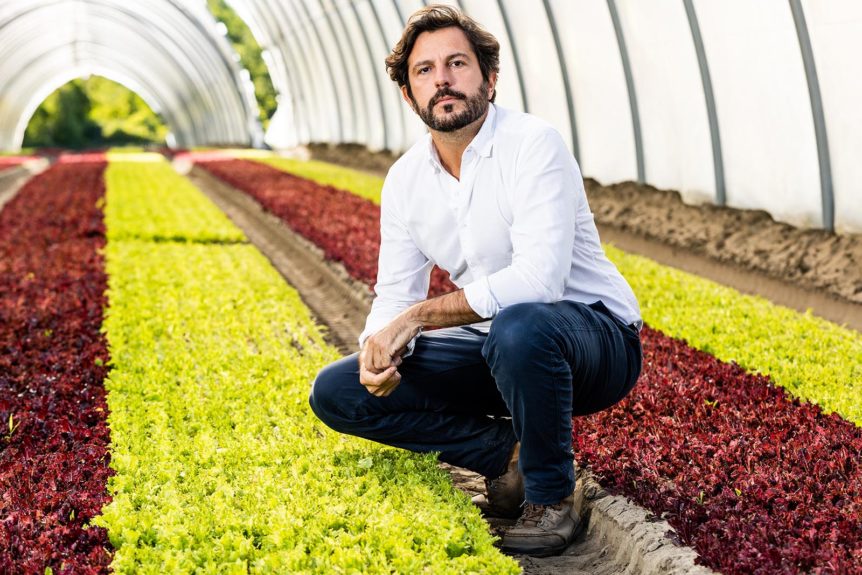
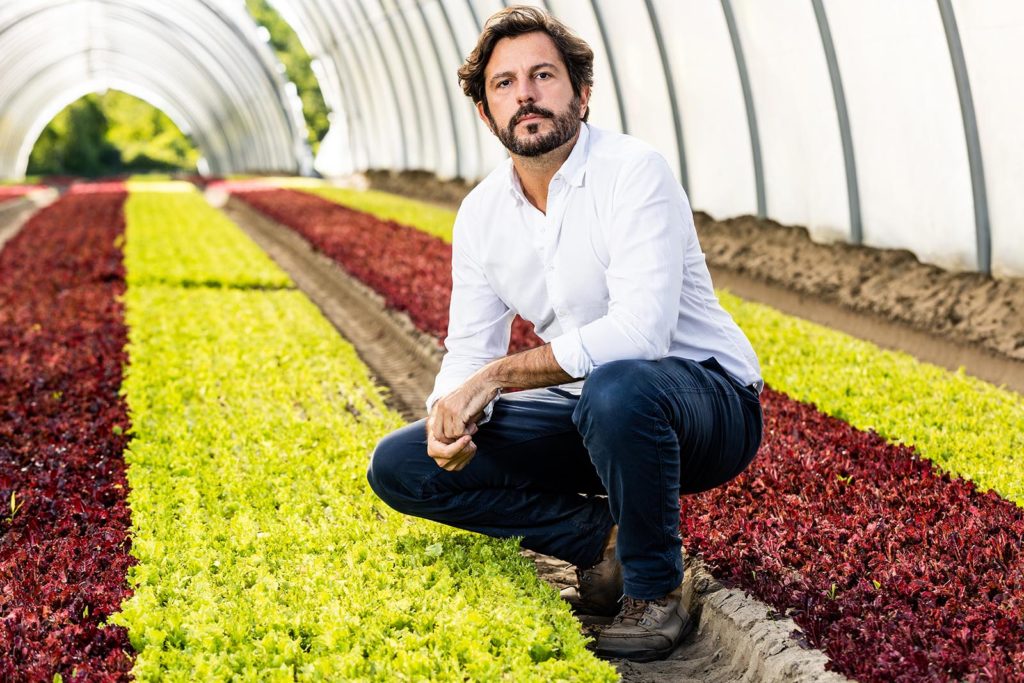
At full capacity, the farm supports approximately 865 high tunnels, covering a net farmable area of about 150 acres. Each tunnel measures 260 feet long by 26 feet wide — roughly 1/6 of an acre. It’s an impressive sight to behold.
Partnerships and Solutions
The idea for the farm was sparked during a discussion at the 2014 Fresh Summit conference (now the Global Produce & Floral Show). Boscolo had a conversation with Leonard Batti of Taylor Farms, the world’s largest vegetable grower and marketer, about bringing baby leaf production to the East Coast.
Boscolo recalls that the initial conversation involved sketching ideas on a notepad and asking “what if” questions. This quickly turned into action as the two companies agreed to partner.
Within a year, property was purchased near Jennings, Florida, and 15 tunnels were built to test whether baby leaf greens could be grown successfully. By the following year, 800 tunnels were constructed, along with a 20,000-square-foot cold storage facility.
The farm was soon up and running, producing baby spinach, arugula and a spring mix. Its East Coast location near Interstate 75 offered key advantages: reduced transportation costs compared to West Coast shipping and the ability to deliver fresh products to customers.
Weathering the Storms

The innovative high tunnel operation was unlike any other in the United States, but hurricanes soon tested its resilience. In 2017, Hurricane Irma delivered the first blow, scattering plastic and poles. Hurricane Idalia in 2023 proved far more devastating.
“The storm was terrible and came right over the farm,” Boscolo says. “It was still essentially a Category 4 storm when it hit, so the damage was massive.”
Boscolo agonized over whether to cut the plastic before the storm. Removing it is a costly and labor-intensive task, so the company decided to leave it in place. In hindsight, this was the wrong call, but there was no historical precedent to guide the decision before the 100-year storm.
“We basically had to start from zero after the storm,” Boscolo says. “It caused about $2.5 million in damages or more. We had just installed new plastic, and 95% of it was destroyed. Additionally, 27,000 steel arches were bent.”
In the storm’s aftermath, power outages persisted for an extended period. Boscolo credits the Florida Fruit & Vegetable Association, of which the farm is a member, for helping source generators to keep the cold storage facility operational, preserving product inventory.
Boscolo also praises Florida Commissioner of Agriculture Wilton Simpson for leading efforts to secure disaster relief for farms impacted by the hurricanes that hit the area. Private insurance helped cover some recovery costs.
Just one year later, another 100-year storm, Hurricane Helene, took direct aim at the farm. This time, the team cut and removed the plastic from the tunnels, significantly reducing labor, but it was still a labor-intensive effort.
“We had our full team cutting and pulling the plastic off the tunnels by hand,” Boscolo says. “It was an exhausting job that took about 12 hours, and we moved 450 tons of plastic. We were all exhausted, but that effort saved the farm from the kind of damage we saw with Idalia.”
Click here to see the video part of the November 2025 digital edition of Specialty Crop Grower Magazine.