









By Clint Thompson
Florida’s blueberry farmers sustained damage from the freeze event that impacted the region during the Feb. 1 weekend. They now must protect their crop from disease buildup, especially one in particular, says Phil Harmon, professor and Extension plant pathologist at the University of Florida Institute of Food and Agricultural Sciences (UF/IFAS).
“We always see a certain amount of disease every season. Our environmental conditions, of course, dictate how prevalent and how severe those are going to be. This year we’ve got environmental stresses that are going to make disease more likely to occur and more severe when it does,” Harmon said.
“Growers are always aware of that. I think they’re always planning for plant protection and this year they want to put a little more emphasis on that strategy that deals with Botrytis. We’ve got conditions that are not our typical and that are going to be favorable for potential disease development to become severe.”
Disease Background
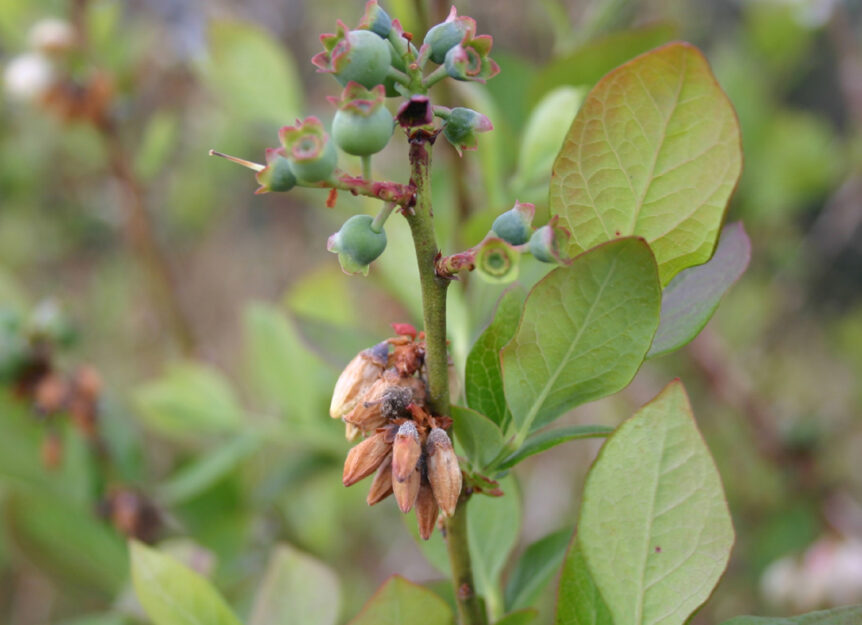
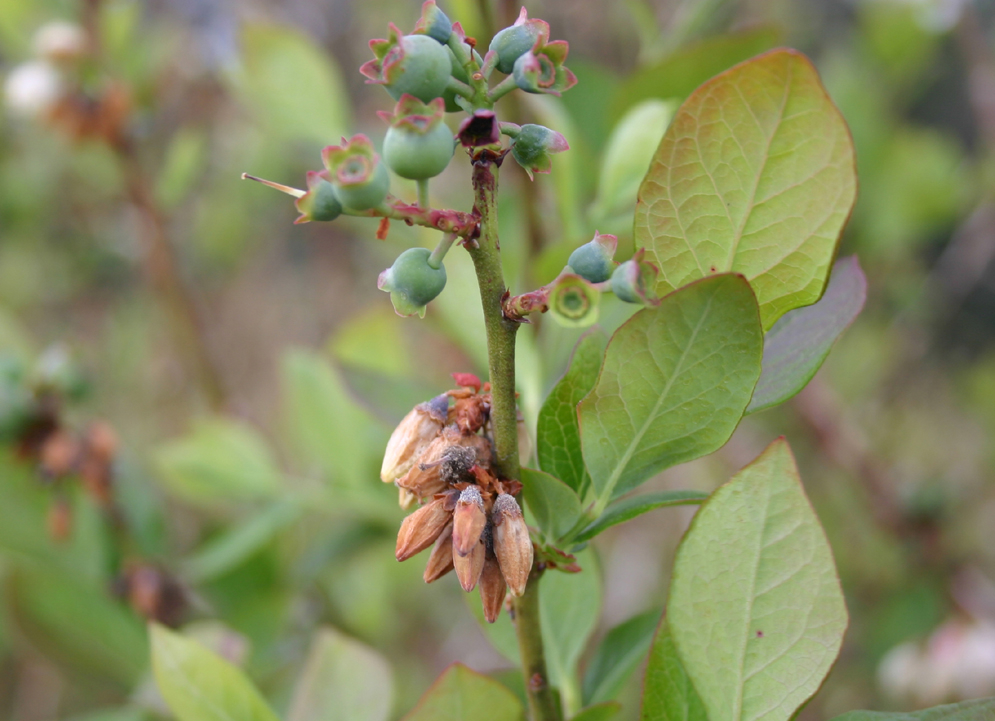
According to UF/IFAS, the development of Botrytis blossom blight is highly dependent on environmental conditions. Development is favored by prolonged periods of high relative humidity. Frequent overhead irrigation, like what was used to protect the crop during the freeze event, increases the opportunity for Botrytis blossom blight to develop.
“The initial thought is we’re going to potentially have Botrytis issues for anything that survived the freeze; from blooms and buds to green fruit. We know cold injury can make those parts of the plant more sensitive to Botrytis. This year, of course, we’ve got a lot of damage and a lot of potential for Botrytis to make it a little bit worse, even moving forward,” Harmon said.
Harmon said growers should add a couple of fungicide applications to their standard programs, targeting Botrytis to prevent blossom blight and to prevent green fruit infections that later could become gray mold problems during and post-harvest.