









By Frank Giles
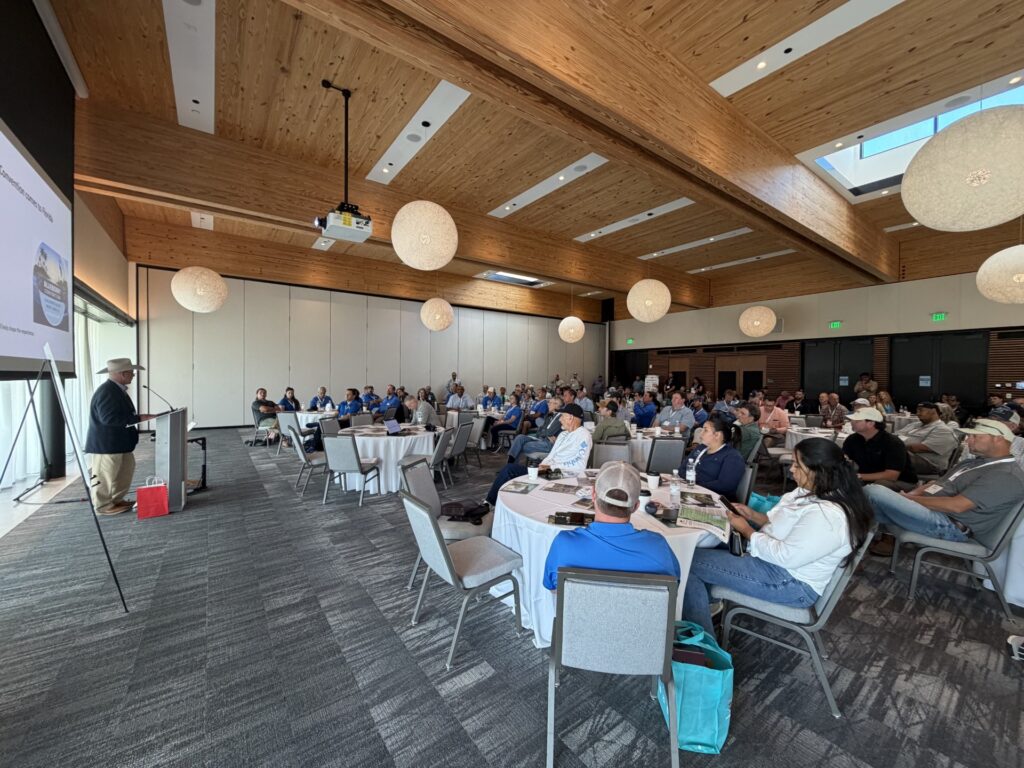
The Florida Blueberry Growers Association hosted its annual fall meeting and trade show in mid-October in Lakeland. The event was well attended by growers preparing for the coming season.
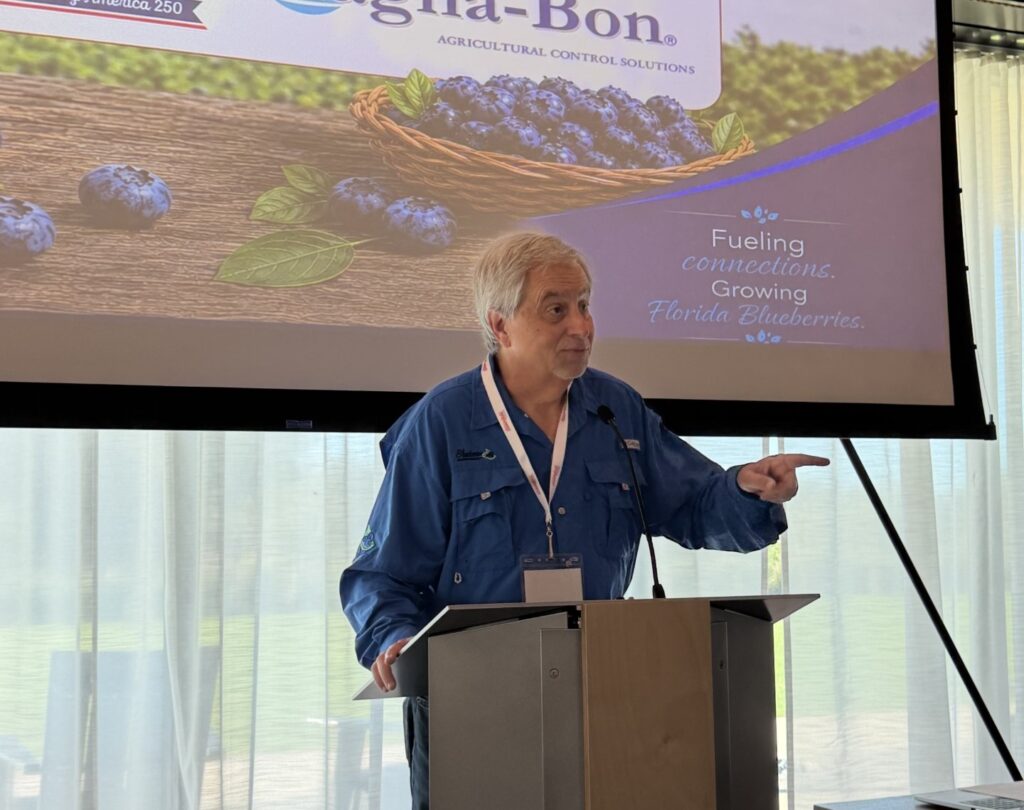
One of the highlights of the meeting was Doug Phillip’s presentation of his annual survey data. Phillips, University of Florida Institute of Food and Agricultural Sciences Extension blueberry coordinator, said the survey covers about 94% of the commercial acreage grown in the state.
The biggest story of the past growing season was the freeze that hit in late January and early February. Phillips added questions to the survey to get an assessment of its impact.
“Losses from the February freeze were pretty devastating for everyone,” Phillips said. “The most significant losses were in Central Florida, which had a 76% loss; a little less in North Florida (52%), because those blooms will set a little later and were less vulnerable; and less in South Florida (52%), where it was not quite as cold.”
Additional Information
The total production as reported by the growers in the survey was about 13.8 million pounds. Phillips said Florida typically produces about 24 to 25 million pounds of blueberries annually.
“So, we were looking at about a 35% loss from the freeze based on these grower-reported numbers,” he said. “That is actually a little bit less of a loss than some of us predicted initially.”
Some other key findings from the survey show that Sentinel, Sharper, Arcardia and Optimus were the top planted varieties across the state, with Sharper on the rise significantly in Central Florida.
The top insect pest remains chilli thrips by a wide margin, and phytophthora was the top disease reported by growers.
The survey found that 12 farms intend to add acreage over the next year, and 17 farms expect to be larger over the next 3 to 5 years. Forty-two farms expect to remain the same size.
“That shows some optimism in terms of the additional acreage folks are investing across the state,” Phillips said.