









By AgNet Media Staff
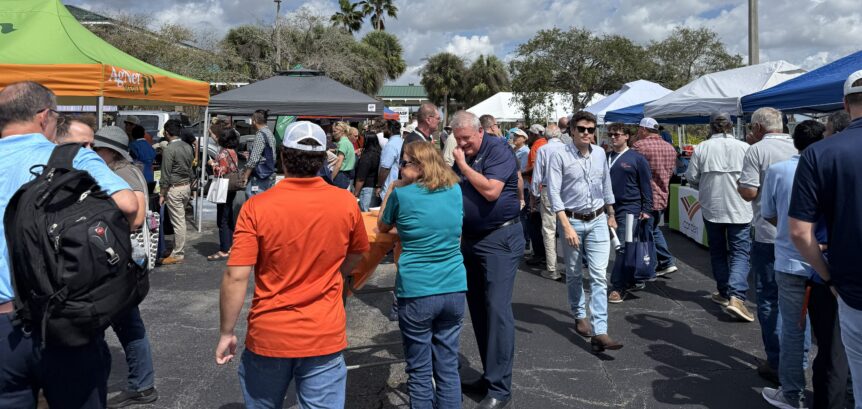
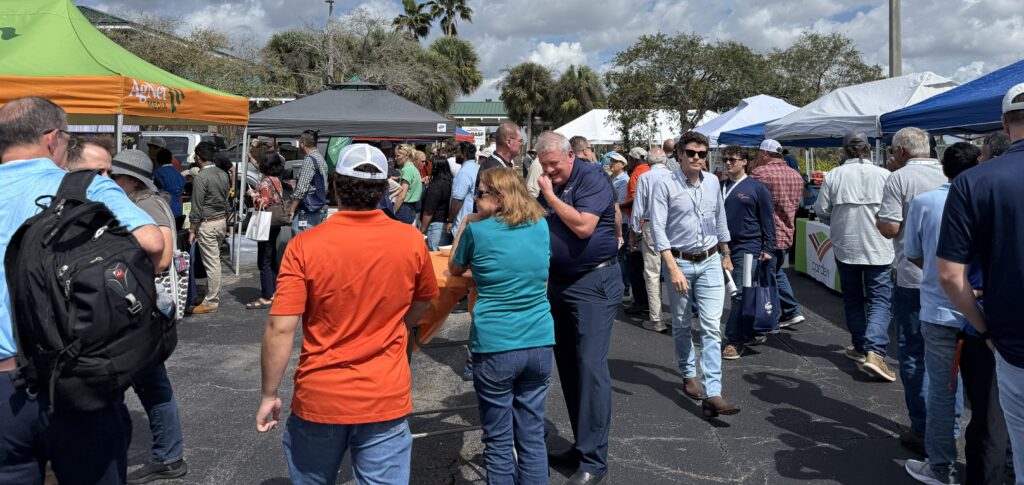
The Florida Citrus Show marked another successful event in March in Fort Pierce. The show provided attendees with a fun, informative day to learn about citrus and specialty crops while engaging with exhibitors during the tailgate-style trade show.
CRAFT Update
Citrus Research and Field Trial (CRAFT) programs have been very popular with growers and have incentivized new citrus plantings across Florida.
During the event’s morning educational session, Steven Hall, CRAFT executive director, led a presentation discussing CRAFT programs. He and colleague Tina Buice gave a demonstration of the new data portal that should be available to the public later this year.
In the CRAFT contract, growers agree to share data about activities in whichever program they are participating. While growers’ identities will be protected, people who access the data portal will see how individual CRAFT experiments are progressing at the grove level. Over time, this should shed light on which rootstock/scion combinations are performing best and how existing grove therapies are working to rehab HLB-infected trees.
After the demonstration, Hall moderated a panel discussion with CRAFT growers Daniel Hunt, Daniel Scott and Tommy Thayer. Each has planted comparisons of various rootstock/scion combinations. Some of the plantings are getting old enough to provide yield data.
Scott says his CRAFT trials include rootstock/scion comparisons and planting-density comparisons. “We have two years’ worth of yield data on some of that, but these are still young trees, so it is still a little difficult to glean a whole lot from that yet,” he said.
Scott also has a CRAFT project evaluating oxytetracycline (OTC) trunk injection.
“We’ve seen an increase in tree health with some of the OTC applications,” Scott said. “It has taken a couple of years to figure out concentrations and rates, but we are learning. There seems to be a compound (beneficial) effect after the first couple of years of OTC injections.”
Hunt and Thayer agreed OTC has seemed to improve tree health. Hunt also is running a CRAFT experiment applying a brassinosteroid before harvest to improve Brix.
“We are spraying a month before harvest on Valencia to see if that gives us some quality improvements on Brix,” Hunt said. “It is still a little early on that experiment — only a couple years in — but hopefully we will see a Brix jump from that.”
Thayer, a nurseryman at Southern Citrus Nurseries, noted that CRAFT has been vital to help clear existing citrus inventories in nurseries and has been a boost to encourage new business.
Citrus Breeders Panel
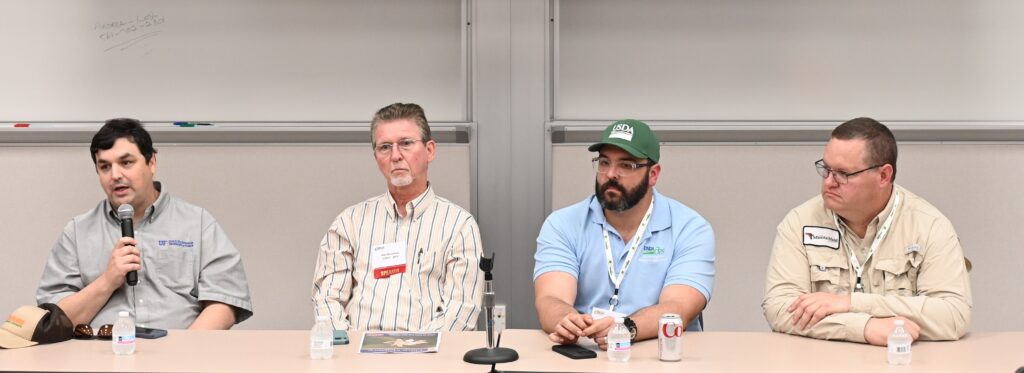
The afternoon’s citrus seminars began with a breeder panel discussion. Panelists were John Chater of the University of Florida Institute of Food and Agricultural Sciences (UF/IFAS), Kim Bowman and Matt Mattia of the U.S. Department of Agriculture (USDA), and Weston Johnson of The Coca Cola Company.
Several varieties and rootstocks were noted for their strong performance. Mattia said the Donaldson orange shows freeze tolerance and is looking better in trials than the Hamlin controls. Johnson said his trials put C4-10-42 mandarin hybrid in the top 10% for tree health. Chater noted that US-897 rootstock is useful in citrus under protective screen.
When it comes to lemons, an increasing crop in Florida, Chater said Bearss lemon, which is known for HLB tolerance, is performing well in Polk County if you can keep canker out. Beatriz is another good lemon option since it is seedless with high peel oil.
Brixy, an orange-like hybrid noted for its high Brix, was recommended for blending in commercial juice. U.S. Sunglow mandarin showed some of the best tree health in drone flyovers.
Bowman emphasized that growers should select varieties and rootstocks based on published performance.
Chater warned of rootstock incompatibility that can take several years to manifest in a grove. “New mandarins may only have been trialed on a few rootstocks,” he said.
More Citrus Sessions
Flavia Zambon of UF/IFAS gave an update on large-scale variety trials. Her take-home messages were that Triumph grapefruit can produce quality fruit even with low tree health, and drone-acquired data can speed up decisions based on early production-cycle years
Randy Niedz of USDA updated attendees on the Grove-First project. He said both doxycycline and tetracycline injections were showing antibiotic effects in trees with fruit showing Brix above 12.
USDA’s Clive Bock discussed citrus black spot. His research shows dispersal of the pathogen under normal conditions may indicate less concern of spread than initially proposed. Under non-extreme weather events, pathogen spread is over relatively short distances (a few meters).
Specialty Crop Seminar Highlights
The specialty crop seminar portion of the Florida Citrus Show focused on how to maintain efficient production practices amid trying economic times.
Crops discussed included banker plants, avocados, sugarcane and more. Other talks covered water conservation and root-knot nematode management.
Johan Desaeger, UF/IFAS assistant professor, updated attendees about management tools for root-knot nematodes, including new nematicides that growers can start applying. One of the most effective is Salibro®. Desaeger is pleased to see the newer chemicals being adopted, especially since they are safer. He said cover crops also help in mitigating nematodes.
Keji Li with UF/IFAS focused her presentation on integrated plant virus management, specifically how whitefly infestations can lead to multiple viruses. Her study centered on understanding whiteflies better and how their impact can be reduced.
Avocados are a major tropical fruit grown in South Florida. But do avocados have potential further north? Anne Plotto with USDA provided information about avocado breeding. She highlighted a USDA experimental plot in Fort Pierce that is examining more than 50 varieties and measuring flowering time, fruit maturity, ripening and storage potential.
Water conservation remains a focal point for growers and industry leaders. Sandra Guzman, UF/IFAS assistant professor, said the cheapest water is the water you don’t pump. She recommended irrigation tools like soil moisture sensors that help producers know if they need to apply water or not.
Sugarcane production was also discussed. USDA’s Matt Rouse said that the United States produces approximately 75% of the total sugar consumed. From 2017 to 2021, 53% of the U.S. raw sugar from sugarcane was produced in Florida. Rouse discussed the Canal Point (CP) varieties and the reorganization of the CP breeding program.
Cindy McKenzie with the USDA shared information on papaya banker plant systems, a project she has conducted research on for many years in Fort Pierce. USDA scientist Jason Hong spoke about regenerative agriculture.
Video
Click here for video.