









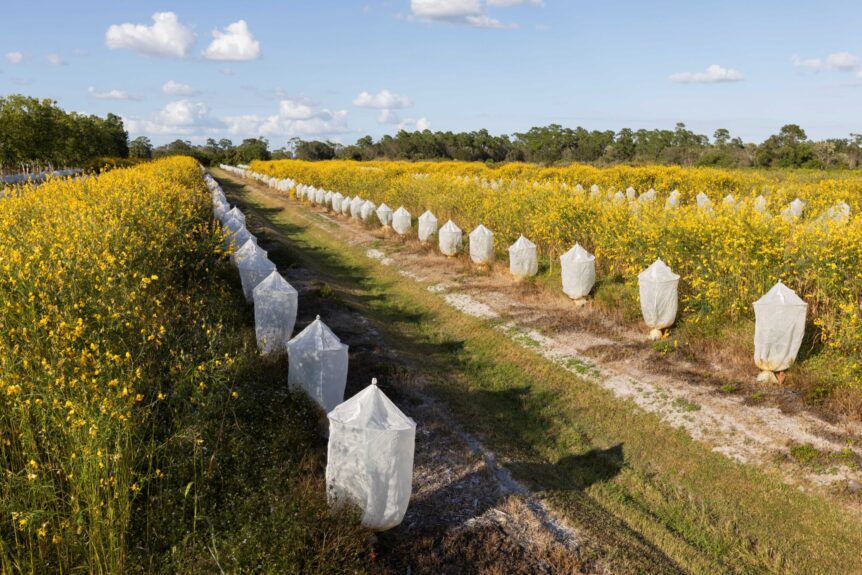
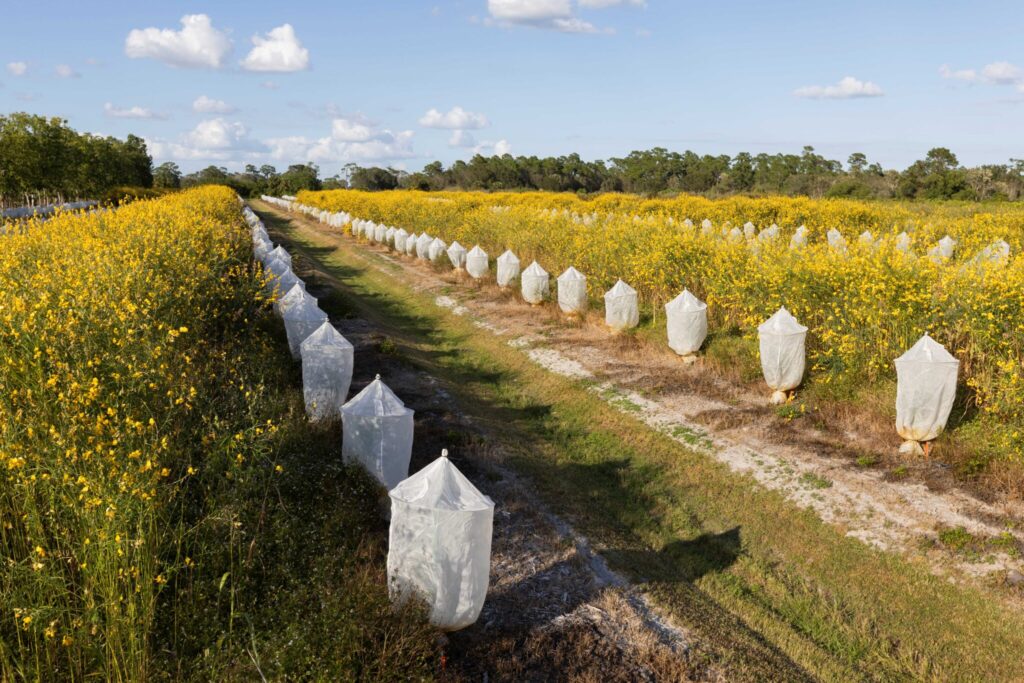
Photo by Tyler Jones
By Clint Thompson
Cover crops remain an integral part of nematode management in Florida. But they should be part of specialty crop growers’ management strategies every year, according to Johan Desaeger, assistant professor of entomology and nematology at the University of Florida Institute of Food and Agricultural Sciences (UF/IFAS) Gulf Coast Research and Education Center.
Desaeger provided an update about cover crop management at this year’s Citrus & Specialty Crop Expo in Fort Myers, Florida.
“It’s a small investment and, not just in terms of nematode management, but it has so many other benefits. It’ll increase your organic matter and will increase your beneficials in the soil,” Desaeger said. “To me, growing a cover crop in between your cash crops, especially here in Florida in our poor soils, should be standard, and I think it’s growing.”
Desaeger has devoted much of time and energy in educating growers about the benefits of a cover crop system. It is paying off as more producers are following his advice.
“I think strawberry growers, the majority now, will plant a cover crop in summer. You drive through the Plant City area in the summer, and you’ll see sunn hemp in a lot of fields, which warms my heart. Tomato growers, too,” he added. “I talk to a lot of the big tomato growers and the ones that have adopted it are really happy with it and are not going to go back. I think, as you said, part of it is education. Then once they try it and they like it, they’re on board.”
Benefits
Cover crops increase soil fertility by adding organic matter. They retain and harvest any residual nutrients that would otherwise be leached during the offseason. Cover crops also help control weeds through competition for available water and nutrients. Maybe most importantly, cover crops require minimal effort on the part of growers.
“You’ve just got to plant your cup by the seed, which is relatively cheap. You can use mixtures. If your sunn hemp is too expensive, you can mix it with sorghum. It’s a little cheaper,” Desaeger said. “But yeah, it’s relatively cheap. You plant it, and you just let it go. You don’t have to spray it. You don’t have to do anything about it.”
Cover crops provide a needed option in fields during the fallow period, something to occupy the soil in between crops.
“You grow your tomatoes or your vegetables to make money. But you grow your cover crops to replenish your soil, to improve your soil,” Desaeger said.