









By Clint Thompson
Plenty is on the minds of North Florida and South Georgia watermelon growers ahead of this year’s Suwannee Valley Watermelon Institute, scheduled for Dec. 3. Multiple concerns are expected to be addressed at the meeting, says Bob Hochmuth, University of Florida Institute of Food and Agricultural Sciences (UF/IFAS) Regional Specialized Extension agent in Live Oak, Florida.
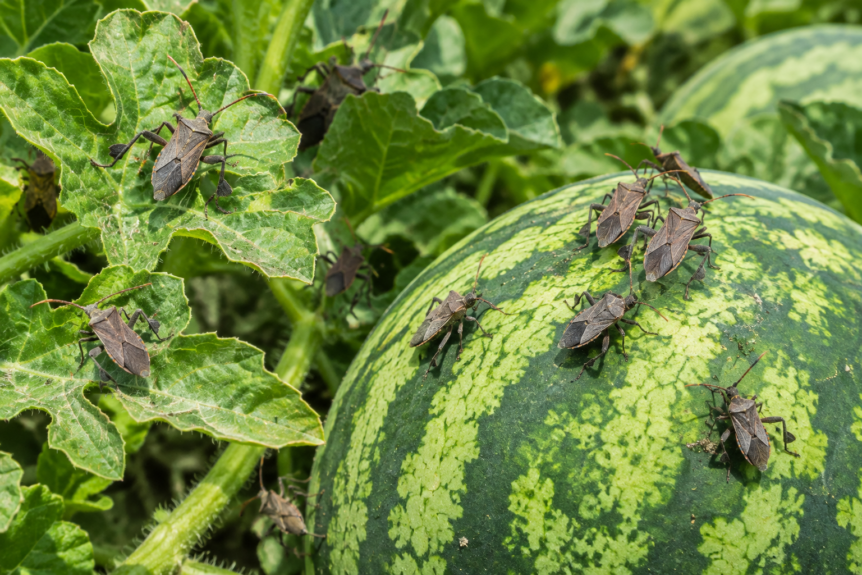
“I think for this area, one of the new things that we have concern about is the squash bug. The population of that insect has been increasing,” Hochmuth said. “Not only has the population been increasing, but we’re very concerned about the potential for the squash bug to transmit some diseases like it does to squash and cucumbers further up the state. I think in terms of newness, the squash bug fits into that particular category.”
Limited Treatment Options
The squash bugs’ emergence is especially concerning since treatment options impact beneficial insects.
“It creates a complex situation because there’s not very many insecticides that are excellent at controlling the squash bug, but the group that is really good is the pyrethroids, and those create a problem that we have to be careful of. That particular class of chemicals knocks out beneficials,” Hochmuth said. “We’re hoping to be able to find some other weapons that are a little safer to beneficials and pollinators as we move forward.
“That’s going to be a piece of research that we’re going to be conducting here this coming year. But that definitely has us really concerned because of how fast it has been moving throughout the region. It’s not just isolated to a small pocket. It’s from east to west, north to south in the Suwannee Valley now. There’s no areas where we don’t have it.”
This year’s meeting is scheduled to take place at the Suwannee River Fair Facility in Fanning Springs, Florida. It will last from 9 a.m. to 3 p.m.