









By Clint Thompson and Josh McGill
An interview with AgNet Media allowed Florida Fruit and Vegetable Association (FFVA) President Mike Joyner to discuss multiple issues impacting his farmers. One of those topics was the United States-Mexico-Canada Agreement (USMCA).
The U.S. declined to extend the USMCA amid the governments’ scheduled review on July 1, 2026.

Needed Changes
Joyner outlined some of the changes he would like to see in a new-look USMCA.
“I’m not a guy that exaggerates, but I don’t think it’s an exaggeration to say that the survival of the southeast specialty crop industry is at stake,” Joyner said. “Going all the way back to NAFTA that passed 27, 28 years ago, what happened is when that trilateral agreement was passed and signed by President Clinton many, many years ago, it opened these countries up to trade. And what we saw is U.S. wheat and corn and soybeans go into Mexico. In return, what happened is a lot of those Mexican growers shifted into specialty crops. You had that shift and then their government spent a lot of money building greenhouses and hoop houses and doing all that stuff.
“What we started seeing pretty quickly is just this onslaught of low-priced fruits and vegetables from Mexico come in right on top of Florida’s season. Really the principal problem that existed 25 years ago and still today is just this unrelenting and unfairly priced volumes of produce coming into the U.S. during our season. So that’s the issue. We simply need a policy that will curb imports during that time of the year, and that has been our priority.”
TRQs
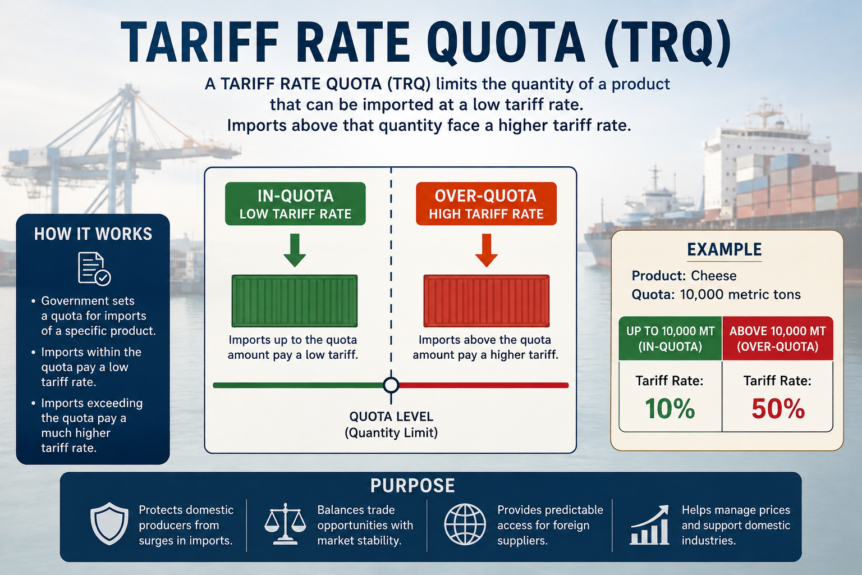
He discussed how assistance could come in the form of product specific seasonal tariff rate quota’s (TRQs).
“What we have suggested is tariff rate quotas (TRQs) for about seven commodities in Florida that we feel like are most in jeopardy right now. Things like strawberries and blueberries and watermelons and cucumbers and squash, bell peppers,” Joyner said. “Those are the ones that seem to be hurting the most, quite honestly, from what I would consider unfair competition. There are a number of commodities in our industry that do have tariff-free quotas. I mean, there’s a dairy tariff-free quota. there’s a beef tariff-free quota.
“What the government simply does is they establish two tiers. And they say for all of the volume of, let’s say, blueberries, up to a certain point can come in duty free, but when that volume is tripped, then a duty is placed on it. The idea is just to certainly allow imports of Mexican produce to come into the country but at rates that will not hurt our growers. So that’s what we’re asking for.”