









By Clint Thompson
The emergence of neopestalotiopsis disease in Southeast strawberries has forced growers to manage their crops differently compared to previous years.
Take Florida producer Dustin Grooms for instance. Grooms, who grows strawberries with Fancy Farms in Plant City, Florida, had to recently consider the disease’s impact against managing the crop amid plunging temperatures.
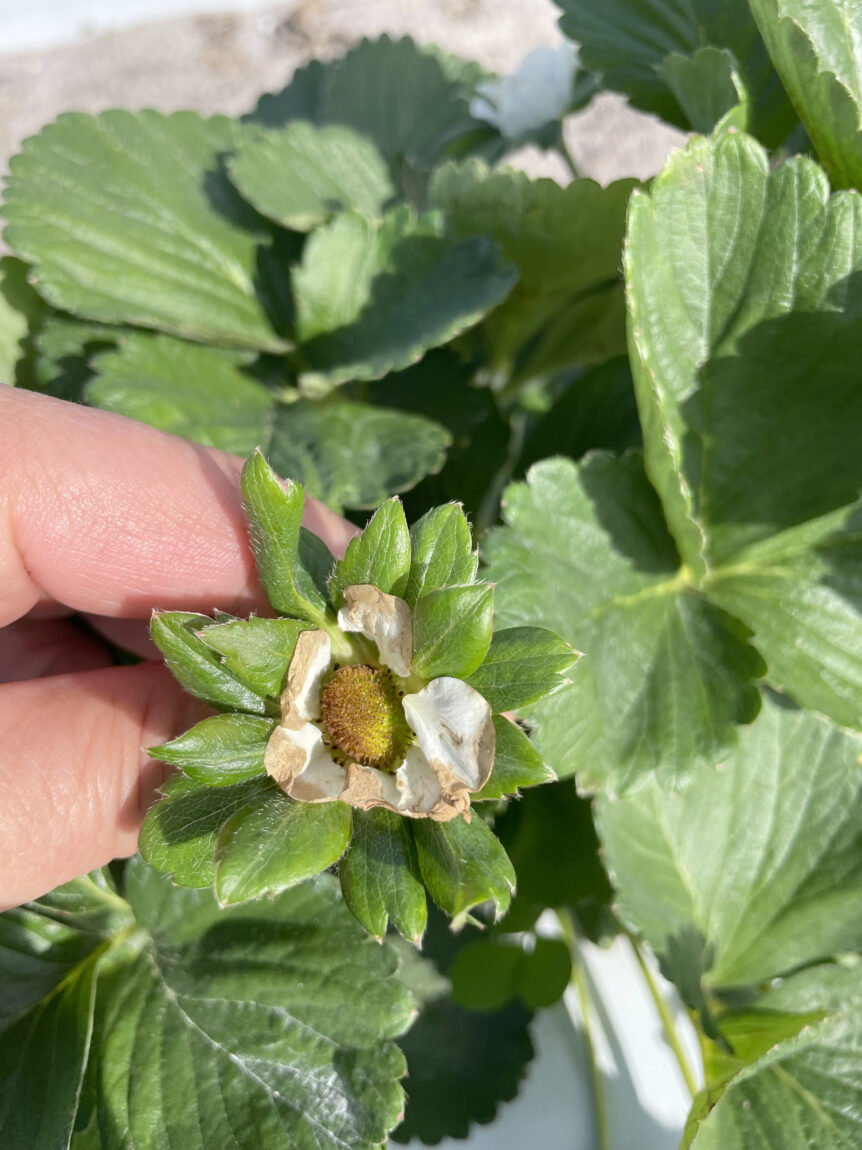
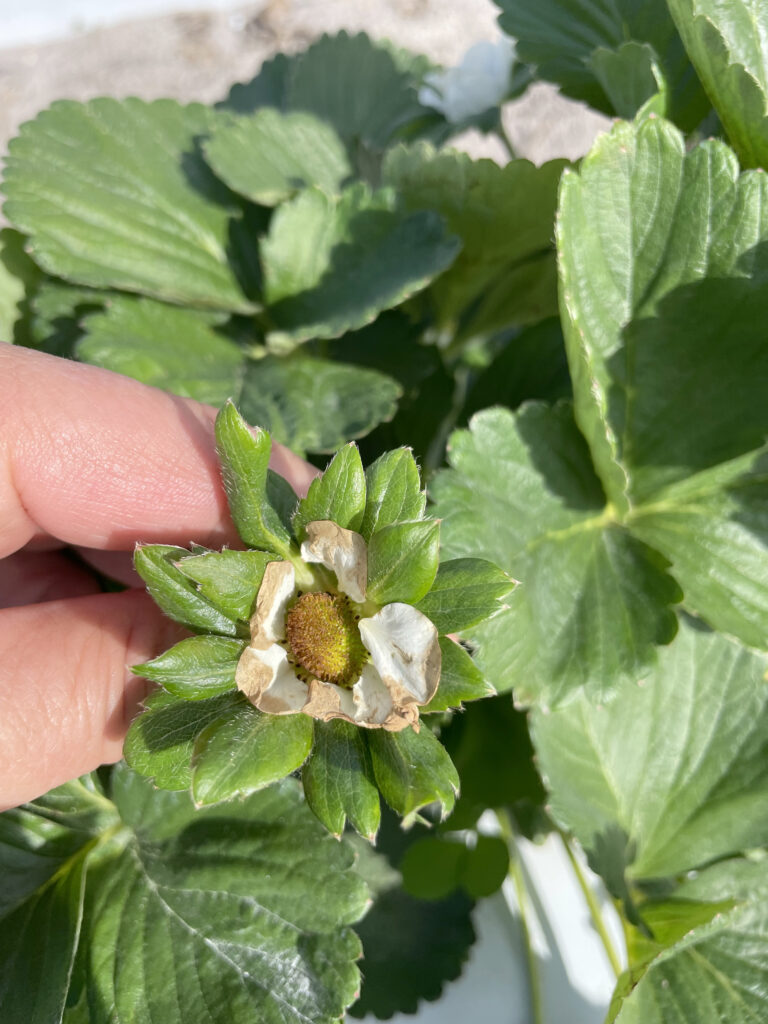
“We had some cold weather a couple of days ago, and we decided not to run water. A lot of people did, and a lot of people didn’t; just depends on your area,” Grooms said. “Walking the fields now, we definitely lost a little bit of blooms out here because we didn’t run water. We were worried about spreading the disease of the neopestalotiopsis. It was just a light frost, but I guess it sat on some of them too long and burned them up. It was nothing real crazy but more than I’d like to see.”
Neo Background
Neopestalotiopsis (Neo) has been a danger to strawberry plants every year since it was first discovered during the 2018–19 season on five farms in Florida. The disease’s initial discovery was attributed to one nursery source in North Carolina. More than 20 farms experienced the disease during the 2019–20 season after it was attributed to two nursery sources early in the season in North Carolina and Canada.
It can lead to severe leaf spotting and blighting under favorable weather conditions, specifically during extended periods of wetness.
“We already had some in the field. It was more of, ‘Are we going to lose some bloom or are we going to throw down a lot more berries because we’re going to spread the disease?’ I felt like we were going to spread the disease more than the blooms we were going to lose,” Grooms said. “You never know that, but it’s your gut feeling you go with.”
Florida’s strawberry season is about to hit its peak, with Grooms calling Valentine’s Day their “Super Bowl.”