









By Clint Thompson
Southeast watermelon producers who are pondering the use of grafted plants to combat fusarium wilt disease must remember that grafted plants have later maturity than regular plants. That’s a message that a panel, including Josh Freeman, regional sales manager with TriEst Ag Group, shared at the recent Suwanee Valley Watermelon Institute in Fanning Springs, Florida.
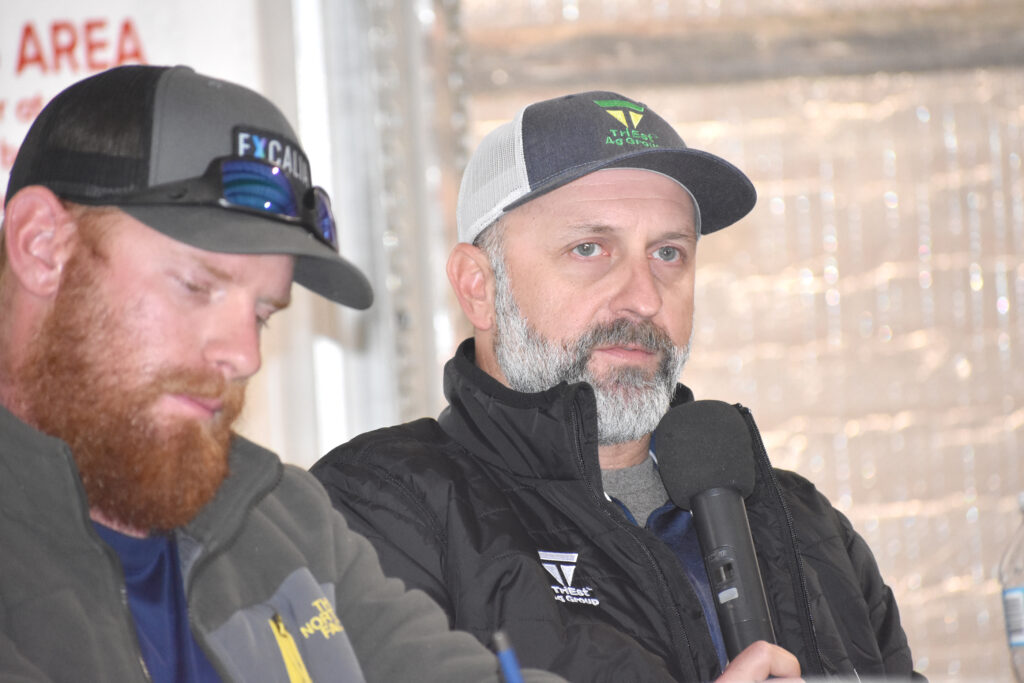
“Nobody knows why. The scientific community doesn’t know why. But on average, yes, we tend to see from five to seven to 10 days of maturity gap between the standard and the grafted plant if the scions are the same,” Freeman said. “Maybe it’s got something to do with the grafted process itself, healing and hormone balance in the plants, nobody knows. They look the same. If you went and saw a field of grafted you couldn’t tell the difference, but yeah, on average, they tend to be a touch later. That’s what we’re trying to do to minimize it, because it’s a problem, especially for this area.”
“We’re doing everything we can just from a stewardship standpoint. We’re in the grafted plant business and we’ve made long-term commitments to be in the grafted plant business, so we want to make sure that the people who use them are successful and willing to use them again,” Freeman added.
A later maturity date is not ideal for South Georgia and North Florida watermelon producers who only have about a three-week period to harvest and market their crop every year.
Fusarium wilt is one of the top limiting factors to watermelon production. Grafting, which is putting a root system in the ground that either doesn’t get the disease or doesn’t get it nearly as bad as the non-grafted plant, allows watermelon producers to plant a crop without fear of the disease limiting production.