









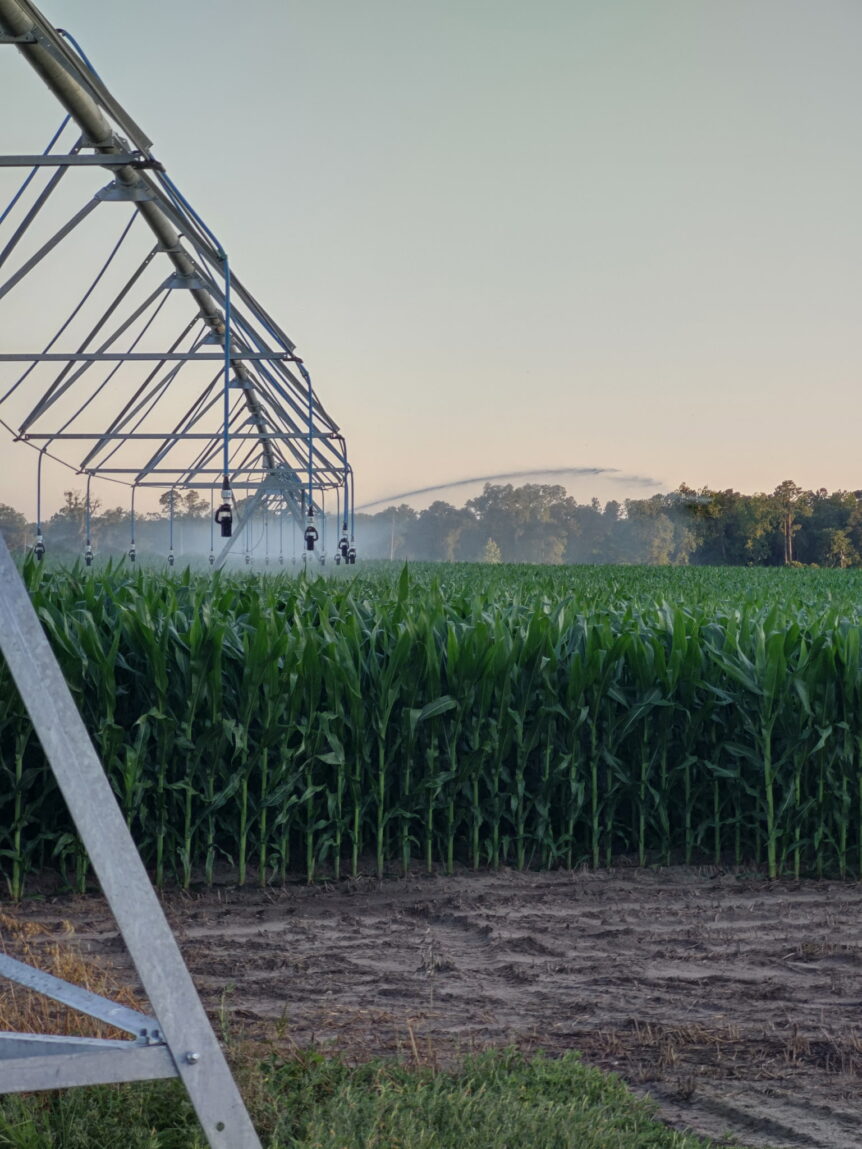
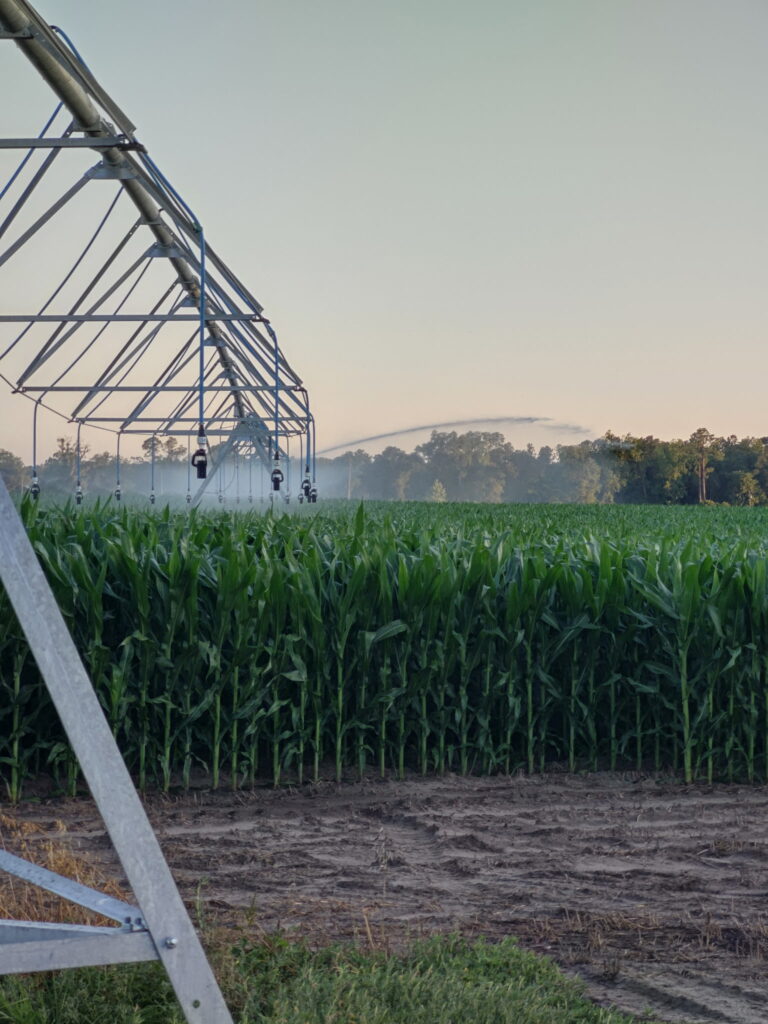
The farm has 67 pivots, and BJ Wilkerson opened an irrigation supply company last year.
By Frank Giles
For BJ Wilkerson, farming is all he’s every known, and he would not have it any other way. As a fourth-generation farmer, he says his family is working hard to ensure there is a place for the fifth generation to continue the legacy.
“We have about eight family members involved working on the farm, along with 11 full-time employees,” Wilkerson says. “I have two kids that say they want to do this, and my sister has two young children who may want to farm, too.”
But sustaining a farm for generations doesn’t come easy, especially these days when profitability is challenged on many fronts. Wilkerson says the problem must be approached from many different angles.
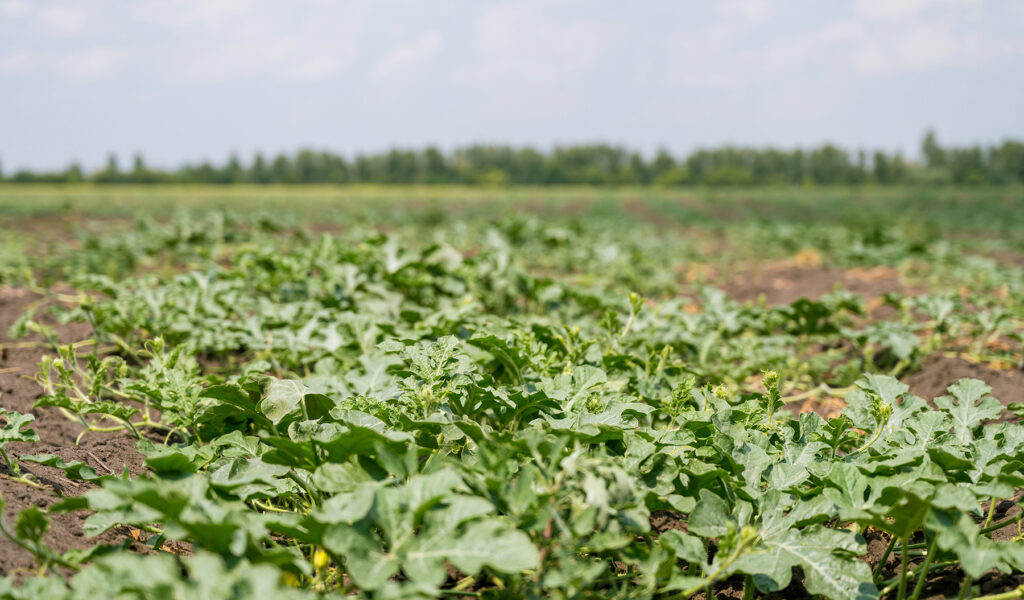
This starts with diversification of crops to spread risks and benefits. The main crop on his farm — based in Trenton, Florida — is watermelon. The family grows about 500 to 600 acres of watermelon annually and runs its own watermelon packinghouse. Other crops include green beans, silage corn, peanuts, cotton and wheat. The family also raises cattle.
Rotation is Key
“Our whole program is built around watermelon,” Wilkerson says. “The challenge with the number of acres we grow is you must keep a good rotation of land available, and there is just not that much land available these days. So, we must do a good job using those other crops like puzzle pieces, making sure we can get a good rotation going with our watermelons.”
The reason rotation is so critical in the area where Wilkerson farms is because it’s one the worst for fusarium wilt disease. The soil-borne disease is a menace to watermelon production. Most Extension specialists recommend at least five to seven years between watermelon crops in fields to allow inoculum to recede. But Wilkerson says this is not very practical when there is a lack of available land to do that, and the disease can act unpredictably.
“We’ve got pieces of land that have gone seven or eight years without a watermelon crop, then we plant them there and they get eat up with fusarium,” he says. “Then we might have a field with only a five-year rotation, and it does fine. There’s no rhyme or reason to it.”
Going Grafted
To fight the fusarium problem, Wilkerson has turned to grafted watermelon plants. It is an expensive option, but he says it is about the only option in some places. He planted 250 acres of grafted plants last year and will plant 170 acres this year.
“If you think you are going to have a problem in a field, you are probably better off going with grafted plants,” he says. “You spend the money and hope it works out.”
Grafted plants are expensive, costing about three times more than conventional watermelon plants. Wilkerson has planted Carolina Strongback, which is produced by TriEst Ag. He has also done business with a Canadian-based company to source plants.
“We are looking at about $2,000 per acre in just plants,” he says. “That is the scary part, but with fusarium you either plant grafted or you don’t likely make a crop. We are doing it on about a third of our acres, so we can spread that additional expense around some. But if you are planting 100 acres and need grafted plants on all those acres, you are probably going to need 25 cents per pound for watermelon for that to work. And that is hard to come by these days.”
Wilkerson has not had any issues so far in sourcing grafted plants. Companies are expanding their inventories to meet growing demand. They’ve been working with seed companies, growers and universities to run trials to improve knowledge about best practices for growing them. Grafted plants tend to mature about a week to 10 days later than their non-grafted counterparts. Wilkerson says they work those later dates into their planting schedule.
Planning and Planting
With 67 irrigation pivots on the farm and six crops in rotation, the planning cycle is a big project. After doing it for years, Wilkerson says some things come as instinct, but he utilizes software like John Deere’s Operations Center and spreadsheets to keep up with all the moving parts.
“We start planting watermelon and green beans around Feb. 25, and things start rolling from there,” he says. “We start planting corn around the first of March and peanuts around the end of March. Cotton starts planting around the first of May.
“When we are done planting, that is about the time we start harvesting the watermelon. We try to get the watermelons harvested in a four-week window, and it is a 24/7 cycle during that time. We usually pick a field three to four times, so all the planning goes into the maturity of those varieties from earlier to later. We try to keep everything running as smoothly as possible, but it is a hustle.”
Sustainability Strategies
For Wilkerson, sustainability means building a farm that is profitable and having an agricultural community surrounding his farm strong enough to sustain the people living there. It also means being open to trying new ways of farming.
“I really don’t believe the answer to our profitability challenge comes in a chemical jug or what is in the fertilizer spreader,” Wilkerson says. “If it was that simple, we’d all be doing it. We must figure out how to make it work, and it is a different formula from field to field.”
Wilkerson has been planting a portion of his green bean crop organically and says he’s learned things that can be applied to his conventional production. Much of that is focused on building soil health. He is planting cover crops and applying compost in some fields and experimenting with microbial-type products to build organic matter and the soil microbiome.
“We can’t use compost in the watermelon because of food-safety reasons, but we can apply it in the organic beans and row crops,” he says. “If we have a field in compost in 2026, we won’t come back with watermelon until at least 2028.”
Wilkerson also saw a need in the local community to support the irrigation infrastructure growers rely on. In 2025, he opened an irrigation company for his own farm and neighbors.
“There was a need for it because we all have pivots,” he says. “With the irrigation deal, if we can make a little money to pay the bills, I hope this is a way to help the local farmers out.”
Beyond the farm, Wilkerson is active in the local Farm Bureau and serves on the Farm Service Agency board. There’s never a slow moment.
“My daughter and son both show pigs, and the son is on the road a lot playing baseball,” he says. “Hell, I don’t even know what down time is. But all of this has taught my kids about hard work and respect, and at 16 and 11 years old, they can outwork most grown folks. That will carry them a long way in life.
“This whole farm deal would not work without the involvement and commitment of our family. Our aim is to keep it going for the next generation.”