









By Clint Thompson
The current dry spell impacting the Southeast is having minimal impact on the region’s pecan crop – at least for now. That’s according to Lenny Wells, University of Georgia Extension pecan specialist.
Wells discussed irrigation and pecans’ water needs during last week’s Georgia Pecan Growers Association Conference and Tradeshow in Perry, Georgia.

“We are pretty dry right now. If you had asked me this question five years ago, I’d said, ‘Yeah, everybody needs to be watering.’ But just based on the research we’ve done over the last five years, looking at how our pecan trees here in South Georgia use water, they just really don’t take up a lot of water this time of year,” Wells said. “It’s really until you get to about mid-May before they really start taking up the water.”
Drought Specifics
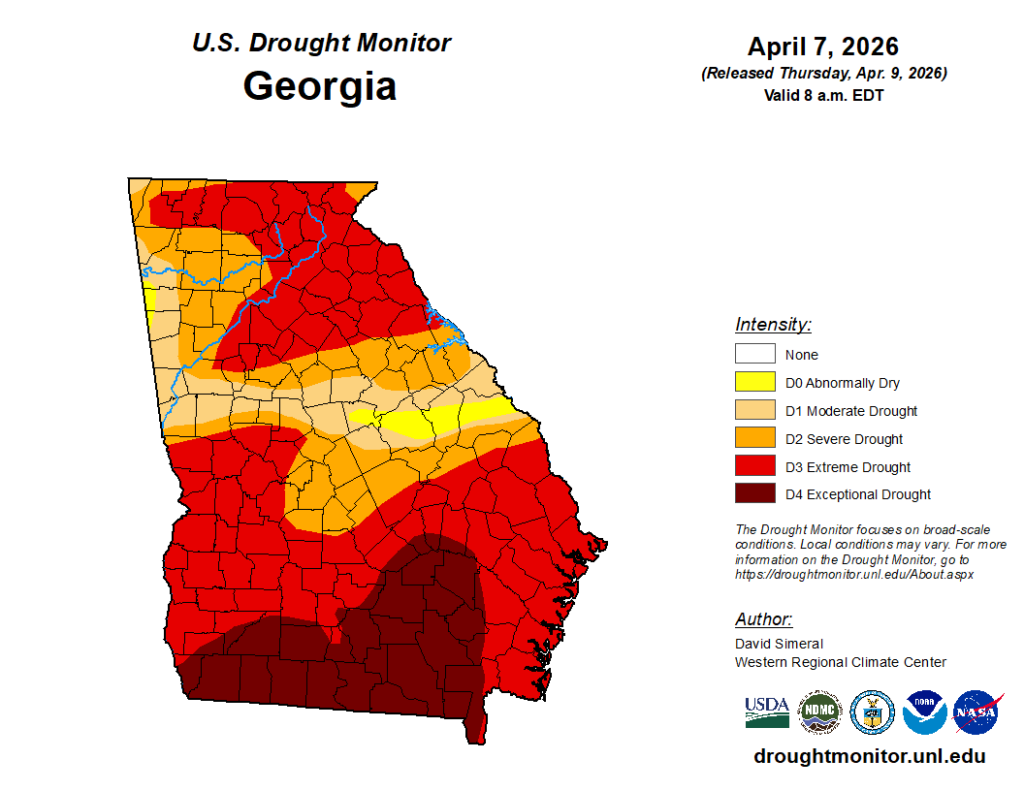
The driest part of the region is located in South Georgia and North Florida with exceptional drought conditions being reported, according to the April 2 release of the U.S. Drought Monitor. Extreme drought expands from South Georgia to the central part of the state, while the eastern part of Alabama is also observing similar conditions. Extreme drought also encompasses most of Florida, especially in the southern part of the state.
But the lack of substantial rainfall, dating back to last August, should have little to no effect on the trees’ production for the next month or so.
“We’re right here at budbreak and really until that foliage gets out and gets developed, there’s just not much of a transporational stream pulling water through that tree,” Wells said. “Based on all the research we’ve looked at, it was hard for me to accept this when we first started looking at it but we continue to see it; they just don’t use a whole lot of water really until that canopy develops.
“I think we’re okay until May.”