









By Clint Thompson
Weather conditions are starting to favor development for certain peach diseases that Southeast growers must be wary of. Blossom blight is especially concerning this time of year, says Phil Brannen, University of Georgia (UGA) Cooperative Extension fruit disease specialist.
“We’re pretty much hitting on bloom or full bloom, and blossom blight, which is the brown rot phase in blossom, is a potential right now, especially,” Brannen said. “That’s something to be aware of.
“Vangard and Rovral® are good in that we don’t use those ever, except for this time frame. Those are good choices, and then of course Captan and chlorothalonil; Bravo is the formulation we’re most familiar with.”
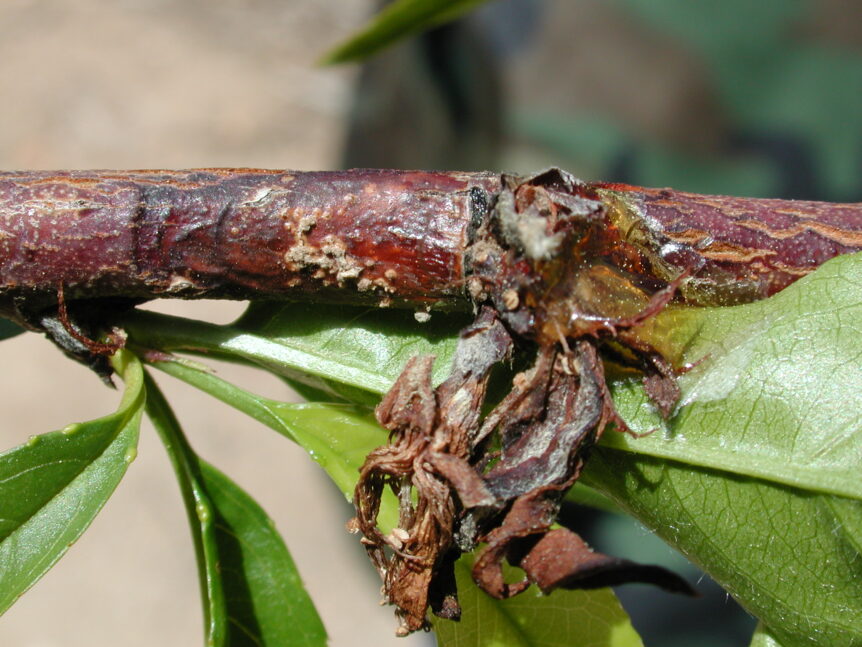
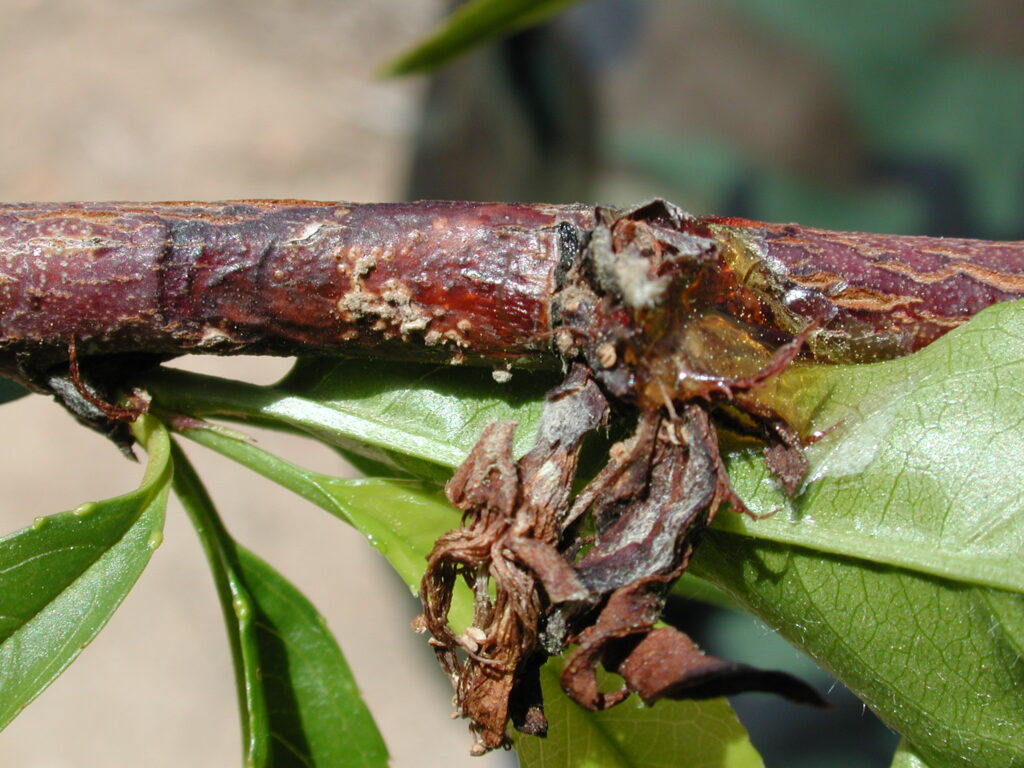
According to UGA, blossom blight appears when trees start to bloom, leading to blossoms changing to a tan or brown color. The blossoms will then droop as if they were suffering from frost damage. Once the disease begins, it can develop quickly and will spread to the tree’s twigs, branches, leaves and fruit. Wood that is impacted may become gummy.
Cold temperatures impacted the region earlier this week, leaving blossoming trees vulnerable. Brannen is more concerned with increased moisture this time of year, however.
“There’s some connection with cold damage, especially frost and a little bit of damage on blooms that could possibly open up some additional blossom blight as well. Really I think more than anything it’s moisture,” Brannen said. “If we have a lot of moisture and moist conditions during the bloom phase, and warmth, the right temperatures; if it warms up and we have moisture, we’re more likely to have blossom blight anyway.
“I’m more concerned about moisture and warmer temperatures during bloom as far as development of that disease.”