









By Clint Thompson
Back-to-back weekends of increased rainfall in the cold-hardy citrus region have left some citrus susceptible to fruit splitting. Growers are advised to discard any fruit showing the condition.
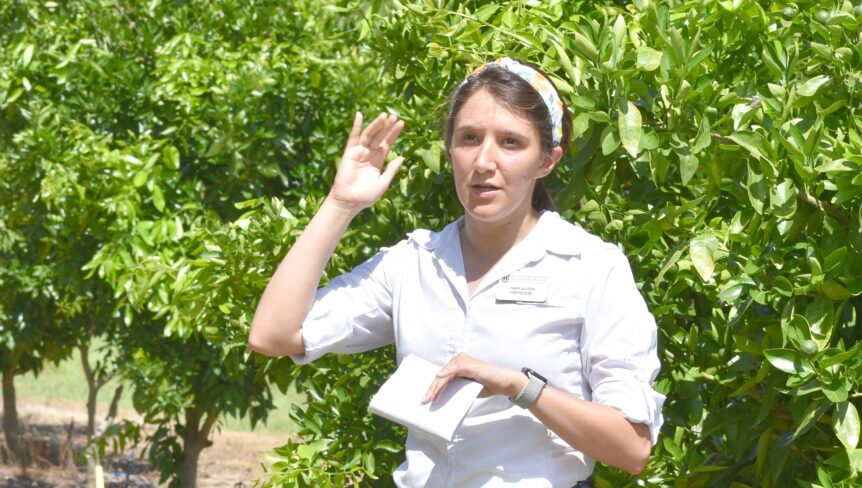
Mary Sutton, University of Georgia (UGA) assistant professor and citrus Extension specialist, discussed the danger of the region’s fruit following Hurricane Isaias and its impact moving through the Gulf Coast last weekend.
“I’m really just starting to get out to see if we have any damage, but I think for the most part we just got rain up here,” Sutton said. “I think we might see some more fruit splitting just because there is so much water in the soil and we’ve gotten so much (rain) here lately.”
Fruit split can occur when extended dry, hot periods are followed by excessive rainfall or very heavy irrigation, much like what has been observed during the previous two weekends, especially in Southwest Georgia. According to the UGA Weather Network, Albany, Georgia, received 5.76 inches of rainfall from Oct. 1-9.
Impact in Fruit
The condition usually starts at the bottom end of the fruit and spreads vertically up the fruit. This is a normal time to start seeing it occur. Unfortunately, it can also invite secondary diseases to move in.
“We’ll always see some fruit splitting, but I do think we’ll see a little bit more,” Sutton said. “Yeah, we’ll see secondary diseases a lot of time on those split fruit and we’ll see different pests move in. So, if possible, it does help to get those split fruit off the tree. Go ahead and get them out just to help cut down on any sources of disease.
“I know that can be a big job, so it’s not feasible for everybody, but it does help to cut down on secondary diseases.”