









By Clint Thompson
Southeast pecan growers should be aware that this week provides the last window to protect this year’s crop from the pecan nut casebearer.
Apurba Barman, University of Georgia (UGA) Extension pecan entomologist, said the insect has two flights within a couple of months, but it’s this first one that can have more impact.
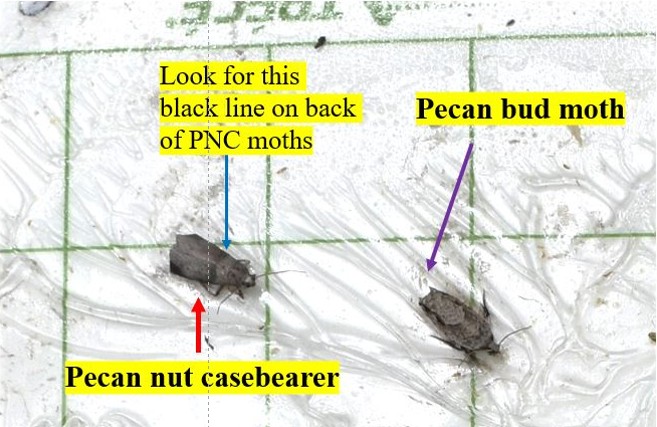
“Growers make an application sometime, you know, the first week or second week of May. We still have maybe another week, but after that all of the nuts will be big enough and (the insects) won’t be able to cause a lot of damage,” Barman said.
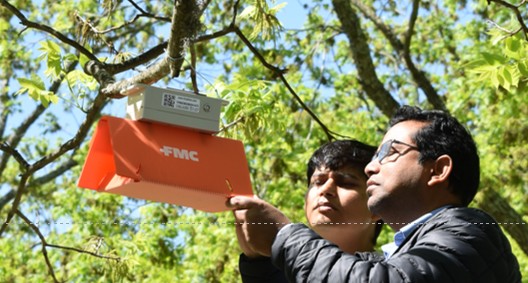
“They have peak activity. One is in late April, and another flight will be in June. The April flight, what we capture on our trap, is more damaging. The nuts are small and (the insects) can cause more damage. The next flight, when we get into June, that time the nuts will already be bigger and that generation cannot really do a lot of damage.”
Barman noted in the UGA Pecan Blog that once moth activity is detected, the next step is to scout for eggs on the tips of nutlets to determine if treatment is actually needed. If eggs are observed, it indicates that females have begun laying, and within about five days, larvae will hatch and start to feed on young nutlets.
Insecticide applications are recommended 10 to 14 days after capturing moths on two consecutive nights in pheromone traps.