









By Clint Thompson
The current hot and dry weather conditions are conducive conditions for insect pests to build up population levels. That’s the current case in Georgia.
Stormy Sparks, University of Georgia (UGA) Cooperative Extension vegetable entomologist, discussed what insect pests that growers should be mindful of as plants are going into the ground.
“With it hot and dry, you’re always worried about spider mites. On watermelons, that’s one of the bigger ones,” Sparks said. “You can have some seedling pests, but for the most part, we avoid a lot of seedling pests by using transplants. But fire ants, with it hot and dry, fire ants will actually attack plants. I think they’re just trying to get to moisture.

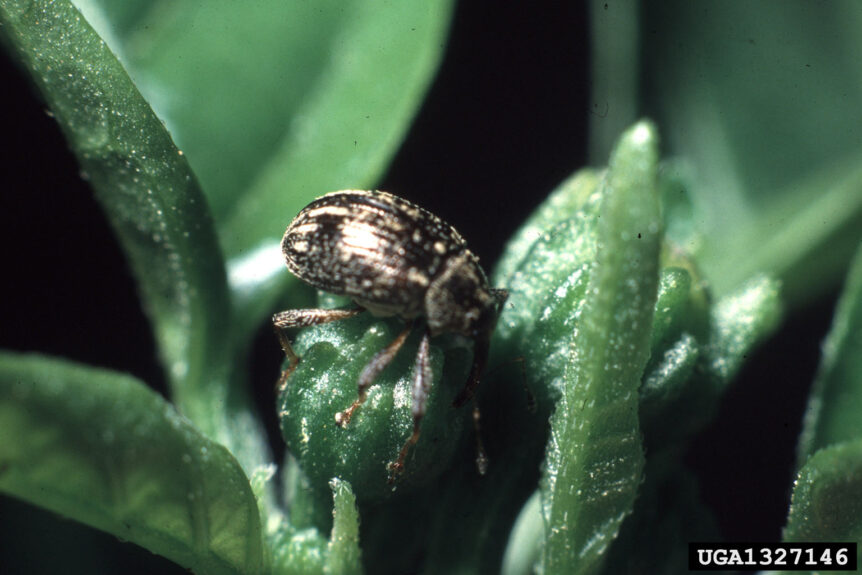
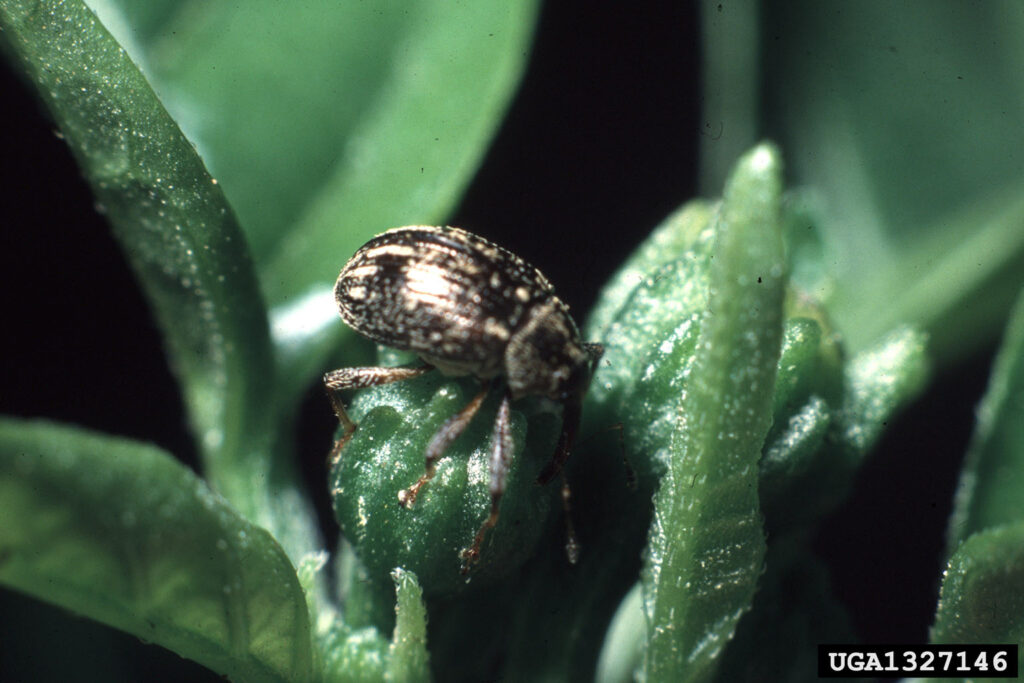
“We’re catching a lot more pepper weevils than we’re supposed to catch in March. In March, we should be near zero, but we have some fields that were pretty bad. It looks like we have some pretty good populations that overwintered; a lot more than we normally do.”
Why So Many Pepper Weevils?
Sparks and other UGA researchers noted in the UGA Vegetable Blog that pepper weevil captures on sticky traps reached “unprecedented numbers for this time of year.”
“For now, growers should be aware of the potential for early infestations in their pepper fields and apply sprays to prevent establishment of reproducing populations in their fields,” the blog added. “The general recommendation is to allow new transplants to attract weevils into the field and spray those fields at first sign of any fruiting structures within the field.”
Sparks also said that Ty Torrance, University of Georgia Cooperative Extension vegetable agent for Colquitt, Tift and Worth counties, has reported that thrip populations are up.
“Ty tells me there’s a lot of thrips out there right now,” Sparks said.
Western flower thrips are major vectors of tomato spotted wilt virus (TSWV). TSWV affects tomatoes, peppers and peanuts. Symptoms include stunting, bronzing, ring spots, necrosis and deformed fruit.